Get Full Government Meeting Transcripts, Videos, & Alerts Forever!
Get email alerts on the Criminal Procedure topic
No spam. Unsubscribe anytime.
Appeals court weighs whether defendant—s request to combine motion and trial precludes due-process challenge in Commonwealth v. Boutet
Summary
The Massachusetts Appeals Court on March 6 heard argument in Commonwealth v. Boutet over whether combining a motion to suppress and a bench trial at the defendant—s request produced a substantial risk of a miscarriage of justice under SJC precedent.
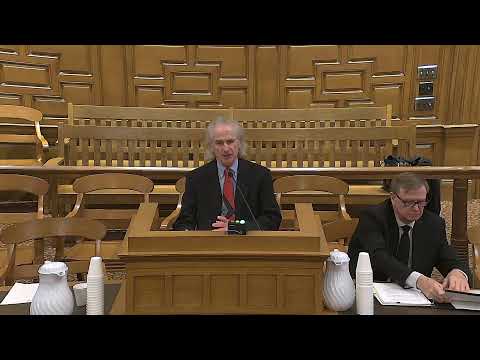
The Appeals Court on March 6 heard argument in Commonwealth v. Boutet (24-P-467), a criminal appeal challenging the use of combined proceedings — a simultaneous motion-to-suppress hearing and bench trial — after the defendant asked the lower court to proceed that way to resolve bail and related matters.
Attorney Kim Peterson, representing appellant Kevin Boutet, told the panel that the transcript and record were “replete” with procedural confusion and that the combined format produced a “convoluted” record that presents a substantial risk of a miscarriage of justice under controlling Supreme Judicial Court decisions including Commonwealth v. Love. Peterson urged the court to overturn the conviction because the process merged motion and trial testimony and allowed evidence in the motion portion that should not have been before the trial judge on the merits.
The panel questioned whether the defendant’s repeated requests to combine the proceedings affected the due-process analysis. An assistant district attorney, Kai Rakash, told the court the defendant sought the combined proceeding to obtain pretrial release tied to a bail-related Superior Court matter and that the defendant elected the process even after the judge fully explained the risks. Rakash said the defendant “got exactly what he wanted” by resolving the case when he did and that the record showed only a few evidentiary items were objected to for trial purposes but admitted for the suppression hearing.
Peterson pressed that the transcript’s structure — multiple breakpoints, motions blending into trial testimony, and overlapping objections — made it impossible to determine which statements were admitted for trial and which were limited to the motion. She argued that key testimony relied on hearsay (dispatch recounting an alleged restraining-order plaintiff) and that Miranda-invocation testimony had prejudicial effect when used in the merits determination.
Prosecutors countered that the judge conducted an on-the-record colloquy with the defendant about combining proceedings, that the defendant repeatedly affirmed his choice, and that the judge explained he would separate legal rulings for the motion from the trial record where necessary. The Commonwealth asserted that the bench trial judge is presumed to apply the law correctly and that any hearsay or other contested material was either objected to or properly considered only for the suppression analysis.
The panel questioned whether precedent (Powell, Healy and Love) requires per se reversal or a case-by-case substantial-risk analysis. Both sides acknowledged the SJC has warned against combining these processes but also has found harmless error in some circumstances. After argument the court took the case under submission.
Ending: The appeal turns on whether a defendant’s requested procedural choice can later be invoked to claim a miscarriage of justice and how closely courts must police record separation when suppression hearings and bench trials are combined. The panel reserved decision after hearing argument.