Get Full Government Meeting Transcripts, Videos, & Alerts Forever!
Get email alerts on the Criminal Procedure topic
No spam. Unsubscribe anytime.
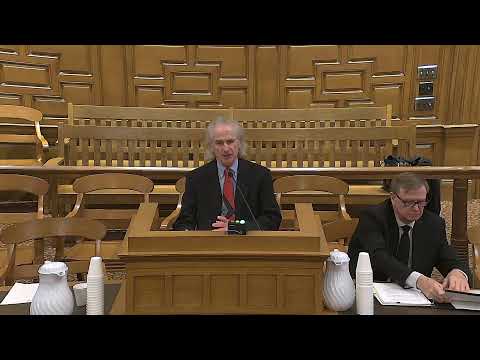
Appeals court presses prosecutors on rule 17 summons, evidence exclusion in Commonwealth v. Brooking
Summary
The Massachusetts Appeals Court on March 6 heard argument in Commonwealth v. Brooking over a trial judge’s exclusion of third-party records the prosecutor sought by Rule 17 summons, questioning whether prosecutors and clerks did enough to secure production and whether exclusion could bar retrial.
The Massachusetts Appeals Court on March 6 heard argument in Commonwealth v. Brooking (24-P-410), a criminal appeal about a trial judge’s exclusion of third-party records the Commonwealth sought by a Rule 17 summons and whether that exclusion effectively barred retrial.
The panel — Justice Greg Massing, Justice Nyman and Justice Wood — pressed the Commonwealth on why it had not secured records from the third-party provider and whether the trial judge had authority to exclude records obtained from a nonparty. Jocelyn McGrath, assistant district attorney for the Commonwealth, told the court the prosecutor’s office viewed the Rule 17 summons as primarily an evidence-gathering tool: “A Rule 17 court summons is an evidence-gathering tool. It is not a discovery tool. It does not grant the authority, even implicitly, for any Rule 14 type sanctions,” McGrath said.
Why the records did not reach the clerk’s office was a central factual dispute at argument. The record, McGrath said, showed clerks relayed that the third-party record holder would “tell you what you need to give us in order to effectuate the summons,” leaving an ambiguous stalemate between the court clerk, the carrier and the Commonwealth. The panel repeatedly asked whether — given those communications — the Commonwealth had any obligation to contact the third-party directly to learn what additional information was required. McGrath acknowledged the Commonwealth could be “cooperative” but argued the summons was a court order and the clerk’s office, acting for the court, was the primary channel for enforcement.
The court also explored whether the exclusion adopted by the first justice amounted to a sanction that would persist if the Commonwealth refiled charges. McGrath told the panel the Commonwealth believed the judge’s order could be read to exclude the records permanently if they were not produced by a date certain, and that exclusion affected whether prosecutors could safely put the alleged victim on the stand without corroboration.
Defense counsel and later argument from an assistant district attorney (who argued for the appellee Commonwealth on some points) emphasized the practical problem: the court record did not show the clerk’s office ever received the records and the docket transmitted to the Appeals Court showed no production. One prosecutor told the panel that, even if the Commonwealth refiles the case and secures records or authenticated screenshots, the defense might invoke the prior order as “law of the case.” The panel discussed procedural remedies available if the prior exclusion were asserted in a new prosecution, such as appeals under Rule 2:11:3 or renewed Rule 17 practice.
The panel also pressed whether the Commonwealth had shown prejudice from the exclusion. McGrath acknowledged that the court must determine not only whether exclusion was error but also whether the Commonwealth was prejudiced: “If the court is gonna give the Commonwealth relief for that error, it has to find that they were somehow prejudiced from the error,” she said. The Commonwealth conceded it could potentially try the case using screenshots authenticated via the victim, but argued the authentication path had not been developed in the district court record because the judge had required certified records.
The parties completed argument and the case was submitted to the panel. The court did not issue a ruling at the hearing.
Ending: The appeal centers on how Rule 17 orders to third parties should be enforced when a clerk’s office, carrier and prosecutors report an impasse and on whether exclusion as a sanction can bind future prosecutions. The panel’s questions focused on the record of clerk-carrier communications and whether the Commonwealth took affirmative steps to secure production before a sanction issued.