Get Full Government Meeting Transcripts, Videos, & Alerts Forever!
Get email alerts on the Mental Health Poa topic
No spam. Unsubscribe anytime.
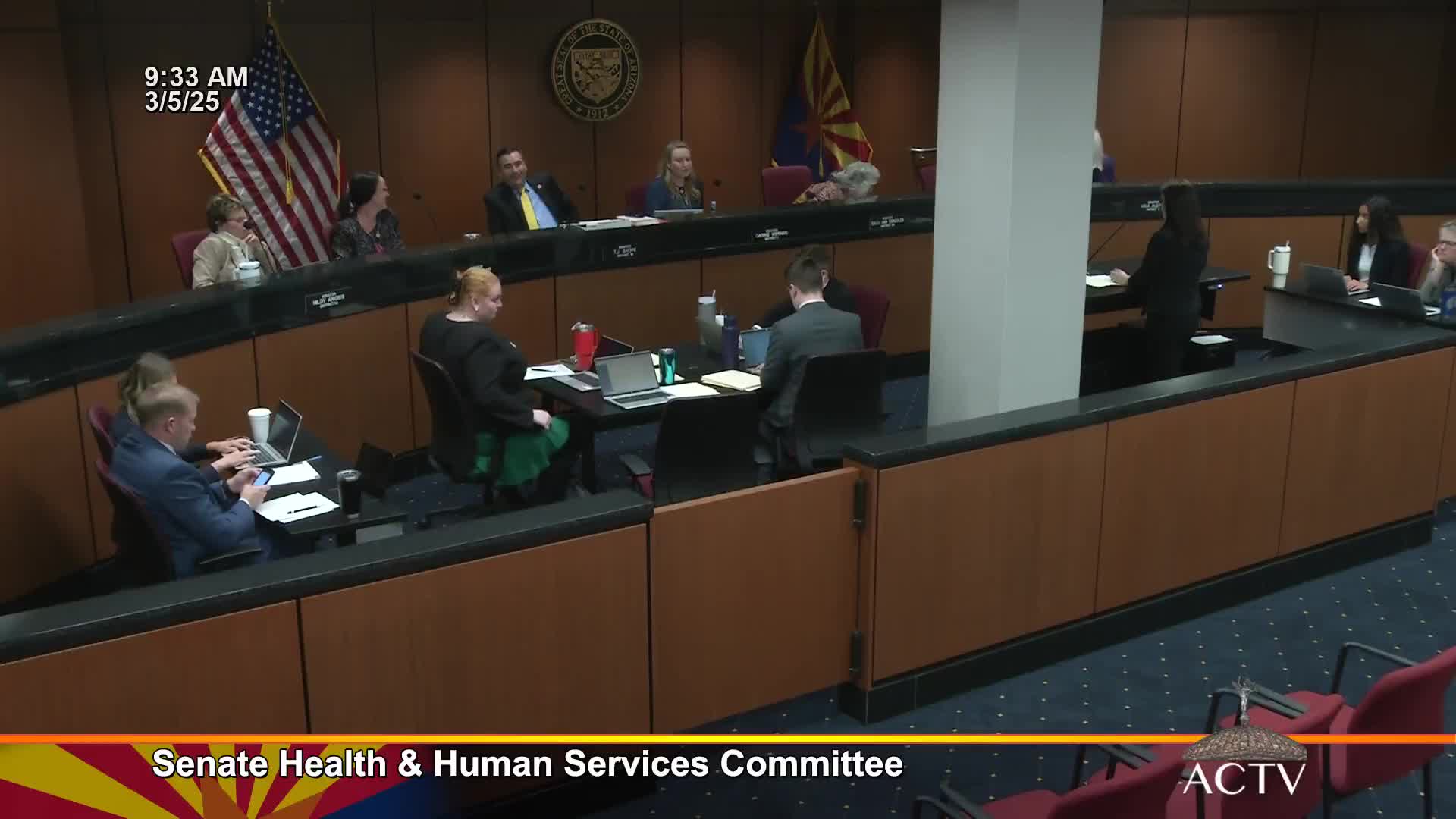
Bill to standardize mental‑health power of attorney procedures draws personal testimony from ‘Mad Moms’ and advocates
Summary
Senate Bill 1570, which would require inpatient behavioral health facilities to presume certain mental‑health power of attorney documents valid and mandate annual staff training developed by the Attorney General’s office, drew multiple family advocates who said facilities often ignore POAs and force costly guardianship proceedings.
Senate Bill 15‑70 would require inpatient behavioral health facilities to presume a mental‑health care power of attorney valid when the document is either notarized or witnessed by someone who is not the agent, or when it is the form and completed according to instructions on the Attorney General’s website. The bill would also require annual staff training on mental‑health care powers of attorney developed by the attorney general. The bill was presented for discussion during the committee hearing; no committee vote was recorded during the session.
Family members and advocates told personal stories about hospitals and behavioral‑health facilities failing to recognize POAs when loved ones were admitted. Rachel, representing a Mad Moms advocacy group, said she obtained a mental‑health power of attorney for a family member but found the document “useless” in practice because hospitals would not rely on it; she urged the committee to consider less‑restrictive tools than guardianship. Dan Jones, who said his mother had a psychotic break, testified that despite having executed mental‑health POAs years earlier, “those mental health power of attorneys were not worth the paper that they were printed on.”
Several witnesses said that when POAs are ignored families face prolonged delays, repeated waivers and sometimes must pursue guardianship at substantial cost. One attendee who works in behavioral health told the committee that facilities commonly require guardianship paperwork in addition to or instead of a power of attorney, placing financial and logistical burdens on families; one witness said pursuing a guardianship cost about $7,000. Speakers urged the committee to adopt a less‑restrictive approach so families can help manage care without needing court orders.
Sponsor remarks framed the bill as a response to those operational barriers, noting the bill includes a transition and training requirement so staff will be familiar with AG‑issued forms. Committee members accepted testimony and discussion but did not take a formal vote during the hearing.