Get Full Government Meeting Transcripts, Videos, & Alerts Forever!
Get email alerts on the Pharmacy Scope Of Practice topic
No spam. Unsubscribe anytime.
Committee advances bill to move Board of Pharmacy rules into statute, supporters cite expanded pharmacist scope
Summary
House Bill 200, which would codify remaining Board of Pharmacy rules into statute, passed the Senate Health and Welfare Committee with a do-pass recommendation; supporters said the change provides stability for businesses and preserves existing scope-of-practice provisions including point-of-care testing and independent prescribing language.
House Bill 200, which would convert remaining Board of Pharmacy rules into statute, advanced from the Senate Health and Welfare Committee with a do-pass recommendation.
Representative Jordan Redmond presented the bill and described it as the second-year phase of a migration of Board of Pharmacy rules into statute. Redmond said the bill makes no substantive policy changes, does not expand or shrink practice authority, and is intended to provide stability for business owners and patients by codifying long-standing rules. Redmond referenced prior legislative consideration: a similar provision had been proposed in 2017 and adopted in 2018 and reviewed multiple times since.
Ed Sperry, who said he served as a public member of the Board of Pharmacy for 10 years, testified in support and said the board’s role is to protect the public; he asked the committee to support the bill as written. Marcus Hurst, pharmacy director for Rollins Pharmacy, also testified in support, saying Idaho leads other states in recognizing pharmacists’ training for physical assessment, point-of-care testing, and independent prescribing; he listed several rural Idaho communities where pharmacists are practicing under the existing framework.
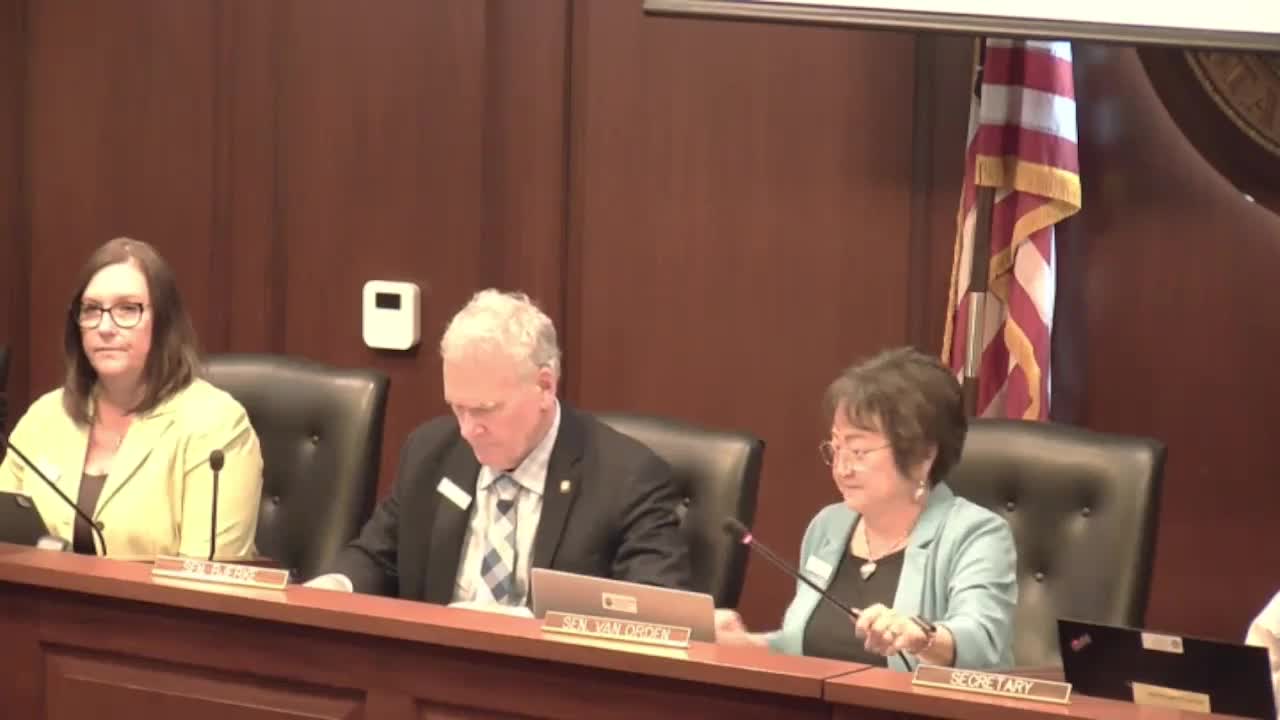
Committee members recorded no substantive questions that changed the bill. Senator Burkey moved to send the bill to the floor with a do-pass recommendation; Senator Harris seconded. The committee approved the motion by voice vote and recorded no opposition.
The bill will proceed to the Senate floor for further consideration.