Get Full Government Meeting Transcripts, Videos, & Alerts Forever!
Get email alerts on the Crisis Hold Neurocognitive Disorders topic
No spam. Unsubscribe anytime.
Senate panel approves change to crisis-hold language for people with neurocognitive disorders
Summary
The Senate Health and Welfare Committee approved sending Senate Bill 1120 to the Senate with a do-pass recommendation after debate over replacing a "likely to injure" standard with an "imminent danger" standard for crisis holds involving people with neurocognitive disorders.
Senate Bill 1120, which would create a limited crisis-hold authority for people with neurocognitive disorders, advanced from the Senate Health and Welfare Committee after senators voted to send the bill to the full Senate with a do-pass recommendation.
The bill was presented by Senator Melissa Wintrow, who said the measure builds on a law enacted last year and would allow police as a last resort to take a person with a neurocognitive disorder to a hospital for medical evaluation when that person’s continued liberty "poses an imminent danger." Wintrow said the revised wording was requested by policing agencies concerned about liability and that "imminent danger" is a legal standard more familiar to officers than the prior phrasing "person is likely to injure."
The committee discussed the change in standard briefly. A questioner asked for an example of how the imminent-danger phrasing would work; Wintrow cited an earlier incident at a homeless shelter where an individual with Huntington’s disease threw hot coffee, posing scalding risk to others, and said that under the revised language an officer who could not persuade the person to accept medical transport could take them into custody because the person’s continued liberty would pose an immediate threat.
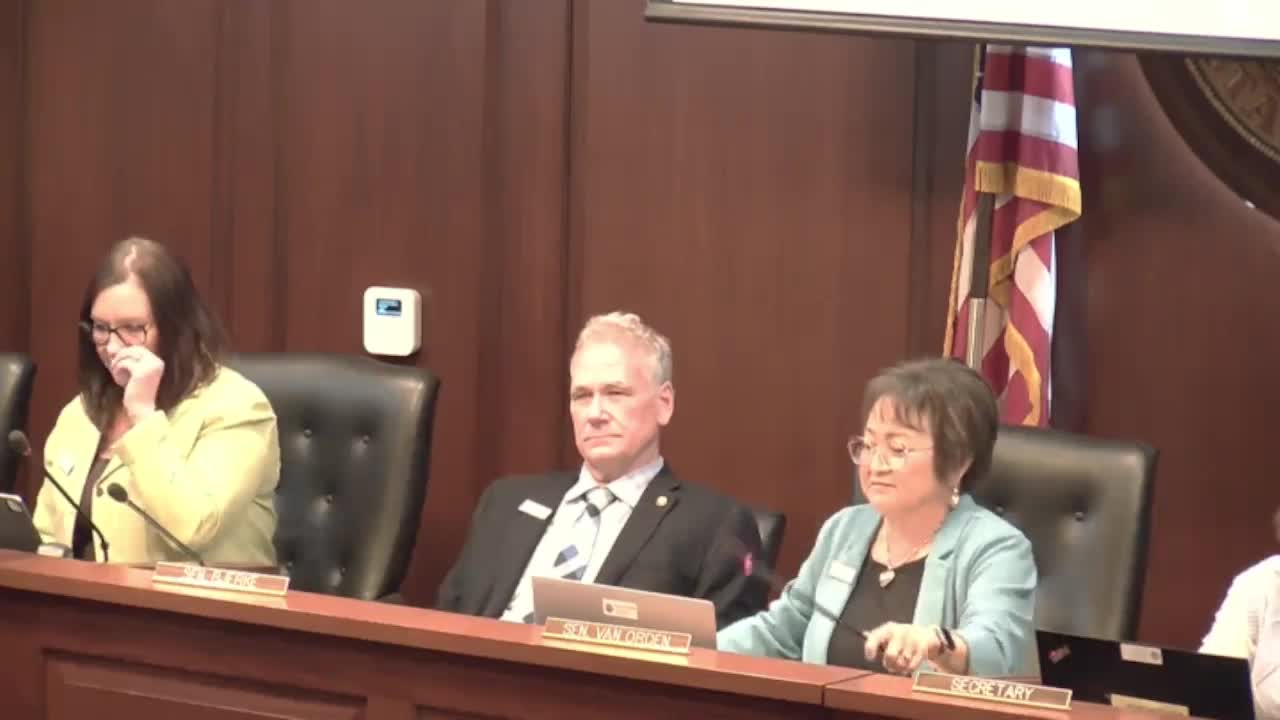
Committee members did not request further amendment. Senator Bierke moved to send the bill forward with a do-pass recommendation; Senator Keiser seconded. The chair called the question, and committee members responded in the affirmative. The committee recorded no opposition during the roll call on the motion.
The committee left in place a higher "likely to injure" standard for physicians who place a crisis hold in a hospital setting when no guardian is present, noting that medical professionals are accustomed to that phrasing.
The committee report will go to the Senate floor for further action.