Get Full Government Meeting Transcripts, Videos, & Alerts Forever!
Get email alerts on the Literacy topic
No spam. Unsubscribe anytime.
Newton Education Foundation funds REAP pilot to teach structured literacy at two Newton County elementary schools
Summary
Teachers at East Newton and South Salem elementary schools described early gains from a REAP structured‑literacy pilot funded by the Newton Education Foundation, saying the training is improving phonics instruction and student confidence for readers, including those with IEPs.
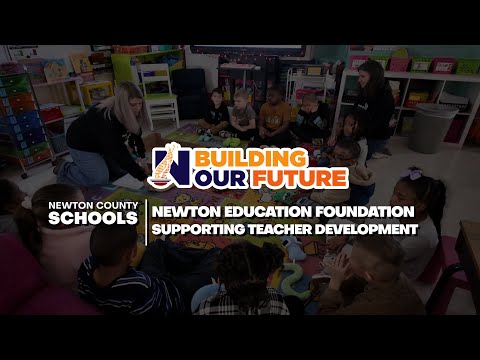
Speaker 1, a staff member, said a pilot structured‑literacy program funded by the Newton Education Foundation and delivered through a partnership with REAP is in use at East Newton and South Salem elementary schools in Newton County.
The program provides specialized training in structured literacy intended to equip teachers with research‑based strategies to help all students, especially those who struggle with reading, Speaker 1 said. “Reading is the foundation of learning, but for some students, mastering this essential skill can be a challenge. Thanks to the Newton Education Foundation and a partnership with REAP, reading is essential for all people, students at East Newton and South Salem Elementary Schools are gaining the tools they need to succeed. REAP provides specialized training in structured literacy, equipping teachers with research based strategies that help all students, especially those who struggle with reading.”
Why it matters: presenters and teachers said the training targets instructional inequities by standardizing phonics and decoding instruction so students receive more consistent, evidence‑based practice. “Already, we see students performing very well. Students who struggle are having an equitable instructional experience,” Speaker 2, a staff member, said. “Because for so long, we've been teaching in a way that has really just caused that inequity to grow. And so students, it doesn't matter if you have an IEP, it doesn't matter if you come from any type of household, you're gonna learn to read.”
Classroom impact: a teacher who identified themselves as a practitioner in the program said REAP “basically retaught me all the phonics rules out there,” allowing them to explain rules in “kid friendly terms.” Another teacher with 23 years of experience described the training as “easily the single most beneficial piece of professional development I've ever been in,” saying it enabled real‑time observation of student growth and increased teacher satisfaction with outcomes.
Program scope and limits: speakers described the effort as a pilot and emphasized classroom‑level changes in instruction and student confidence but did not specify districtwide rollout plans, total number of classrooms included beyond East Newton and South Salem, or the dollar amount of the Newton Education Foundation contribution. Speaker 6, a staff member, summarized the objective as building a “life love of learning for literacy in the classrooms.”
Voices from the pilot: presenters highlighted multimodal instruction and repetition as key methods that helped students who previously could not blend sounds to begin reading and to “feel accomplished.” The comments framed the work as focused on early grades—kindergarten through second grade—and on ensuring students enter each successive grade with stronger reading skills.
Outlook: presenters described the effort as an initial step rather than a completed program. “This is just the beginning. Thanks to the Newton Education Foundation, the REAP literacy pilot program is making a difference, 1 student, 1 teacher, and 1 classroom at a time. Together, we are building a stronger foundation for literacy in Newton County,” Speaker 1 said.