Get Full Government Meeting Transcripts, Videos, & Alerts Forever!
Get email alerts on the Criminal Justice topic
No spam. Unsubscribe anytime.
Committee backs bill allowing peace officers to search parolees and probationers under existing waivers
Summary
The Senate Judiciary & Rules Committee voted to send House Bill 187 to the floor after testimony on whether peace officers should be able to search convicted felons on probation or parole under existing consent waivers.
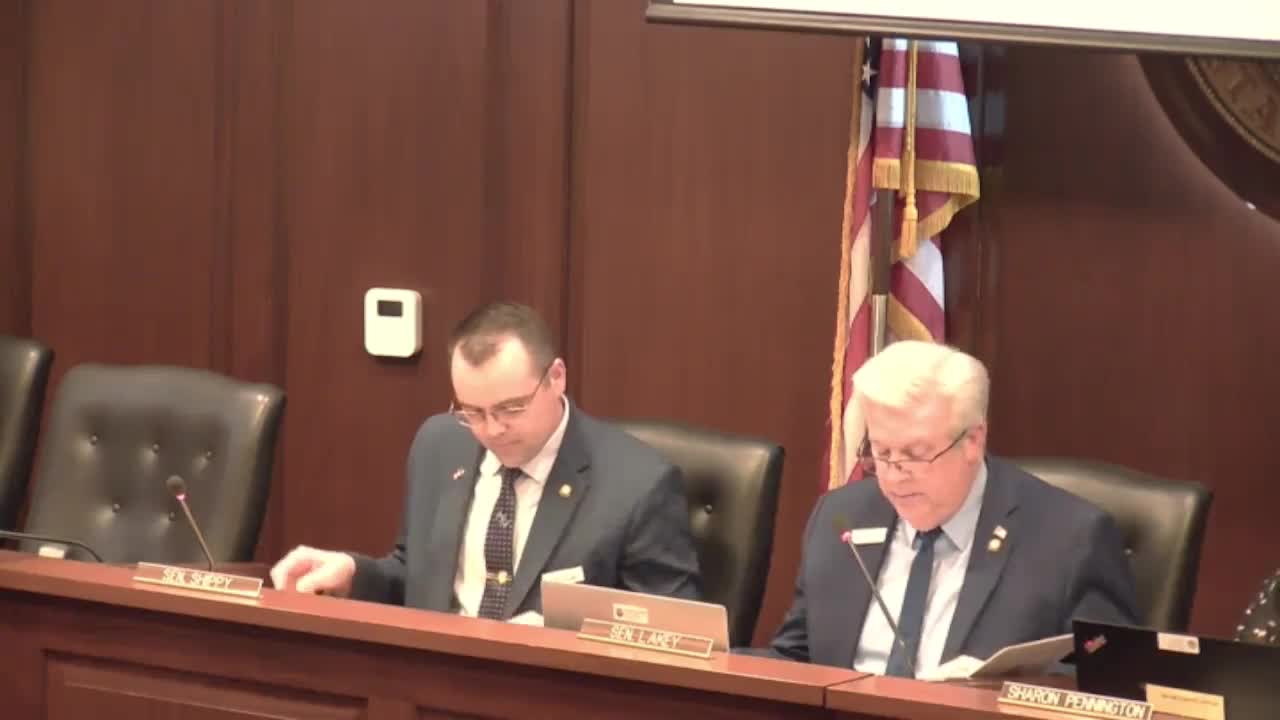
The Senate Judiciary & Rules Committee voted to send House Bill 187 to the Senate floor with a due pass recommendation after extended testimony from law enforcement representatives, a family member of a parolee and civil liberties commenters.
Todd Lakey, State Senator from District 23 and sponsor, told the committee the bill would make the consent-to-search term in parole and probation agreements consistent across Idaho and allow peace officers to perform searches now limited to parole or probation officers in some counties. “Probation and parole is really the ultimate trust and trust but verify, right?” Lakey said, describing the agreements parolees and probationers sign and the public-safety rationale for broader search authority.
Opponents raised constitutional concerns and the risk to family members and hosts. Michael Law of Kuna testified he opposed the bill, saying the waiver in practice is a coerced choice for people who must sign to get released. “You either stay in prison or you sign this to get out. That’s a false choice,” Law said, arguing the provision would allow searches and seizures of residences and vehicles and could affect nonoffending hosts.
Supporters included Rex Ingram, president of the Idaho Chiefs Police Association and Caldwell police chief, who described situations where local officers encountered parolees and were unable to search because a parole officer could not respond. “We stopped a parolee … and his response was ‘only my parole officer can search me,’” Ingram said, describing an incident in which local officers later found narcotics after securing a search warrant. Ingram and other law-enforcement witnesses stressed officer safety, staffing shortages for parole officers and the role of local police as a force multiplier.
Robbie Blaszard, deputy prosecutor with the Ada County Prosecutor’s Office, said prosecutors support the bill and that the measure aligns with judicial precedent that parolees and probationers may waive certain protections if the waiver is informed and voluntary.
Committee members asked about safeguards against harassment and about differences between probation and parole. In response, law-enforcement witnesses pointed to recording, complaint processes, court oversight and existing supervisory review; they also said local police already assist parole officers and that the bill would streamline an inconsistent patchwork of practices across counties.
Senator Dan Foreman moved to send the bill to the Senate floor with a due pass recommendation; Senator Keiser seconded. The committee recorded verbal aye votes and at least one recorded nay; the motion carried and House Bill 187 will go to the floor for a full Senate vote.
The committee did not discuss specific statutory text amendments in detail during the hearing. Questions about how the change would affect parole-office workloads, precise reporting or complaint processes, and whether additional parole staffing or weekend coverage could be an alternative were raised but not resolved at the hearing.