Get Full Government Meeting Transcripts, Videos, & Alerts Forever!
Get email alerts on the Post Adoption Contact topic
No spam. Unsubscribe anytime.
Senate committee debates, does not advance bill to file post-adoption contact agreements in court
Summary
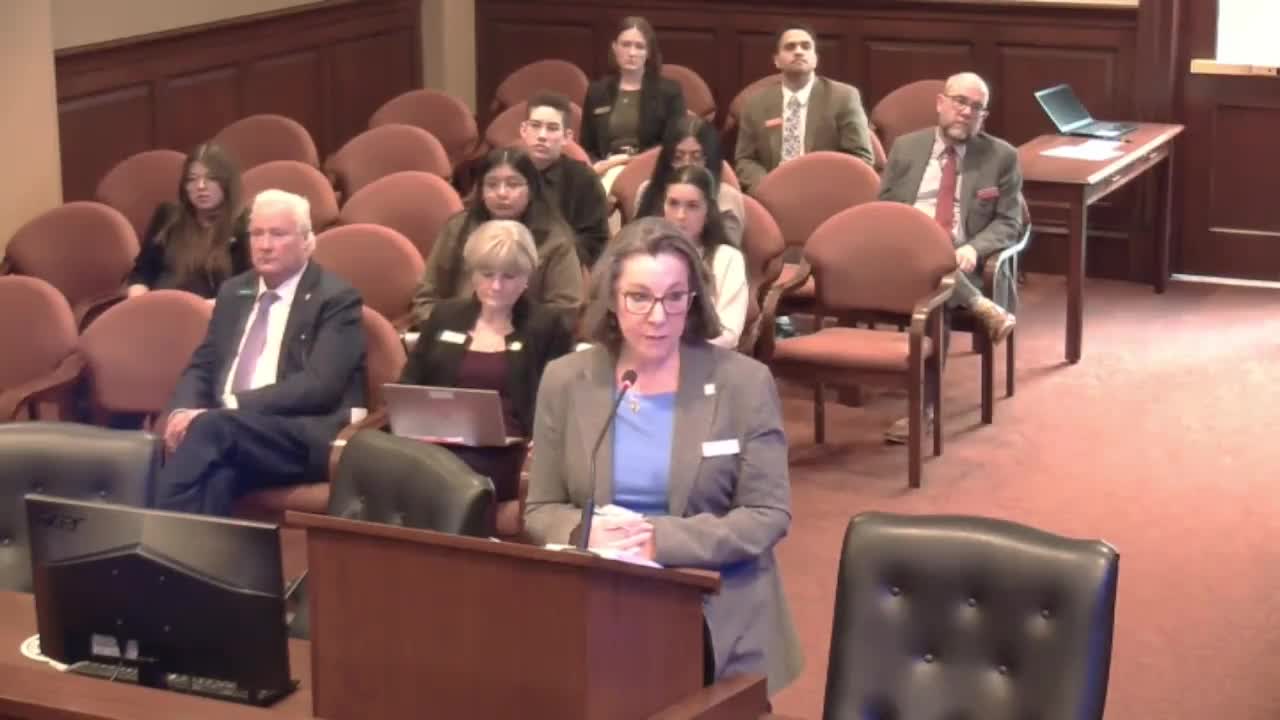
The Senate Judiciary & Rules Committee considered Senate Bill 113, a measure sponsored by Senator Julie Van Orden that would create a statutory framework for voluntary post-adoption contact agreements to be filed with adoption decrees.
The Senate Judiciary & Rules Committee considered Senate Bill 113, a measure sponsored by Senator Julie Van Orden that would create a statutory framework for voluntary post-adoption contact agreements to be filed with adoption decrees. The bill would let birth parents and adoptive parents record promises — such as exchanging photos or letters — in a written agreement that becomes part of the court record but would not, according to sponsors, provide a path to undo an adoption.
Supporters said written, filed agreements give birth parents reassurance that promises made during placement will be remembered. "When people write things down, they think about what they're promising," said Terry Markcroft of Unplanned Good, a proponent of the bill. Senator Julie Van Orden told the panel the intent is to capture promises that are sometimes made verbally and later broken: the agreement "would be filed along with the adoption papers as they move through the court."
Opponents — including licensed social workers, adoption-agency staff and experienced adoption attorneys — warned that court filing could complicate informal practices now handled by agencies and could create legal and financial burdens for birth parents. "This bill creates significant financial and emotional burdens on both adoptive and birth families," testified Kara Walsh, a licensed social worker who has worked on roughly 300 adoptions in the state. Adoption attorney Shelly Kazakos said current practice in Idaho requires birth parents to terminate legal rights before an adoption is finalized, and that making post-adoption contact agreements court‑enforceable risks dragging adoptive parents into litigation years later over what they believe is their parental discretion.
Committee members pressed proponents and opponents on enforceability and the risk that filing agreements with the court could invite judicial review under "best interest" standards. Amber Stiles, a birth mother who testified, said the existing judicial requirement that judges verify consent protects against coercion and cautioned that court‑filed agreements could make birth parents feel compelled to sign. Markcroft said the bill originally had a "best interest" provision that was later removed.
Senators debated competing policy goals: increasing certainty for birth parents and preserving adoptive parents’ authority to make decisions they deem best for the child. A motion to send SB 113 to the Senate floor with a "do pass" recommendation was moved and seconded. The transcript records a roll call with several named votes (Senator Foreman recorded an aye; Senators Shippey, Ricks and Lamb recorded nays). The roll call as captured in the transcript did not show a sufficient affirmative tally to carry the motion and the committee did not advance the bill at this meeting.
The committee invited further refinement. Several senators suggested sending the measure to the fourteenth-order process for amendment, and proponents and agencies signaled willingness to work together on revised language. The bill may return to the committee after negotiation among the sponsor, adoption agencies and adoption attorneys.