Get Full Government Meeting Transcripts, Videos, & Alerts Forever!
Get email alerts on the Health And Welfare Fee Schedule topic
No spam. Unsubscribe anytime.
Senate committee advances bill to codify mental‑health fee rules, retain 5% cap and guarantee services
Summary
The Senate Health and Welfare Committee voted to send House Bill 2 20 to the floor with a due‑pass recommendation after the Department of Health and Welfare said the bill moves a dormant sliding fee schedule from administrative rule into statute while keeping a 5% income cap and a requirement that services not be denied for inability to pay.
The Senate Health and Welfare Committee voted to send House Bill 2 20 to the Senate floor with a due‑pass recommendation after the Department of Health and Welfare told the committee the bill moves an unused sliding fee schedule from administrative rule into statute while retaining a 5 percent income cap and a prohibition on denying services for inability to pay.
Jared Larson, legislative and regulatory affairs chief at the Department of Health and Welfare, told the committee the fee schedule became “dormant” after 2020 and is “unwieldy for contractors to carry out” now that the state is no longer the direct service provider. “We do retain the 5% cap on income to determine how much someone should pay, but we also maintain the requirement that nobody is denied services for an inability to pay,” Larson said.
The bill—described by Larson as budget neutral—moves those fee provisions into statute to clarify implementation following the transition to contractor‑provided services under the Magellan contract that began July 1. Larson said the department worked with Representative Erickson on the House side and that the House approved the measure unanimously.
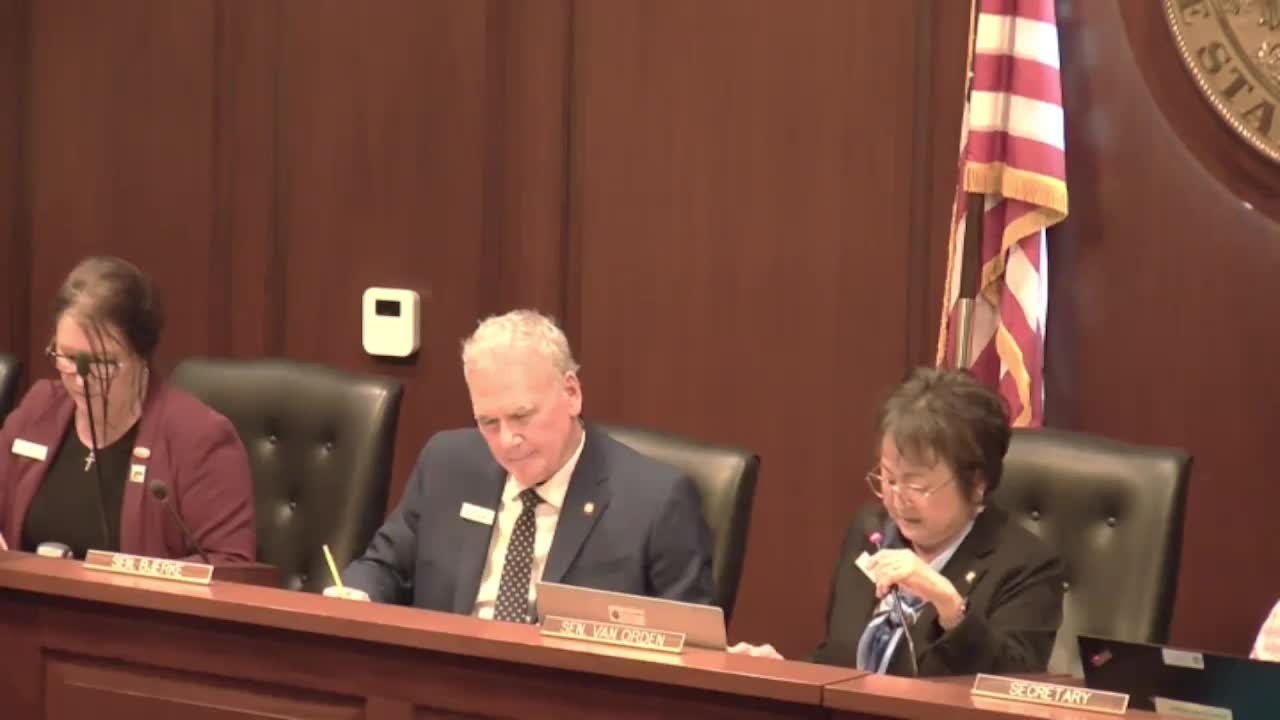
Senator Blaylock moved the committee recommendation; the motion was seconded and taken by voice vote. Senator Wintrow said she had discussed the bill with Larson and Ross Edmonds and that she supported replacing the sliding scale with the capped approach, adding that the department had “guarantee[d] that we’re not gonna cut services off if somebody actually still needs them and can’t afford to pay.”
No roll‑call vote was recorded in the transcript; the committee recorded the motion as agreed by voice. The bill will proceed to the full Senate for further consideration.
The committee recorded no formal amendment to the measure during its hearing and no budget figures beyond the department’s description that the change is budget neutral.