Get Full Government Meeting Transcripts, Videos, & Alerts Forever!
Get email alerts on the Special Purpose Districts topic
No spam. Unsubscribe anytime.
House panel advances bill to remove sunset on special-purpose districts' property conveyance authority
Summary
The House Domestic Relations, Business and Probate Law Subcommittee voted 5-0 to give a favorable report to House Bill 3,731, which would repeal a sunset provision and preserve special-purpose districts' authority to convey property granted under Section 6-11-345 of the South Carolina Code.
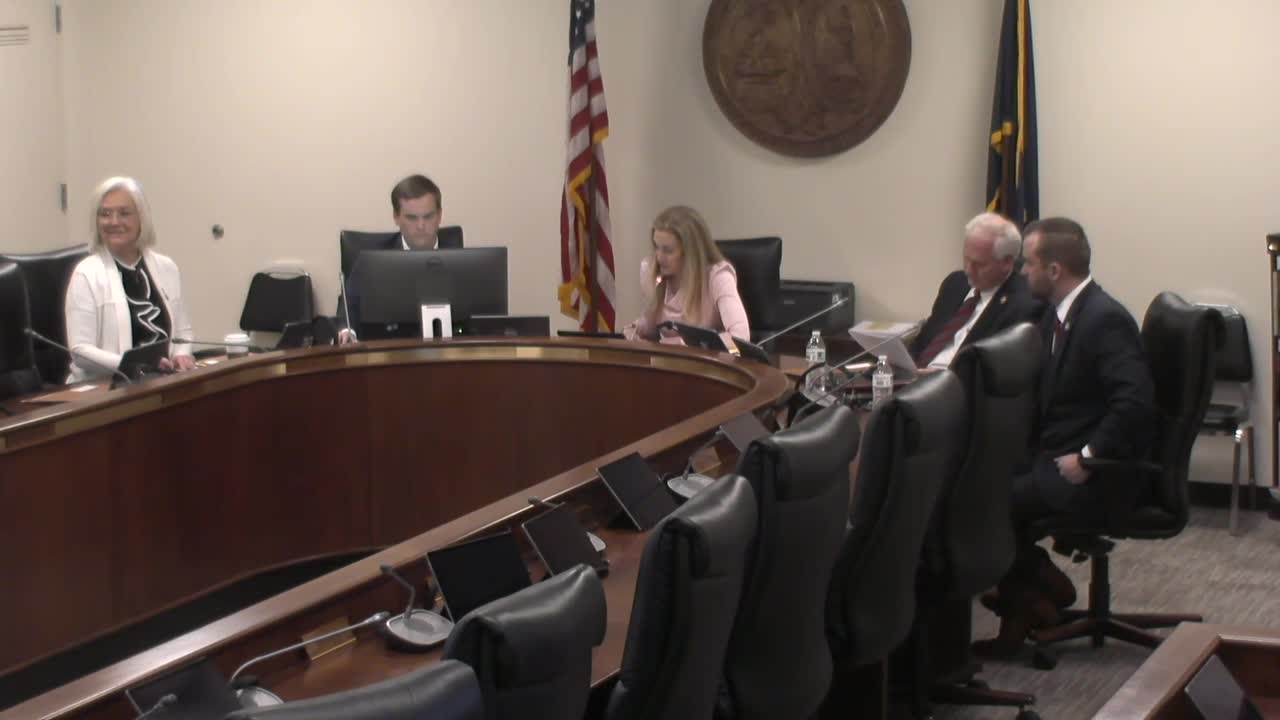
COLUMBIA, S.C. — The House Domestic Relations, Business and Probate Law Subcommittee voted 5-0 on Oct. 12 to give a favorable report to House Bill 3,731, a measure that would remove a sunset provision and preserve special-purpose districts’ authority to acquire, hold, use and convey property.
Supporters said the change eliminates an unnecessary time limit that could force special-purpose districts to use condemnation processes when state or local agencies need to acquire portions of park land for public works.
The bill would repeal section 2 of the act adopted last year that added a sunset to the general law provision found in Section 6-11-345 of the South Carolina Code. That sunset is currently set to remove the code section on June 30, 2027; HB 3,731 would keep the property authority in effect indefinitely unless the General Assembly later amends it.
Jim Headley of the South Carolina Recreation and Parks Association told the committee the association represents municipal, county and special-purpose parks entities and supports the repeal. “We would just in full support of this bill,” Headley said, adding that special-purpose districts should have the same property conveyance rights as counties and municipalities.
Lawrence Flynn, an attorney representing the Richland Recreation District, told lawmakers the change grew out of a practical problem. Flynn said special-purpose districts in South Carolina do not have home-rule authority and instead hold only the powers granted in their enabling legislation. “They only have those powers that are expressly granted them in their original enabling legislation,” Flynn said, describing how the Richland Recreation District discovered it lacked explicit authority to sell property when the Department of Transportation asked to acquire land as part of an interstate expansion near Marley Drive.
Flynn said the Legislature passed a general-law fix last year that clarified conveyance authority for recreation-oriented special-purpose districts, but a sunset was added as a compromise late in the session by Senator Malloy. The current bill asks the Legislature to remove that sunset so districts have a continuing statutory ability to convey property when their enabling acts otherwise do not grant that power.
Committee members asked for and received basic factual context about how many recreation special-purpose districts exist. Headley and Flynn said there are six public park and recreation special-purpose districts in South Carolina—examples cited during the hearing included Lexington and Richland counties, St. Andrews Parks and Playgrounds Commission, Charleston County Parks and Recreation Commission and a small district in Cherokee County.
Flynn also noted a policy consequence: property owned by special-purpose districts is generally exempt from ad valorem taxation while it remains in public ownership. Allowing the districts to convey parcels they do not intend to use for parks could return property to the tax rolls and allow redevelopment, he said.
With no members of the public or other witnesses raising opposition, the committee chair ordered a roll-call vote. Representative Beth Bernstein of Richland County, the subcommittee chair, voted aye; Representatives Paula Calhoun, Val Gass, King and David Martin also voted aye. The subcommittee’s clerk announced, “With 5 in favor and 0 against, House Bill 3,731 receives a favorable report from the Domestic Relations, Business and Probate Law Subcommittee.”
The favorable report sends the bill back to the House for further consideration. Supporters emphasized the repeal does not expand powers beyond what the General Assembly could later change and said the removal of the sunset resolves practical title and transaction problems raised by local districts and by agencies such as DOT.