Get Full Government Meeting Transcripts, Videos, & Alerts Forever!
Get email alerts on the Military Enrollment Preference topic
No spam. Unsubscribe anytime.
Subcommittee favorably reports bill letting charter schools give enrollment preference to military dependents
Summary
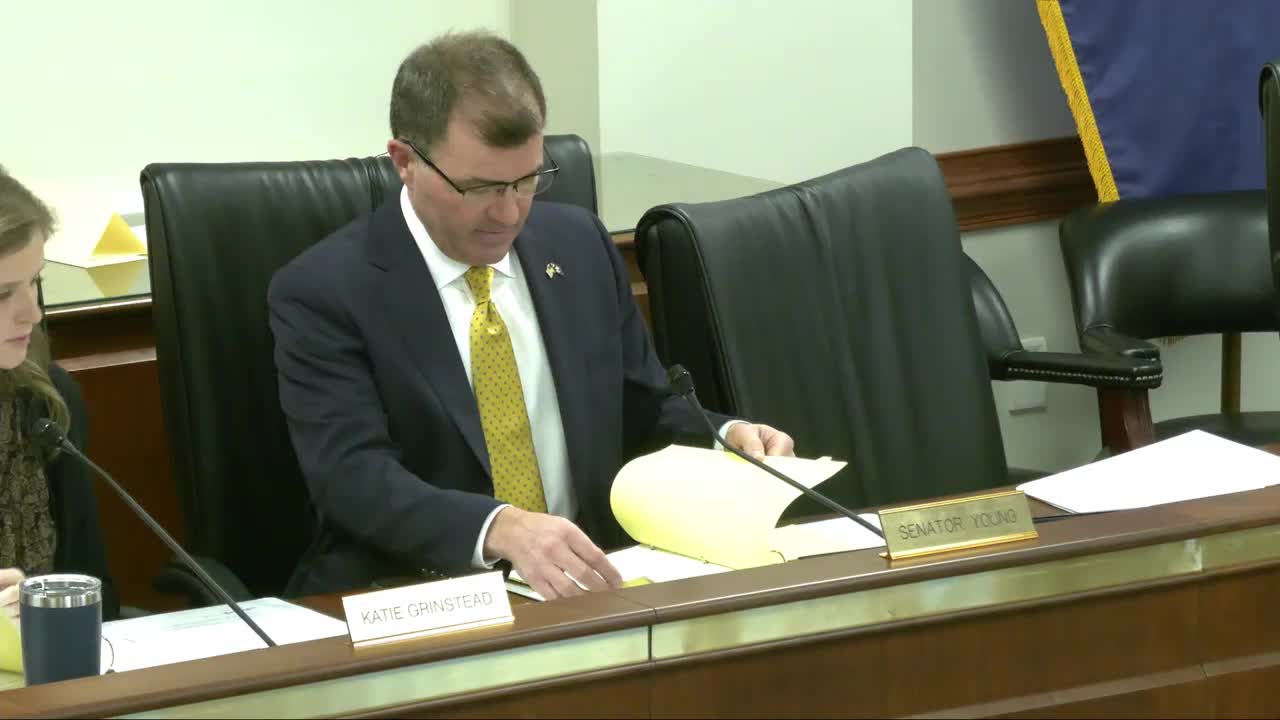
A South Carolina Senate Education subcommittee voted to report H.3862 favorably after testimony from charter operators and military families. The bill would allow public charter schools to opt to give enrollment preference to dependents of active-duty service members residing or stationed in the state.
A South Carolina Senate Education subcommittee on an undisclosed date reported H.3862 favorably to the full committee after hearing testimony supporting an option that would let public charter schools grant enrollment preference to dependents of active-duty military stationed or residing in South Carolina.
The bill, summarized for the panel by a committee staff member, "adds a military enrollment preference option for public charter schools in South Carolina to have if they so choose to desire," said JW Ragley, who testified for SC Learns. Ragley represents a nonprofit that operates two virtual public charter schools in the state and said the change would be optional for charter operators.
Supporters told the subcommittee the change aims to reduce instability for military families who move into the state midyear or after many charter lotteries have closed. Dr. Trevor Ivy, founder and executive director of Liberty Steam Charter School in Sumter County, said Liberty Steam serves 731 students and currently has 76 scholars with an active-duty parent — about 10 percent of the school's enrollment. He described high demand: the school's recent lottery generated roughly three applications per available seat and the school maintains a wait list for multiple grades.
Melissa Clampett, a military spouse and parent who traveled from Beaufort to testify, described being placed far down several charter wait lists after moving unexpectedly: she said she landed about 80th on one wait list and about 50th on another, and that many military families do not receive transfer orders early enough to meet charter application deadlines. "Implementing this South Carolina charter schools to have enrollment preferences for active duty military dependents gives military families a higher probability of enrollment in their preferred schools," Clampett said.
Witnesses and committee members also discussed how existing charter enrollment preferences interact with lotteries and wait lists. Ragley noted the bill does not alter the lottery process but would let verified military-connected students be placed among those with other verified preferences, such as returning students, siblings of enrolled pupils, or children of staff or board members; schools would still verify preferences before running the lottery. Dr. Ivy said the subcommittee or state agencies would need to provide clear guidance on how multiple verified preferences are handled when demand exceeds available seats.
After testimony, a motion for a favorable report was made and seconded; committee members voiced "aye" and no opposition was recorded. The subcommittee chair said the bill is reported favorably to the full committee. If the Senate takes no amendments that differ from the House version, supporters noted, the bill would proceed to the governor following the legislative process.
The subcommittee also briefly discussed technical cleanup language in the bill: Ragley described much of the bill as reordering and clarifying existing enrollment-preference language rather than creating new categories. He and other witnesses said virtual charter operators currently identify military-connected students in the state student information system and that the schools represented by Ragley had about 105 military-connected students combined (approximately 2.5 percent of their combined enrollment).
The subcommittee did not change the bill's substance in the meeting; it was reported favorably to the full committee for further consideration.