Get Full Government Meeting Transcripts, Videos, & Alerts Forever!
Get email alerts on the Education Parental Rights topic
No spam. Unsubscribe anytime.
Senate approves measure restricting school instruction and requiring parental notification on gender-identity accommodations
Summary
Senators passed an engrossed committee substitute for Senate Bill 154 on third reading, 33–1, prohibiting certain instruction related to sexual orientation and gender identity in public schools and creating a complaint and sanction process that includes parental notification and progressive employee discipline.
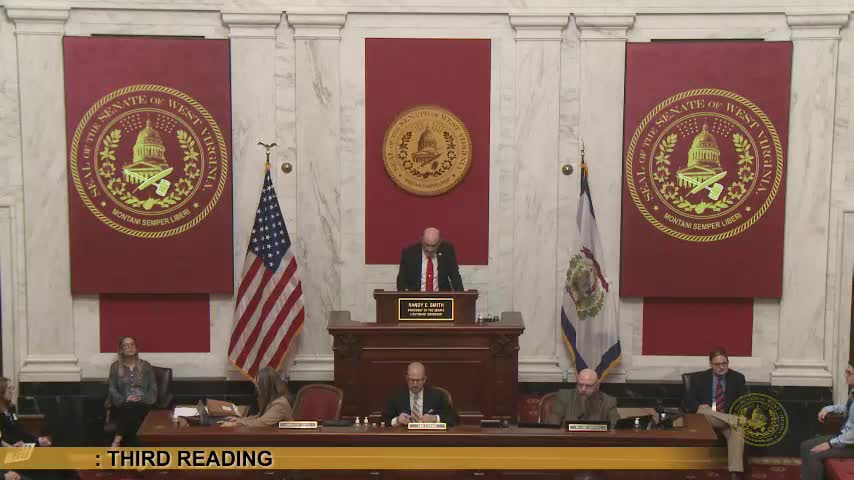
CHARLESTON, W.Va. — The West Virginia Senate on March 5 approved an engrossed committee substitute for Senate Bill 154 on third reading, 33–1, a measure that, according to floor remarks, would prohibit public schools from providing instruction related to "****** orientation or gender identity" and would require schools to report student requests for accommodations to parents or guardians.
The sponsor described the bill’s scope on the floor as prohibiting instruction related to the redacted term and requiring administrators to notify parents when a student requests accommodation intended to affirm a change in the student’s gender identity. The bill, as explained on the floor, does not bar a teacher from answering student questions about sexual orientation or gender identity when they are tied to the subject matter of instruction, nor does it forbid mention of the orientation or gender identity of historical figures when that information provides necessary context for instruction.
The bill establishes a complaint, investigation and sanction process: a parent or guardian may file a complaint with the public school; the school must complete an investigation within 10 days and recommend dismissal or sanctions to the school board. Sanctions listed on the floor for school employees were: a written reprimand for a first violation; a 30-day suspension without pay for a second violation within 12 months; and termination for a third violation within 12 months. The bill also provides an appeals mechanism for employees and indicates boards of education may use administrative grievance procedures.
“It's a shame that we have to have a bill like this,” said Senator from Mason in floor remarks urging passage; she framed the measure as protecting parental rights and said social transitioning is a parental and medical decision. By contrast, Senator from Marion argued the bill “creates such big problems,” raising concerns about vague definitions, hearsay in the complaint process and potential targeting of teachers.
The clerk closed the roll and announced 33 yays, 1 nay, 0 absent; the Senate declared the bill passed and the clerk communicated the action to the House.
The measure’s text, as described on the floor, includes a system of investigation and prescribed employee discipline; teachers and school employees remain mandatory reporters for suspected child-abuse or neglect cases, the sponsor noted when answering questions. The floor debate included both legal and educational arguments about parental rights, teacher discretion and student safety.
The bill will be transmitted to the House for further consideration.