Get Full Government Meeting Transcripts, Videos, & Alerts Forever!
Get email alerts on the County Government Meeting Votes topic
No spam. Unsubscribe anytime.
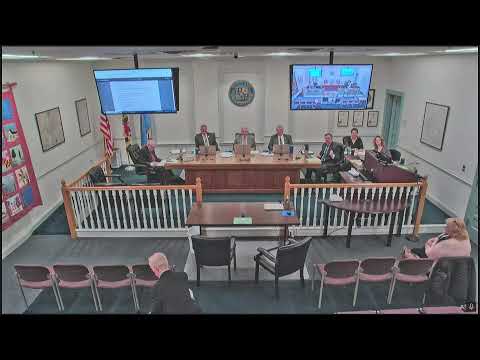
Kent County commissioners approve zoning changes, licensing plan for foxhound kennels, development bid package and a slate of administrative items
Summary
At its February meeting the Kent County Board of County Commissioners introduced an assisted‑living zoning amendment, adopted a new construction‑trades board law, approved a fox‑hunting dog‑kennel zoning change contingent on licensing rules, authorized federal earmark requests, and approved multiple administrative and personnel items.
Kent County commissioners on a busy February agenda introduced one zoning text amendment, adopted two local bills, directed staff to draft implementing licensing rules for a new animal‑licensing category, authorized federal earmark requests and approved multiple administrative motions including liquor licenses, personnel promotions and a contingency payment to a statewide consortium.
The board voted to: introduce a citizen‑sponsored zoning text amendment to allow assisted living facilities of up to 16 beds in certain residential districts and schedule it for public hearing; adopt a new Construction Trades Board ordinance; adopt a text amendment permitting fox‑hunting dog kennels in a single district and to direct staff to draft licensing regulations in chapter 64 of the county code that will be required before the zoning change becomes effective; and to publish a public‑works agreement to solicit proposals for completing the Village of Kennedyville subdivision. Commissioners also approved three special class C per‑diem liquor licenses, continued an administrative licensing hearing for 60 days, approved a county resolution changing detention center oversight, and authorized two personnel promotions and a $5,000 contingency payment for the Time to Care (paid family leave) collaborative membership.
Votes and formal actions - Liquor licenses: The commission approved three special class C per‑diem liquor license applications (Kent Association of Riding Therapy Incorporated; Timothy Kern Memorial Fund; Community Volunteer Fire Company of Millington). No public opposition was recorded at the hearing. - Administrative hearing (license compliance): The board continued a pending administrative hearing related to a licensee’s trader’s license / comptroller clearance for approximately 60 days to allow the applicant to obtain a trader’s license from the clerk and any necessary clearance from the Maryland Comptroller. - CHR 1‑20‑25 (assisted living zoning): The board voted to introduce code home rule bill 1‑20‑25 to increase assisted‑living capacity from 8 to 16 beds in Community Residential and Critical Residential zoning districts and to schedule a public hearing. The planning commission had issued a favorable recommendation. - CHR 10‑20‑24 (construction trades board): The board adopted the third reading of CHR 10‑20‑24, creating a unified Construction Trades Board to address changes in state licensing of master electricians and provide a single advisory board for construction trades. - CHR 9‑20‑24 (fox‑hunting dog kennels): The board adopted CHR 9‑20‑24 as amended. Commissioners also approved two follow‑up motions: (1) add a contingent effective‑date clause tying the zoning change’s effectiveness to adoption by the board of licensure requirements in chapter 64 (animal ordinance); and (2) direct staff to draft a CHRB to add a new Article 2 to chapter 64 establishing a licensing process, standards, annual review and revocation procedures for fox‑hunting kennel licenses. The adopted approach makes the zoning amendment contingent on the subsequent licensing ordinance and includes a probationary 12‑month review and annual review/appeals framework as described by county staff. - Detention center oversight resolution: The board approved a resolution that shifts day‑to‑day operational oversight of the county detention center to the sheriff while employees remain county employees; the motion passed with the ayes recorded on the voice vote. - Tax‑study response: Commissioners voted to sign and forward a draft response to mayors of the county’s municipalities concerning a 2024 property‑tax “setoff” study (a municipal/county duplicate‑service analysis) and to send the county’s observations and supporting materials to municipal leaders. - Personnel and human resources: The commission approved promotions to fill two vacant corporal positions at the Kent County Detention Center and approved use of $5,000 from contingency funds to pay the Maryland Association of Boards of Education invoice for the Time to Care Act collaborative annual membership fee. - Federal earmark requests: The board authorized submission of requests for congressionally directed spending (earmarks) to Senators Chris Van Hollen and Ben Cardin (staff also coordinated with Representative Andy Harris’ office) for (a) construction funding for a relocated Millington Wastewater Treatment Plant (project request amounts were for the full cost; the plant would be subject to a 25% county match where the applicable federal program requires cost sharing) and (b) purchase and installation of a backup emergency generator for the new EMS headquarters (the generator item carries a county match requirement described by staff). - Village of Kennedyville public works agreement: The commission approved a draft Public Works Agreement (PWA) to be included in a solicitation package for developers to complete the partially built Village of Kennedyville subdivision. The PWA requires a developer to purchase 43 sewage allocations up front, post 100% financial assurance (performance bond or letter of credit) for public improvements, provide a one‑year maintenance bond at dedication, dedicate public roads to the county, pay vacant lot fees while lots remain unconnected, and connect lots and complete public improvements within five years or risk forfeit of unconnected allocations. The board instructed staff to incorporate commissioner‑requested edits (for example, earlier deadlines for street lights and targeted timelines for certain stormwater and lighting items) when finalizing the advertisement package.
Why it matters The votes affect land use, licensing and near‑term capital planning. The fox‑kennel action pairs a zoning change with an animal‑licensing scheme so that the county can impose operating standards, probationary review and revocation authority rather than issuing a permanent special‑exception zoning approval without a follow‑up enforcement path. Adoption of CHR 10‑20‑24 creates a multi‑trade advisory board for construction licensing. The Village of Kennedyville decision authorizes an active procurement to finish a long‑stalled residential subdivision; its bonding and dedication requirements are intended to protect existing homeowners and ensure public infrastructure is completed.
Key numbers and clarifications presented in the meeting - Constant‑yield tax rate: county staff cited a computed constant‑yield tax rate of 97.61¢. Net assessed property values were projected to rise about 4.7% for the county; staff estimated roughly $1.6 million in additional revenue in the coming year if the current rate is left unchanged and roughly $4.8 million across three years (a 14.1% cumulative increase over three years) under current assessment projections. Staff clarified that state SDAT figures showing a 20.8% increase reflect full cash value, not net taxable assessed value; homestead and homeowners’ credits and the 5% annual cap on taxable base reduce the amount that shows up on tax bills for primary residences. - Millington wastewater earmark: staff said the request would be for the full cost of a relocated and expanded Millington Wastewater Treatment Plant and that certain federal programs require a 25% local cost share. - EMS generator earmark: staff said the generator request carries a county match (staff cited a 65% county match for that item in the application language) and that the building is being constructed to allow straightforward future generator connection and an automatic transfer switch.
What commissioners directed staff to do next - Schedule a public hearing for the assisted‑living zoning amendment (CHR 1‑20‑25). - Draft and prepare a licensing ordinance amending chapter 64 to create a Fox Hunting Club dog‑kennel licensing article, and schedule that legislation for introduction, public hearing and vote so it can run concurrently with the Critical Area Commission review where necessary. - Finalize the Village of Kennedyville Public Works Agreement language (including edits discussed in public comment) and issue an advertisement soliciting proposals from developers; include scoring criteria beyond price (e.g., pace of construction and capacity to complete infrastructure). - Submit federal earmark requests to congressional offices as authorized and continue coordination with the offices of Senators Van Hollen and Cardin and Representative Harris before the Friday deadline staff noted.
Meeting context and next steps The meeting included extended public comment—residents pressed for specific timelines and infrastructure work at the Village of Kennedyville site and asked for earlier completion of street lights and pond work. Commissioners emphasized that bids may be rejected if proposals do not meet the county’s objectives and that the county will require bonds to protect completion of public improvements. The fox‑kennel zoning change will not take effect until the chapter‑64 licensing ordinance is adopted; staff estimated the licensing‑ordinance drafting and review process could take roughly 60–90 days depending on scheduling. The county will continue follow‑up on the pending administrative licensing matter and expects to reconvene that hearing if the trader’s license is not issued during the continuance period.
The board’s actions on zoning, licensing and the Kennedyville procurement mark several policy and implementation steps intended to couple new land‑use permissions with enforceable operational standards and to protect taxpayers and existing residents when stalled development is reactivated.