Get Full Government Meeting Transcripts, Videos, & Alerts Forever!
Get email alerts on the Budget Health Insurance topic
No spam. Unsubscribe anytime.
McAllen ISD staff warn of $4.8 million health-insurance shortfall as trustees weigh 2%–4% pay scenarios
Summary
District presenters told trustees the employer share of employee health benefits could leave a roughly $4.8 million gap next year; trustees discussed raising the district contribution, other plan design changes and how proposed salary increases (2%–4%) interact with planning-period savings and fund constraints.
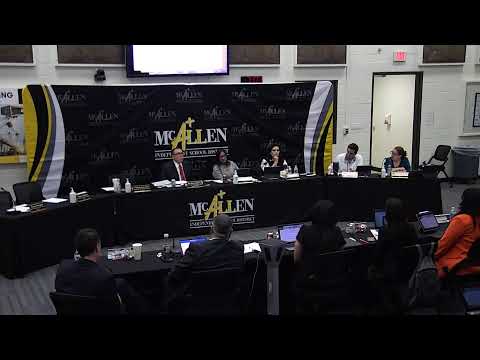
McAllen Independent School District staff told trustees at a March 4 budget workshop that the district faces an estimated $4.8 million shortfall to maintain current employer contributions for employee health insurance for the 2025–26 fiscal year.
The shortfall comes as staff presented three salary-increase scenarios — 2%, 3% and 4% — and modeled how those raises would affect fund-level budgets. “We are staring down at $4,800,000 that we have to cover,” Lorena Garcia, district finance staff, said during the presentation, describing options on both the employer and employee sides of coverage and potential procurement savings from a planned request for proposals for a third-party administrator and pharmacy benefit manager.
Why it matters: Employer health contributions are recurring costs that affect the general fund available for salaries, stipends and capital needs. Garcia said the district currently contributes $466.50 per enrolled employee per month. The benefits team recommended targeting a $55 per-employee monthly increase, which would cover roughly $2.0 million of the gap; covering the full projected shortfall at current enrollment would require an employer increase near $125 per month, a level staff described as “kinda high.” Trustees asked about phased approaches and the timing of decisions; staff said a separate, deeper budget meeting on benefits is scheduled after spring break to explore plan design, multi-year phasing, and procurement options.
Details: Garcia said the district is planning to go out for proposals on the third-party administrator and pharmacy benefit manager to try to generate discounts and incentives that could reduce the deficit. Staff also discussed eliminating the state plan or consolidating plan options as strategies other districts are using. Andy (benefits team) and Mister Silva provided tables showing incremental revenue per-dollar increases to employer contribution and projected savings from benefits procurement.
Context on raises: The three salary scenarios presented include fringe benefits; staff estimated the 2% scenario would cost about $2.5 million in the general fund (fund 199), while the 4% scenario pushed total estimated costs higher (Garcia listed roughly $5.1 million in the general fund for a 4% increase, including fringe). Trustees and staff noted the district’s June budget deadline limits waiting for final legislative action, so staff modeled current-law, worst-case scenarios and said they would adjust figures as state actions become clear.
What trustees asked: Trustees requested multi-year phasing options for employer contributions, clarification of how the employer increase would be paid (general fund vs. fund balance), and comparative data showing peer districts’ contributions and plan designs. Trustee Rivera asked about the average employee premium contribution; staff said most employees are enrolled in the basic plan and pay about $65 per month for employee-only coverage.
Ending: Staff scheduled a focused health-insurance workshop after spring break to present options and recommended next steps. The district cautioned that any employer-side increase must be balanced against other needs and that using fund balance for recurring health costs is not recommended by staff because it masks a recurring liability.