Get Full Government Meeting Transcripts, Videos, & Alerts Forever!
Get email alerts on the Transportation Impact Fee topic
No spam. Unsubscribe anytime.
Panama City reviews proposed transportation impact-fee ordinance; builders urge exemptions, phased start
Summary
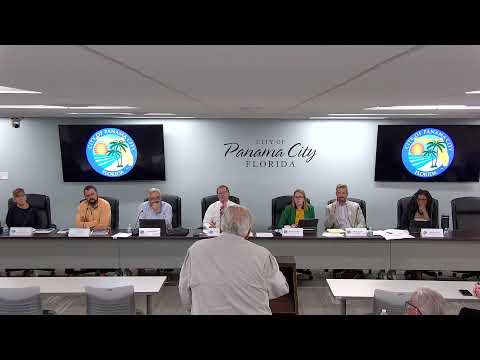
City of Panama City staff on a March workshop laid out a draft transportation impact-fee ordinance and heard more than two hours of comments from builders, brokers and business groups who said the proposed fees would raise housing and commercial development costs.
City of Panama City staff on a March workshop laid out a draft transportation impact-fee ordinance and heard more than two hours of comments from builders, brokers and business groups who said the proposed fees would raise housing and commercial development costs.
The draft ordinance, developed with consultant Kimley‑Horn, would exempt single‑family homes built on existing platted lots that are 2,400 square feet or smaller (measured as heated and cooled space), exempt accessory dwelling units up to 1,200 square feet, adopt the state’s statutory treatment of affordable housing (citing the State Housing Initiatives Partnership rules), allow credits for previously existing nonresidential uses and municipal/public projects, and reserve the city’s plan to begin collecting fees no sooner than Oct. 1, 2025. Staff also proposed a 36‑month reconstruction credit so property owners rebuilding on an existing lot within three years would retain a fee credit for the previously existing dwelling.
Why it matters: The city says transportation impact fees shift the cost of new capacity — lanes, turn pockets, signals, sidewalks and bike facilities — from the general fund and existing taxpayers to new development that generates additional traffic. Builders counter that the proposed fee levels are large relative to current home prices in Panama City and could make smaller, “missing‑middle” homes and neighborhood commercial projects uneconomic.
City manager Jonathan Hayes and city staff walked attendees through red‑line edits to a 24‑page draft prepared after a February 5 staff workshop and a Feb. 26 roundtable with local builders, the Bay County Chamber and contractors. Vincent Spar of Kimley‑Horn, the consultant that prepared the fee study, answered technical questions about trip generation and the study methodology.
Builders and developers said several provisions need clarification or change. Kurt (Kirk) Hartog of the Bay Building Industries Association pointed to language that still appeared to assess fees for change‑of‑occupancy work and asked staff to confirm that ordinary remodels and alterations would not trigger a fee. He also asked staff to revisit the 36‑month reconstruction rule for lots cleared long after Hurricane Michael that remain vacant.
Brian Knox of Coastal Classic Homes and other homebuilders urged expanding the small‑home exemption beyond existing platted lots, saying attainable homes under the threshold should be exempt whether on newly created lots or existing lots. Chase Gruber of Fisher Homes and other builders argued the fee levels in the draft produce a material percentage increase in a new home’s price and asked the city to consider a phased implementation or lower initial rates.
Commercial developers raised separate concerns. Jim Everett, a local commercial broker, said the draft’s fee for a gasoline/convenience store appeared to be economically prohibitive and asked staff to distinguish fueling positions (pumps) from convenience stores when calculating trip generation. Kimley‑Horn’s Spar said the trip‑generation calculations in the study already apply pass‑by adjustments (reductions) for uses such as convenience stores and gas stations — typically treating 25% or so of trips as new trips in the model — and the ordinance includes a data‑backed appeal path for developers to seek a reduction if a project‑specific study supports fewer new trips.
On credits and off‑site work, staff said the ordinance allows credits for capacity improvements that serve to increase roadway capacity — adding lanes, turn pockets, traffic signals, sidewalks and bike lanes — but distinguishes those from access or site‑level safety work. Vincent Spar and staff explained that driveway work and required on‑site turn lanes are typically considered access or safety improvements and are not automatically creditable as capacity improvements; however, developers may submit project‑specific documentation for staff and the planning board to review.
Several builders and contractors asked the city to delay sending the ordinance to the commission to allow more outreach, suggest a phased fee schedule (for example, charging a lower percentage in the first year and ramping up over several years), or to adopt broader exemptions for small, service‑oriented commercial uses the North Panama City area needs, such as clinics and day cares.
Developers also sought clarity about administrative items in the draft: who will administer the program (existing staff or additional hires), how refunds would be handled if fees were overcollected, and how credits attached to an existing lot would be tracked if parcels are split.
City staff responded to many process questions on the record: the draft ties the 2,400‑square‑foot single‑family exemption to heated/cooled area; accessory dwelling exemptions apply to units up to 1,200 square feet; development orders, zoning approvals or building permits issued before the ordinance’s effective date would be exempt; and staff intends to insert a formal effective date if and when the commission adopts the ordinance. Staff noted software and administrative workflows would be needed to track credits and that the ordinance contains an appeal mechanism to circuit court for planning‑board decisions.
No formal vote or ordinance adoption took place at the workshop; staff described the session as an opportunity for word‑smithing and public input before the commission considers the measure. Attendees representing the Bay Building Industries Association, Bay County Contractors and the Bay County Chamber said they will continue meeting with staff and commissioners and urged changes to the draft before any commission reading.
What’s next: City staff said they will circulate the updated red‑line draft to stakeholders and provide the ordinance to commissioners. Staff also raised the possibility of a phased approach to implementation and acknowledged the commission has the authority to adopt, delay or amend the schedule if it decides to do so.
Ending: The workshop closed after more than an hour of public comment and staff answers. No final policy decision was made; the next formal step will be a commission agenda placement for consideration of the ordinance, timing and any amendments.