Get Full Government Meeting Transcripts, Videos, & Alerts Forever!
Get email alerts on the Animal Shelter Operations topic
No spam. Unsubscribe anytime.
Salina animal services presents shelter data as board weighs no‑kill goal, disease, volunteers and funding
Summary
Salina animal services staff told the advisory board that 2024 cat illnesses and intake patterns left the shelter below the commonly used 90% “no‑kill” live‑outcome threshold, prompting staff to prioritize capacity, foster expansion and disease control while the city reviews the data.
Salina animal services staff told the Salina Animal Control Advisory Board on a packed public‑comment night that the shelter’s 2024 intake and outcome numbers — particularly for cats — kept the combined live‑outcome rate below the 90% threshold often used to describe a “no‑kill” shelter, and that the department will appear at a city study session to present updated statistics.
The presentation, made by shelter staff and reviewed at the board’s Feb. 24 meeting, explained that a spike in feline disease (panleukopenia) and several animals that arrived severely ill or injured raised the shelter’s euthanasia and “died in care” counts for 2024. “If an animal comes in and it immediately tests positive and we euthanized right away, that goes towards those numbers,” a shelter staff member said during the presentation. Shelter staff also pointed to limited foster capacity for neonatal kittens and to multi‑shelter kennel‑cough outbreaks that constrained transfers.
The result, staff said, is that the dog live‑outcome rate met or exceeded the commonly cited 90% threshold (reported at about 95% for 2024), but combined cat and dog outcomes fell short. That shortfall prompted staff to recommend focusing on capacity and operational changes — more fosters for kittens, targeted infection‑control measures, and a staff‑driven volunteer program — rather than an immediate policy reversal. Several public commenters urged the board and city to explore public‑private partnerships and models such as Prairie Paws to expand transfer and adoption networks.
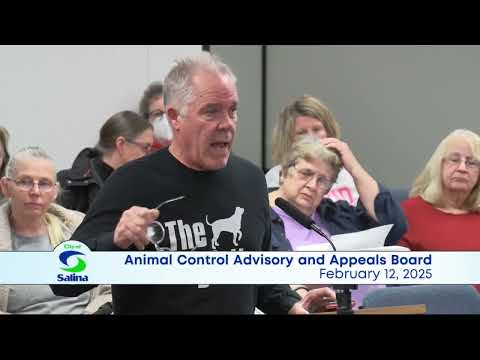
Public comment at the meeting was extensive. Dozens of residents described concerns ranging from data accuracy and recent disease outbreaks to shelter cleanliness and volunteer relations. “We had panleukopenia in the community and those cats that then are coming into the shelter,” a staff speaker said, answering a question about why euthanasia counts rose. Multiple longtime volunteers and former shelter staff recounted an erosion of trust between volunteers and shelter leadership after the dissolution of Friends of the Animal Shelter, saying that the loss of an organized volunteer force harmed adoptions, transport and routine care.
Breed‑specific policy and transfer capacity were also focal points. Several speakers said the city’s pit‑bull breed restriction (described in public comment as a city policy) contributes to a heavier shelter population of pit‑type dogs and to longer holds while staff seek transfers or rescues. Shelter staff reported 20 pit‑type dogs currently held for transfer across two kennel areas, and said transfers were sometimes delayed because partner organizations were contending with kennel cough or full transports.
The board also reviewed the shelter’s fiscal and donation reporting. Staff clarified that the slide deck showing 2024 revenue reflected donations received in that calendar year (roughly $163,000), and that a separate cumulative fund balance of about $600,000 (reported at the city commission meeting) is an accumulation of donations over time; speakers cautioned that part of that balance already is earmarked for park and facility projects. A staff member said restricted gifts (for a named purpose such as a memorial bench or veterinary surgery fund) are treated differently from unrestricted donations and that donors may specify restrictions when they give.
After hearing public comment and staff presentation, the board took three procedural votes: it approved the meeting agenda, approved minutes from the prior meeting, and passed a motion urging the city to issue a public statement addressing the loss of volunteer support and to outline how residents can donate or volunteer. The motion — read into the record by Scott (board member) and passed by voice vote with unanimous assent recorded — asked the city to acknowledge the volunteer departure, explain impacts, provide contact information for donations/volunteers, and promise a review of what went wrong.
Board members and staff said the city will present updated census and outcome slides at a February 24 city study session related to the shelter and the no‑kill discussion. Several residents urged the board to require more frequent publication of meeting packets and minutes online, to restore an accessible volunteer program, and to investigate staff turnover and cleaning protocols. Shelter leadership said they will pursue expanded foster recruitment, targeted infection‑control practices, and a staff‑led volunteer program to increase capacity and reduce length of stay for animals at risk of becoming untreatable.
The board closed by scheduling follow‑up items to coordinate with the city study session and to consider how public comment will be taken at future meetings.