Get Full Government Meeting Transcripts, Videos, & Alerts Forever!
Get email alerts on the Short Term Rentals topic
No spam. Unsubscribe anytime.
Council passes short-term rental cap after lengthy public comment; enforcement concerns persist
Summary
After extended public testimony from Park Circle and Mixon neighborhood residents, the council passed an ordinance capping short-term rental permits per district and setting a review timeline; speakers urged density limits and stronger enforcement mechanisms.
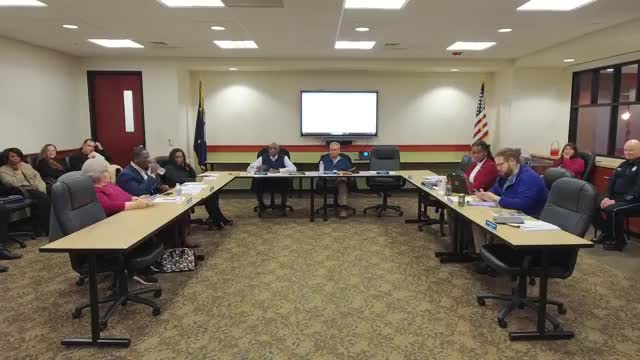
The North Charleston City Council passed an amendment to the city’s short-term rental ordinance on Feb. 20, 2025, after substantial public comment urging tighter limits and active enforcement.
Residents from Park Circle, Mixon and other neighborhoods delivered extended testimony asking the council to cap the number of short-term rentals (STRs), limit proximity and density of STRs, and strengthen enforcement. Speakers said clusters of rentals create noise, parking and safety concerns and urged the city to adopt rules that allow neighborhood participation in enforcement and permit revocation under the existing three-strike policy.
Multiple public commenters described close clustering of STRs in their neighborhoods: Trevor Edmond and residents Larry and Becky Lerch said about 35 STRs operate within the borders of their neighborhood, with “11 or 12” within a 300-foot radius in some places. Keegan Robbins and other speakers urged a 60-per-district cap as a starting point and asked for clarity on how the city will identify and enforce against unregistered STRs.
The council discussed enforcement needs and the capacity of code enforcement and public safety staff to identify unregistered operations. Members suggested revisiting the ordinance soon after implementation to measure compliance and the effect of the cap. A question was raised on whether a 60- or 90-day grace period could be applied for properties under contract; staff indicated that modifying ordinance language could require restarting the process.
Council moved, seconded and called for the question on the short-term rental ordinance. The motion passed by voice vote; the transcript records “Aye” in favor and “Any opposed? Motion passed.” The transcript does not include a roll-call tally.
What residents asked for
Speakers sought proximity limits (examples offered included one STR per 100-block or fixed-radius minimums), stronger and clearer reporting channels for neighbors, stricter enforcement including photographic evidence accepted by the city, and the ability to revoke permits when the three-strike threshold is met. One speaker said some STRs were operating at an incorrect tax rate (4% rather than 6%), raising revenue concerns.
Council direction and next steps
Councilmembers said they favored passing the ordinance and then monitoring its effects, with plans to revisit the cap after initial implementation. Staff and the council flagged enforcement resourcing as the key implementation issue; options discussed included involving code enforcement alongside public safety officers. The transcript shows no specific changes to the three-strike policy or new enforcement staffing numbers at the time of passage.
The ordinance as passed sets a district cap and moves forward to implementation; the council signaled an intention to track compliance and return with amendments if the cap proves insufficient or enforcement problems arise.