Get Full Government Meeting Transcripts, Videos, & Alerts Forever!
Get email alerts on the Housing Rehabilitation topic
No spam. Unsubscribe anytime.
Manhattan reviews proposed $100,000 home rehabilitation and repair program; no final vote
Summary
At a Feb. 11 work session, city staff and local nonprofits outlined a proposed home rehabilitation and repair assistance program that would dedicate $100,000 a year from the workforce housing sales tax to reimburse nonprofits for critical home repairs. Commissioners voiced general support but took no formal action to adopt the program.
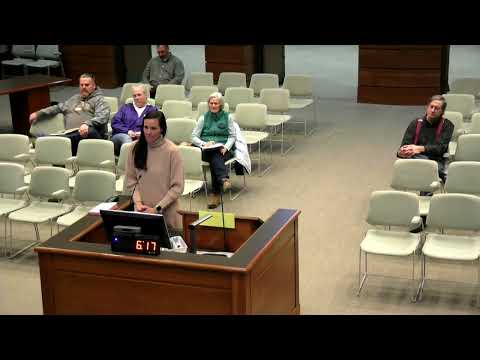
At a Manhattan City Commission work session on Tuesday, commissioners discussed a staff proposal to create a home rehabilitation and repair assistance program that would dedicate $100,000 a year from the city's workforce housing sales tax to reimburse nonprofit providers for critical repairs and limited rehabilitation work.
The proposal, presented by Stephanie Peterson, director of Community Development, calls for a reimbursement-based program in which certified 501(c)(3) nonprofits would apply under a notice of funding availability (NOFA). Peterson said staff would recommend awards and bring funding agreements back to the commission for approval. "This is really a skeleton of a program," Peterson said. "We would recommend that this is a reimbursement program."
Peterson told commissioners staff recommends reserving 10% of the annual allocation for emergency repairs—for example, furnace or water heater failures—and using the remaining 90% for other eligible repairs on a reimbursement basis. Under the draft program parameters discussed, eligibility would be limited to owner-occupied homes inside Manhattan city limits and households at or below 120% of area median income. Eligible applicants would be state-registered 501(c)(3) nonprofits that perform repair or rehabilitation as part of their mission.
Program details discussed included: a proposed $20,000 cap for comprehensive structural rehabilitation per structure (staff called for pairing such awards with a mortgage or similar instrument to allow partial recapture if the property is sold within a defined retention period); a $2,500 maximum for manufactured-home repairs (manufactured homes under 30 years old); allowance for ADA-accessibility improvements; and a suggested administrative payment of up to 15% for nonprofits to cover program administration. Peterson said the city would aim to issue the NOFA around March 1 and to return funding agreements to the commission once applications are reviewed.
Local nonprofits and residents who spoke during the public-comment portion urged design choices that favor administrative flexibility and program sustainability. Donna Shankamlin, speaking for Habitat for Humanity of the Northern Flint Hills, said the affiliate has preserved over 80 homes across its service area and recommended an RFQ-based selection after the NOFA and practical recapture thresholds. "Emergency repairs and accessibility modifications should be managed by the selected agency contractor in the same manner as other critical home repairs," Shankamlin said. Mel Borst, a resident and neighborhood advocate, said the program would stabilize older neighborhoods and offered his support.
Commissioners asked about scale and timing. Peterson said the $100,000 figure was chosen because it exceeded what the city previously routed through the Community Development Block Grant (CDBG) program and noted the workforce housing sales tax currently generates roughly $800,000 annually. Commissioners discussed the possibility of increasing the allocation later in the year if demand is high; several said they were comfortable starting at $100,000 and reviewing the program in October.
Peterson and others explained the proposed recapture/retention approach would differ from past CDBG practice: staff suggested a five-year retention period for prorated recapture if a property receiving more than a threshold amount is sold before the retention period ends; by contrast, Peterson said CDBG retention periods the city used previously had sometimes been 10 years.
No formal adoption or ordinance vote to establish the program occurred at the meeting. Commissioners passed a procedural motion earlier in the session to allow public comment on the agenda item and later moved to adjourn; neither vote constituted final approval of the housing program. Staff said the NOFA and funding agreements would return to the commission for action in a subsequent meeting.
Clarifying details from the discussion include the proposed annual allocation ($100,000), a recommended 10% emergency reserve (approximately $10,000), the remaining $90,000 to be awarded on reimbursement terms, a $2,500 cap for manufactured-home repairs, a suggested $20,000 cap per structure for comprehensive rehabilitation, a recommended five-year retention/recapture period (CDBG practice had used 10 years in the past), an administrative allowance up to 15% for nonprofits, and an anticipated NOFA release around March 1. Peterson said the workforce housing sales tax produces about $800,000 annually.
Staff requested direction on program details and said they would notify known providers, including Habitat for Humanity of the Northern Flint Hills and Shepherd's Crossing, and would accept applications from any qualified nonprofit. Commissioners asked staff to track matching funds used in projects and to report back as applications are awarded so the commission can consider increasing funding during the 2026 budget discussions.
Next steps: staff will prepare and issue the NOFA, review applications, return recommendations and funding agreements to the commission for approval, and provide an annual report on awards, units served, administrative costs and any mortgage/recapture activity.