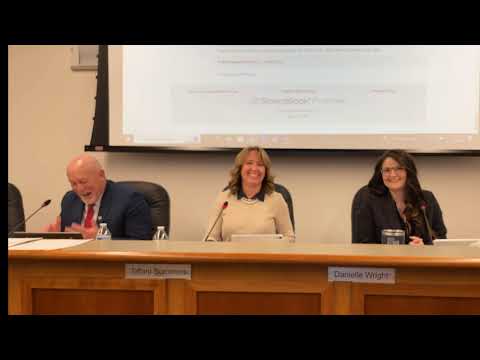
Box Elder board approves Utah State concurrent course to pilot CAPS educator pathway
Loading...
Summary
The Box Elder School District board approved a Utah State concurrent-enrollment course, USU ITLS 2,500, to pilot an aspiring-educators pathway through a Cache County-led CAPS consortium. The program will initially accept mainly seniors and offer paraprofessional exam access and dual-credit opportunities.
The Box Elder School District Board of Education on Tuesday approved a Utah State concurrent-enrollment course, USU ITLS 2,500 (Technology-Enabled Instruction), intended as the capstone for a pilot ASPIRING-EDUCATOR pathway within a regional CAPS (Centers for Advanced Professional Studies) consortium.
The approval will allow district seniors to enroll in the ITLS 2,500 course as part of a two-district consortium that will house the pilot program at Bridgerland Campus. District presenter Ben Wiley said the course and CAPS model are “not a sit-and-get curriculum” and described the CAPS environment as lab and business space where students work directly with industry mentors.
The nut graf: district leaders said the ITLS 2,500 approval is the first concrete step in building a career-pathway that could let students earn paraprofessional credentials, carry credit into 3000-level university classes, and move more quickly into education careers. Cache County has already reserved Bridgerland Campus space and is funding a director for the consortium, district staff said.
District staff described how the pilot will operate. Local high schools will deliver preparatory concentrator courses; the capstone (ITLS 2,500) will be taught for the consortium and carry concurrent-enrollment credit if an agreement with Utah State is finalized. Wiley told the board that after completing the capstone students can take the paraprofessional exam and be employable as paraprofessionals within Box Elder, Cache, Logan or elsewhere in the state. He added that the plan could allow “seniors graduating and then we could be hiring full fledged teachers in under three years” if students continue through university coursework built on that capstone.
Board members asked about logistics and capacity. District staff said the pilot will prioritize seniors for the educator track, may accept juniors into some business/marketing seats, and that Bridgerland Campus and local business partnerships will reduce travel and facility needs for most of the work. The board was told that some courses and capstone numbering are still under negotiation with Utah State, and a formal concurrent-enrollment agreement may return to the board for approval.
The board voted to approve the course. Board members and staff encouraged board members to visit operating CAPS sites; Wiley said he and partners have arranged tours of Wasatch CAPS and other regional sites for trustees.
Ending: District staff said they will return if concurrent-enrollment or capstone numbers need formal board approval or when additional CAP programs are ready to be added to the consortium.