Get Full Government Meeting Transcripts, Videos, & Alerts Forever!
Get email alerts on the Beach Restoration topic
No spam. Unsubscribe anytime.
County official: dredging will supply far more sand than expected; Daytona Beach Shores likely to be replenished
Summary
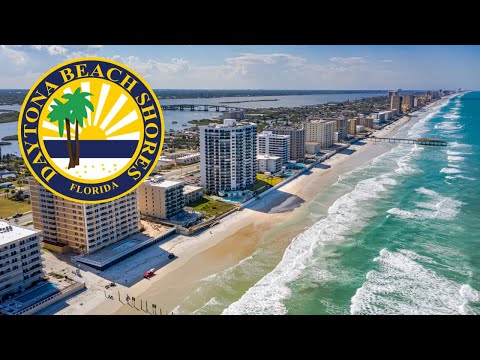
Volusia County District 2 representative Matt Reinhart told the Daytona Beach Shores commission on March 4 that dredging work, including material from shoals, could produce as much as 2.2 million cubic yards of beach‑compatible sand, enough to rebuild much of the city's shoreline and possibly reach Ormond Beach.
Matt Reinhart, Volusia County District 2 representative, told the Daytona Beach Shores City Commission on March 4 that recent Corps dredging and adjacent shoal work will produce substantially more beach‑compatible sand than first estimated, and that the material should allow shore restoration through much of Daytona Beach Shores.
Reinhart said the Army Corps of Engineers and the Florida Inland Navigation District initially expected about 770,000 cubic yards of sand from the inlet; that amount has risen to just over 900,000 cubic yards. He said additional dredging of shoals alongside the channel — using the same contractor and equipment — is expected to generate another 1.7 million to 2.2 million cubic yards, which would “definitely far exceed the Sunglow Pier area” and could allow work to extend north toward Ormond Beach.
The county representative said Halifax Paving won the contract because its bid met the city and county needs; the contractor will pump sand offshore to shore, allow it to settle, then truck and redistribute material to build berms and vulnerable shoreline segments. Reinhart said piping is being installed and traffic deviations are being posted in Ponce Inlet to support the operation.
Why it matters: shoreline restoration affects storm resilience, public beach access and local tourism that supports small businesses. Daytona Beach Shores officials have been coordinating with county and federal agencies to prioritize vulnerable areas and to comply with permitting.
Reinhart told commissioners that some walkovers and ramps will require permit modifications from FEMA and the Florida Department of Environmental Protection because federal building requirements assume existing sand levels. He said those agency reviews can delay replacement of dune walkovers because permittees must match federal step counts and other specifications.
Reinhart said the county will also buy native dune vegetation with remaining grant funds to stabilize rebuilt dunes. He noted an earlier Noah grant application to grow beach plants in an inmate farm was not funded; instead, the county will purchase plants directly and include planting as part of the restoration work.
He also described related projects: a Lighthouse Point Park redesign that will include a public kayak launch and a separate New Smyrna Beach dredging of Rattlesnake Island that is expected to supply about 550,000 to 600,000 cubic yards for restoration south of Daytona Beach Shores.
The commission asked whether dunes and vegetation were part of the plan; Reinhart confirmed they are. He described the sequencing: dredging and pumping, then trucking and berm construction, with follow‑up planting work funded by grant proceeds. No formal action was requested of the commission at the March 4 meeting.
Reinhart: “We are also we had enough money left over that we are going to, use the same dredging equipment, the same company, and we're going to be able to, dredge the shoals ... which will produce, we're gonna say safe to 1,700,000 more cubic yards. However, now they're saying it may be closer to 2,200,000 cubic yards.”
The city will continue to coordinate permitting and staging with the county, the Corps, FEMA and FDEP as the work proceeds.