Get Full Government Meeting Transcripts, Videos, & Alerts Forever!
Get email alerts on the Workplace Training Policy topic
No spam. Unsubscribe anytime.
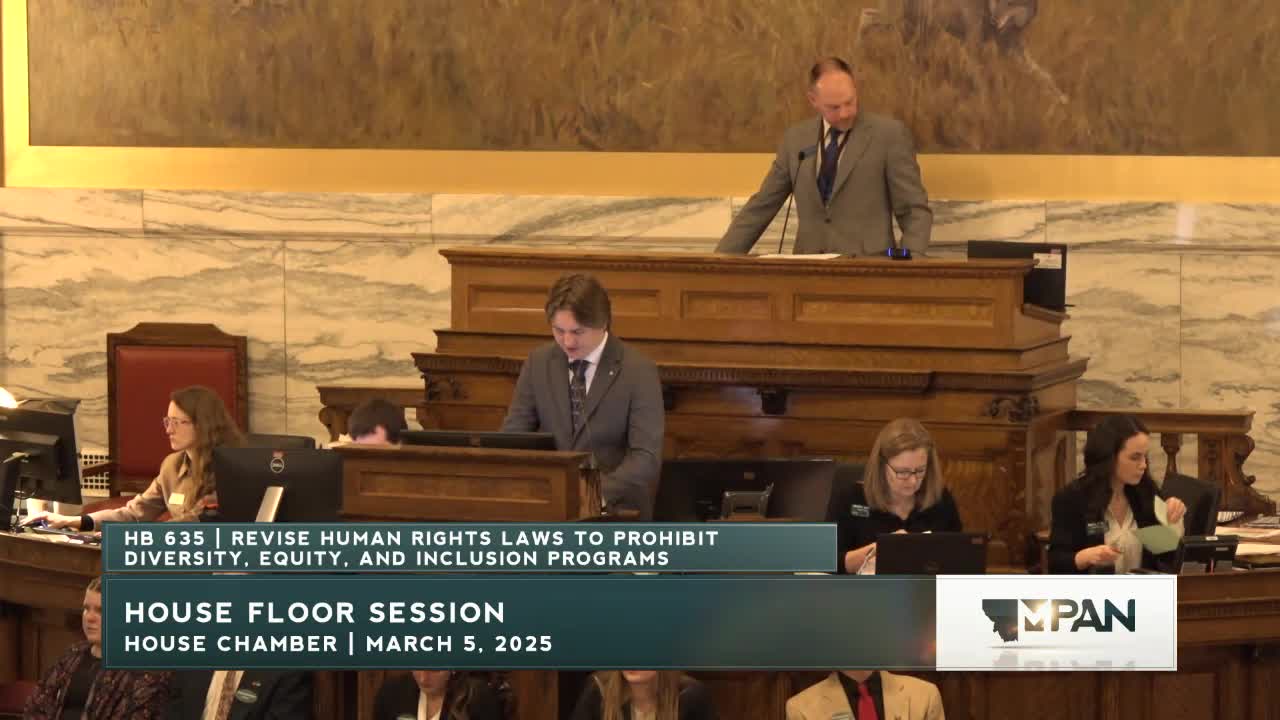
House advances bill limiting government‑run diversity, equity and inclusion programs amid heated debate
Summary
House Bill 635 would restrict state and local government agencies from funding or requiring participation in certain diversity, equity and inclusion (DEI) training and would prohibit some "divisive concepts" in government training; the bill passed second reading after extensive debate.
Representative G. Nicola Caucus introduced House Bill 635 (referred to in the transcript as House Bill 6 35), a wide‑ranging proposal to limit state and local government DEI programs and training. The sponsor framed the bill as protecting individual rights and taxpayer funds and sought to restrict government‑sponsored training containing what the bill calls “divisive concepts.”
Key sponsor remarks and scope Representative Nicola Caucus argued that DEI programs had become politicized and that some government training “singled out and blamed individuals based on their race and gender in a highly offensive way.” He said the bill would ban state agencies from requiring employees to participate in DEI programs, spending public funds on DEI programming, or requiring diversity statements in hiring. The sponsor said Exemptions would preserve training on harassment and programs that comply with existing education statutes and tribal sovereignty.
Floor debate Opponents, including Representative Staffman and other members, expressed concern that the bill’s ban on training containing “divisive concepts” is broadly worded and could chill routine discussion or civic debate. Representative Staffman called the proposed ban a form of censorship that could bar discussion of contentious but relevant public‑policy issues. Supporters argued the bill defends merit and freedom and prevents taxpayer‑funded indoctrination.
Vote and outcome The bill passed second reading on a recorded roll call, 52 yes to 47 no, according to the clerk’s tally as read into the record in the transcript.
Action - Motion to recommend do pass (mover: Representative G. Nicola Caucus). Final second‑reading recorded vote: 52 yes, 47 no. Outcome: passed second reading.