Get Full Government Meeting Transcripts, Videos, & Alerts Forever!
Get email alerts on the Healthcare Liability Insurance topic
No spam. Unsubscribe anytime.
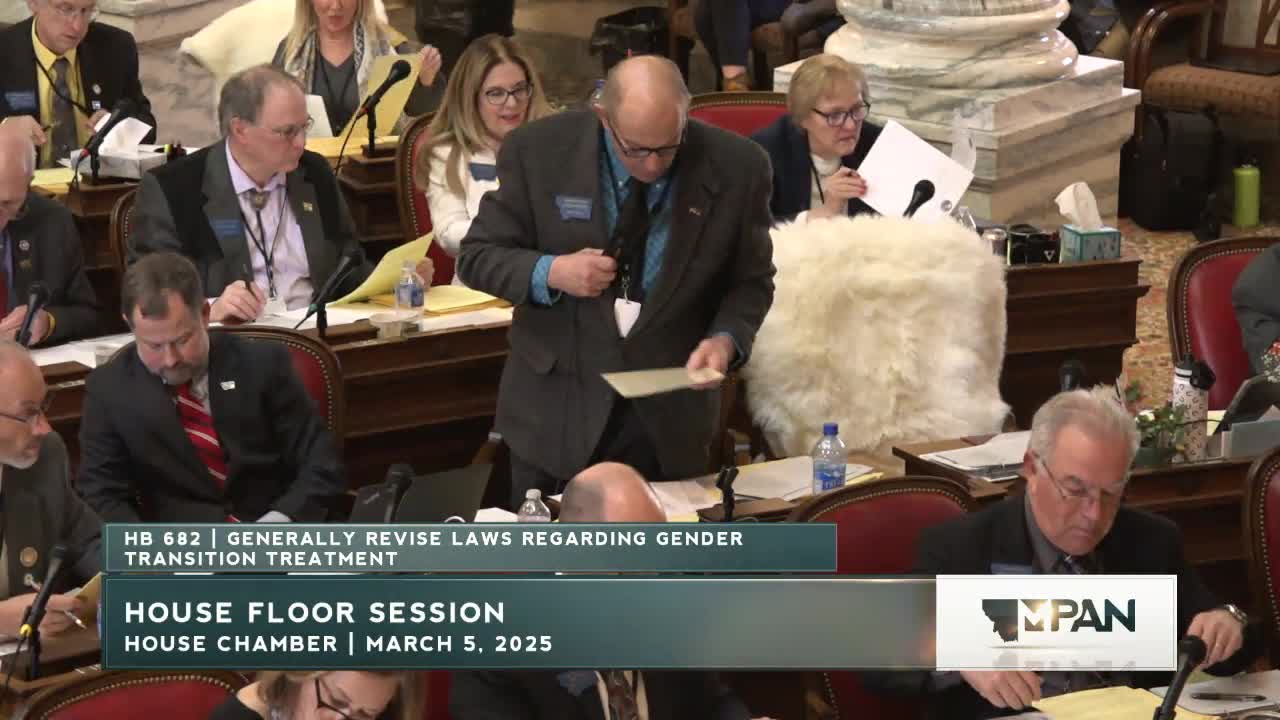
House passes bill on detransition care and extended malpractice window for minors after amendment
Summary
House Bill 682 advanced on second reading after an amendment narrowed the bill’s original statute‑of‑limitations language and removed a retroactive applicability provision. Sponsors and opponents sparred over liability, provider availability and coverage for detransition care.
House Bill 682, introduced by Representative Jacob Kametz (Representative Kametz), advanced on second reading after the House adopted an amendment that substantially revised the original bill’s statute‑of‑limitations language.
The bill, as presented by Representative Kametz, proposed allowing a longer statute of limitations and requiring that certain detransition care be covered by private insurance plans and public programs including Medicaid and the Healthy Montana Kids program. Kametz said the bill would provide “compassion and real help for those who are harmed by attempting to change their gender as a minor” and that detransitioners “deserve protection and empowerment to help undo some of the damage” (Representative Jacob Kametz). He stated the proposal would not affect treatment of consenting adults.
Representative Thane offered an amendment (HB0682.002) that reduced the statute‑of‑limitations period the bill would create from 25 years to 4 years and removed the bill’s retroactive applicability and two‑year look‑back language. Representative Thane described the amendment as bringing the bill “closer to parity between providers” and said she hoped it would alleviate provider‑availability concerns. The amendment passed on the floor by roll call, 55 yes to 41 no.
Opponents raised concerns about the extension of liability and the impact on provider malpractice insurance. Representative Thane argued the original 25‑year period was far from the usual standard for health‑care malpractice statutes and could make liability insurance unobtainable for providers. Representative Zephyr and others said they continued to have concerns about strict liability and differential treatment for procedures depending on the patient’s gender identity. Representative Zephyr urged a no vote even after the amendment, citing the bill’s potential chilling effect on providers and concerns about distinguishing similar medical treatments by the identity of the recipient.
After debate and the successful adoption of the amendment, the House recorded a second‑reading vote on the bill. The clerk recorded 57 representatives voting aye and 41 voting no; the transcript states that House Bill 682 "has passed second reading." Representative Kametz closed by urging a yes vote and stating that following evidence‑based practice will protect providers.
Action and amendment - Amendment HB0682.002 (sponsor: Representative Thane): changed the statute of limitations from 25 years to 4 years and removed retroactive applicability (passed, 55–41, roll call recorded). - Final second‑reading motion (sponsor: Representative Kametz): House Bill 682 passed second reading (recorded tally 57 yes, 41 no).