Get Full Government Meeting Transcripts, Videos, & Alerts Forever!
Get email alerts on the Ammunition Regulation topic
No spam. Unsubscribe anytime.
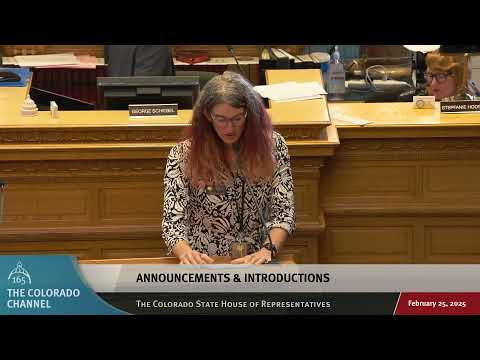
House adopts new rules on retail sale and delivery of ammunition after hours-long floor fight
Summary
The Colorado House passed House Bill 11-33, establishing new requirements for retail sale and delivery of ammunition, after intense debate over age limits, rural impacts and constitutional challenges. An amendment creating technical fixes was adopted; an attempt to send the bill back to committee failed.
The Colorado House on Tuesday approved House Bill 11-33, a bill that sets new requirements for the retail sale and delivery of ammunition and restricts some ammunition sales to people under 21, after more than two hours of debate and an adopted technical amendment.
Supporters of the bill said it adds safety and accountability to ammunition sales and delivery. Opponents argued the measure is unconstitutional, will harm small gun shops and rural residents, and said it will be the subject of immediate legal challenges. The House adopted a technical third‑reading amendment (L047) and rejected a motion to refer the bill back to the Business Affairs and Labor Committee before voting to pass the bill on final reading.
House Bill 11-33, introduced by Representatives Duran and Gilchrist, covers requirements for retail sale of ammunition and establishes rules for delivery of ammunition sold at retail. The bill as debated on the floor includes an exception for people under 21 who are named as protected persons in a protection order; that exception was a product of an earlier bipartisan amendment referenced on the floor.
Representative Caleb Armagost (Representative Armagost) argued the bill would “not protect anyone except for Wyoming's businesses and Wyoming's revenue,” saying Coloradans could simply shop across state lines. Several other opponents said the measure would push small, family‑run gun stores out of business and would impose compliance costs that many shops could not meet. Representative Lindsey Caldwell (Representative Caldwell) pointed to recent federal litigation, telling colleagues that “on January thirtieth of 2025 ... there was a federal court ruling on this exact issue,” and warned the state would face lawsuits over the bill.
Supporters pushed back that the bill contains safety and accountability provisions and that the protections for domestic‑violence victims in the adopted amendment acknowledge the need for targeted exceptions. Representative Brooks (Representative Brooks) highlighted that the bipartisan carve‑out for people under protection orders recognizes “the need to defend oneself” and asked whether the same logic should extend to other law‑abiding young adults.
Key floor actions recorded in the transcript: - A third‑reading technical amendment, L047, was adopted by the House (recorded on the machine as “With 60 I, 1 no, and 4 excused, the amendment is adopted”). The sponsor described the amendment as renumbering and technical corrections. - A motion under House rules (to refer House Bill 11-33 as amended back to the Business Affairs and Labor Committee) failed on a recorded vote of “With 22 I, 39 no, and 4 excused, the motion is lost.” - On final passage the House recorded, “With 38 I, 27 no, and 0 excused, House Bill 11 33 is adopted.”
Several lawmakers warned of predictable litigation: multiple speakers cited recent federal court rulings and said they expected legal challenges that could force the state to defend the statute in court. Other speakers emphasized rural safety, hunting and agricultural uses, arguing that limiting ammunition sales to people ages 18–20 would impair everyday activities on ranches and farms.
The bill’s supporters said it includes targeted exemptions and technical fixes designed to address implementation concerns raised in committee and on the floor. Opponents and some small‑business advocates said the bill would impose new shipping and delivery verification duties that carriers and small vendors are not currently equipped to meet.
The bill now moves to the Senate. The transcript records no immediate follow‑up direction from the House about implementation steps or a request for an official fiscal note update; several speakers urged the Judiciary and Business Affairs committees to monitor implementation and potential legal exposure.
Votes, amendments and motions cited in this article are taken verbatim from the House floor transcript excerpt.