Get Full Government Meeting Transcripts, Videos, & Alerts Forever!
Get email alerts on the Education Budget topic
No spam. Unsubscribe anytime.
Education committee reports early biennial budget priorities to Appropriations, highlights homeless-student funding and teacher pay
Summary
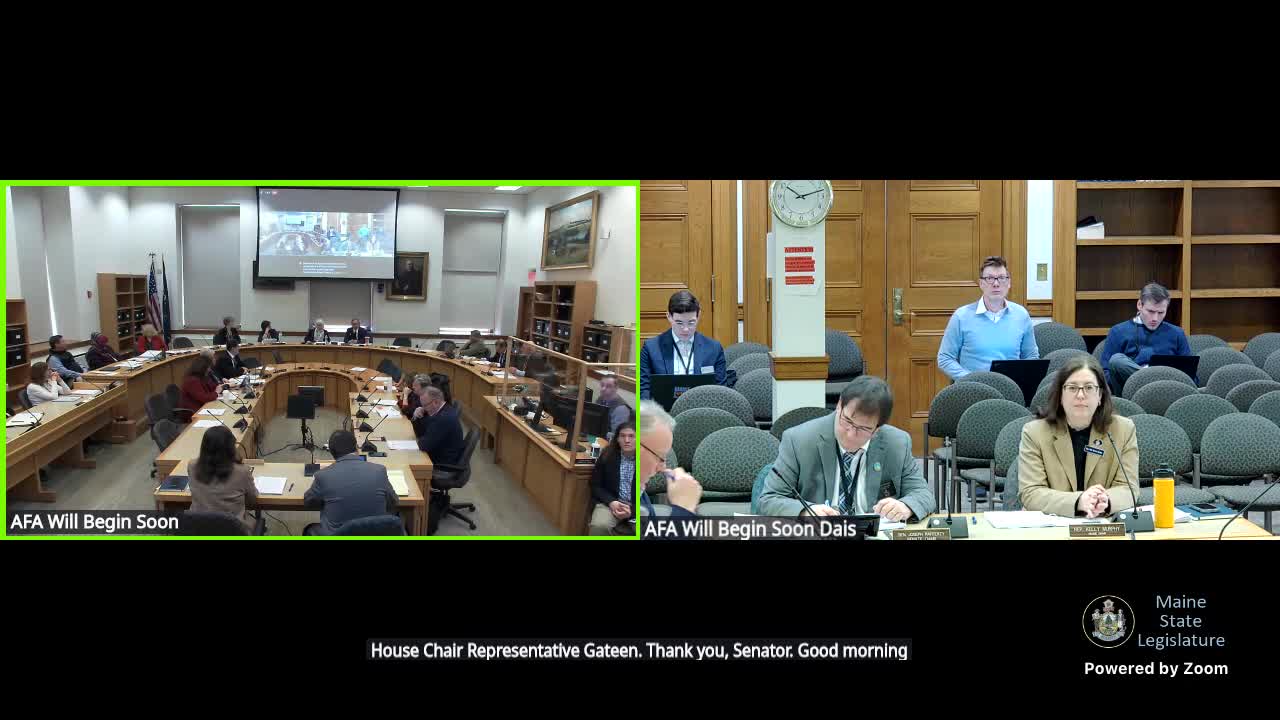
Members of the Maine Legislature’s Education Committee on Wednesday gave an in-person report to the Appropriations Committee on early work on the state’s biennial education budget, saying they have heard roughly 15 of an expected 187 bills and have identified several early priorities.
Members of the Maine Legislature’s Education Committee on Wednesday gave an in-person report to the Appropriations Committee on early work on the state’s biennial education budget, saying they have heard roughly 15 of an expected 187 bills and have identified several early priorities.
The Education Committee’s House chair, Representative Drew Gatine, and Senate members told Appropriations that the committee supports continuing the state’s main education grant program as configured and has prioritized funding for homeless students, community schools, preschool supports and a teacher minimum salary proposal.
Senator Peggy Rotundo, Senate chair of the Appropriations Committee, opened the joint session and invited Education Committee leaders to summarize their review of the biennial budget work. "Please understand that for us, it's early in the process," said Senator Joe Rafferty, who represented the Education Committee in the briefing. "We are looking at somewhere in the neighborhood of about 200 bills, that we'll hear." Rafferty said the committee has already circulated written testimony that outlines areas of agreement and areas where caucuses have different priorities.
Rafferty said both caucuses supported continuing the state’s main education grant program "so that it stays as is and does not exclude the private schools," a change that had been in an initial proposal. He also said the committee voted to reinsert funding for services for students experiencing homelessness under the McKinney‑Vento program, describing that reinstated request as a $1,500,000 ask.
Representative Kelly Noonan Murphy said the committee expects recurring priorities to return this session. "The $50,000 minimum teacher salary is going to be a priority for us again," Murphy said. She also noted the committee was pleased to see funding for special‑purpose preschools included in the budget proposals.
On community schools, Rafferty said the budget initially included $250,000; the Education Committee caucus added an additional $250,000 to that line in its proposal. Committee members also raised school construction and capital needs as an ongoing concern: Rafferty noted the average age of Maine public school buildings is about 56 years, and that since February 2018 the state has built roughly five or six schools, leaving many districts with long lists of needs.
Representative Gatine said the committee expected a long schedule of public hearings and formal testimony as it proceeds. "We've got a lot to do," he said, noting the committee had already taken three meetings to work through its portion of the biennial budget and would continue to refine priorities.
No formal votes on budget bills were taken at the joint briefing; committee leaders described the session as an early report and preview of topics that will receive fuller hearings over the coming weeks.
The Education Committee listed further technical and policy matters it expects to address, including continued support for statewide emergency broadcasting (LD 692, as referenced in committee remarks), funding for career and technical education programs, and additional detail to come as more bills are scheduled for hearing.
Committee leaders said they will provide a more detailed set of priorities later in the session once more testimony has been heard and bills are fully drafted.