Get Full Government Meeting Transcripts, Videos, & Alerts Forever!
Get email alerts on the Utility Finance Generation topic
No spam. Unsubscribe anytime.
Senate debate over 'Generating Arkansas Jobs Act' exposes trade-offs on utility cost recovery; bill fails
Summary
Senate Bill 307, the Generating Arkansas Jobs Act of 2025, failed after extended floor debate that split senators over whether to permit utilities to recover construction costs during project build‑out under expanded PSC oversight.
Senate Bill 307, the Generating Arkansas Jobs Act of 2025, failed after extended debate in the Arkansas State Senate that highlighted competing priorities: new electric generation to meet projected shortfalls and safeguards against higher utility bills for ratepayers.
The bill, presented on the floor by Senator Dismang, would have authorized regulated utilities to recover construction costs incrementally during a project’s build phase through a strategic‑investment rider approved by the Arkansas Public Service Commission (PSC), with regular 12‑month reviews and a one‑year post‑completion audit.
Supporters said the measure would let Arkansas attract energy‑intensive employers and avoid paying premium prices for imported power. “We are doing what we can to attract job creators,” Senator Dismang said while laying out the bill’s mechanics and oversight timeline. He told colleagues that roughly "3.2 gigawatts of power" are set to come offline and that the bill would create a third financing option to reduce carrying costs that otherwise would be capitalized and passed to ratepayers after completion.
Opponents pressed on consumer risk, oversight and the distribution of costs. Senators warned the bill could shift the financial consequences of failed or imprudent projects to utility customers. "If it is not prudently done, then that would be the problem of the utility," Senator Hammer asked; Senator Dismang responded that prudence determinations and refunds are within PSC authority but acknowledged open questions about co‑ops and how reserves or shareholders would be treated.
Key provisions explained on the floor included: - PSC review and approval of a strategic investment application within six months and approval of rider rates within 60 days (with one 30‑day extension possible); - 12‑month construction‑period reviews (look‑back/look‑forward) and a one‑year audit after capitalization; - a cap on utility equity contributions at 50% for projects considered under the rider; - an option for cooperatives to avoid automatic cost‑of‑service studies unless 10% of members petition; and - an explicit exclusion of wind generation from rider projects (the bill allows renewables in certain circumstances but sets a high bar for showing consumer benefit).
Lawmakers asked multiple technical questions: how the PSC would determine prudence, whether ratepayers would be refunded if projects failed, and how the bill would treat site‑specific projects built for single industrial customers. Senator Dismang said the PSC would decide whether incurred costs were prudently incurred and that if a project were found imprudent the utility could not recover those costs; he acknowledged uncertainty in how co‑op reserves or shareholders would be affected and said those details would play out under PSC processes.
Several senators urged more time to study alternatives and to refine consumer protections, citing the bill’s potentially large financial scope. Senator Hickey characterized the measure as possibly the largest monetary bill many members would see and urged additional safeguards; Senator Hester argued that costs will rise regardless and that smoothing costs during construction could reduce long‑term rates for consumers. Senator McKee said the bill increases scrutiny compared with current processes and emphasized the economic stakes in ensuring reliable, in‑state generation.
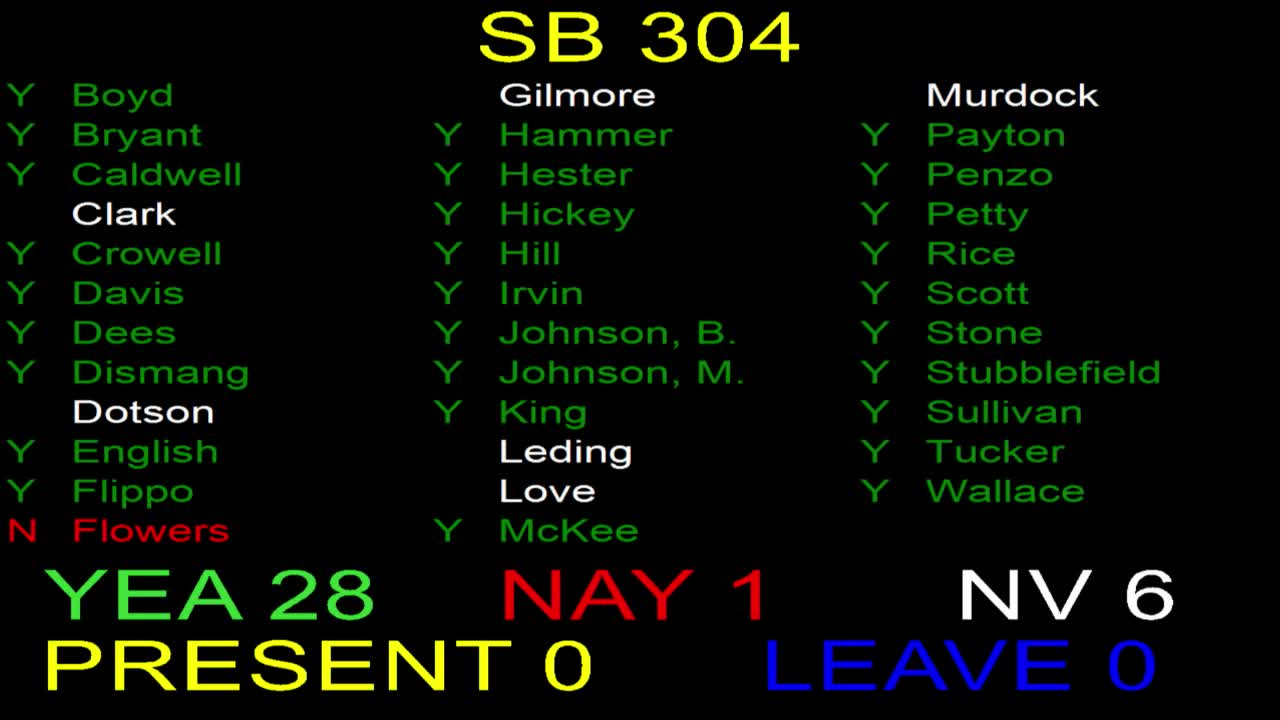
After debate and a roll call, the Senate recorded the result that left the bill without the votes required for passage. Later on the floor Senator Dismang moved to expunge the record of the failing vote; the motion to expunge carried, but the transcript shows the original bill did not advance on this day.
Discussion vs. decision: the record shows sustained floor discussion, multiple committee and stakeholder consultations referenced by members, and a formal roll‑call vote that resulted in the bill failing to advance. The transcript includes exchanges about procedural safeguards the PSC could exercise but does not record explicit legislative amendments that would have resolved the central concerns.
The debate underscored a central trade‑off: faster, in‑state generation financed incrementally to reduce capitalized carrying costs versus protecting ratepayers from the financial consequences of project delays, cancellations or imprudent spending. Several senators urged additional study of alternative financing approaches and more explicit consumer protections before reconsidering the concept.
No further formal action on SB 307 was recorded in the transcript; the Senate moved on to other calendar items.