Get Full Government Meeting Transcripts, Videos, & Alerts Forever!
Get email alerts on the Vape Ban Disposables topic
No spam. Unsubscribe anytime.
Committee hears bill to ban single‑use disposable vapes amid safety and market‑fairness debate
Summary
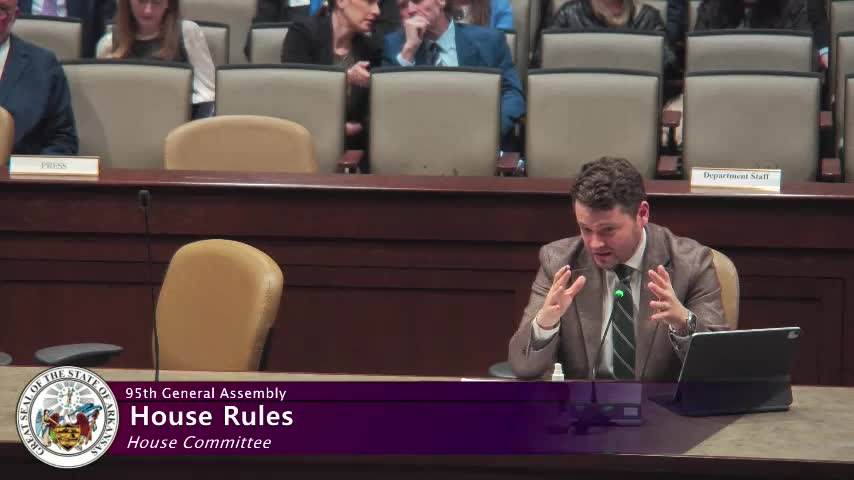
Representative Matt Duffield introduced House Bill 16‑26 to ban single‑use disposable vaping devices, citing test results and school reports that show disposables are the primary products confiscated from students.
Representative Matt Duffield (District 53) presented House Bill 16‑26, a proposal to ban single‑use disposable vaping products. The sponsor and a small‑business vape‑shop owner, Scout Stubbs, told the committee that many disposable vapes are manufactured abroad, carry deceptive labeling and in some tests contained heavy metals and solvents.
Stubbs, who identified herself as a small business owner and vape‑liquid manufacturer, said disposable vapes arrived on the U.S. market about three years ago and are overwhelmingly manufactured in China. She told the committee she had laboratory test results for a sample of products that showed nicotine levels discrepant with labeling and the presence of lead in at least one sample; in a broader set of samples Stubbs said several contained elevated ethanol and some showed lead or arsenic. She said that local school districts report disposables account for “100% of the vapor products they confiscate from students.”
Why it matters: The bill aims to remove small, flavored, single‑use devices that supporters say are most attractive to youth and are often sold without accurate ingredient labeling. Stubbs argued the bill is a narrow, targeted remedy that would reduce children’s access while leaving American refillable/open systems available.
Committee debate hit three recurring themes: enforcement effectiveness, market disruption and alternatives. Representative Wardlaw and others warned that manufacturers and distributors can modify product form factors (for example, produce rechargeable or multi‑use devices) to evade a single‑use ban. Representative McKenzie and Representative McClinton expressed concern that a ban on disposables could disadvantage U.S. businesses and restrict consumer choice; they suggested alternatives such as ingredient‑disclosure registries.
Duffield and Stubbs replied that most problematic products are Chinese‑made disposables, are often mis‑labeled and that a targeted ban is a practical enforcement approach. Duffield said the bill provides a 90‑day sell‑through period and directs the Alcohol and Tobacco Commission (ATC) to remove banned products from shelves. He said many independent vape shops prefer not to sell disposables but feel forced to do so for competitive reasons.
Authorities and precedent cited during testimony included FDA regulation of vapor products (noted as beginning in 2016), the 2020 federal ban on flavored prefilled pods, and guidance from the CDC on youth vaping prevalence. Representative Wardlaw also noted that the United Kingdom planned a single‑use ban effective 2025‑06‑01.
Action: The sponsor closed by arguing the bill is a simple and enforceable approach to the disposable‑vape problem and urged a favorable vote. The committee responded with a voice vote; the transcript records vocal “aye” responses after the sponsor’s closing remarks. The hearing record shows ayes were called; an exact roll call or numeric tally was not recorded in the transcript.
Outlook: The bill drew bipartisan support in the committee and pushback on market and regulatory alternatives. Sponsors said they will press forward; opponents recommended registries or ingredient‑disclosure approaches to avoid unintended negative impacts on U.S. producers and consumer choice.