Get Full Government Meeting Transcripts, Videos, & Alerts Forever!
Get email alerts on the Petition Title Reading topic
No spam. Unsubscribe anytime.
Panel advances bill requiring signers be offered or read ballot title before signing; critics call it a barrier to grassroots petitions
Summary
Lawmakers passed a measure that would require petition signers to read (or be read) the official ballot title before signing. Supporters called it a protection against misleading canvassers; opponents said long ballot titles and field conditions will make compliance infeasible and deter volunteers.
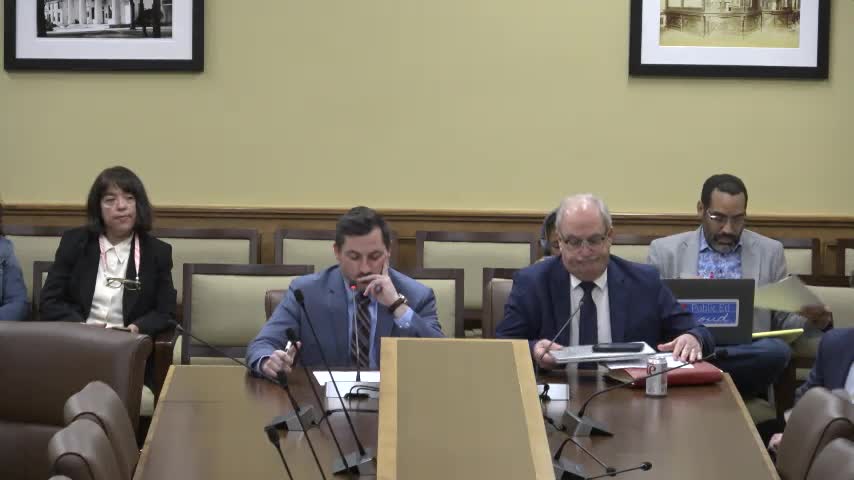
Little Rock — The House Committee on State Agencies & Governmental Affairs advanced a bill that would require petition signers to read the official ballot title before signing or, if they cannot, to have it read aloud in the presence of the canvasser.
Representative Ken Underwood, explaining the bill on the floor, said the measure “requires that the canvassers not accept potential signer signatures until the signer has read the ballot title.” He said the change aims to reduce instances in which signers later claim they were misled about an initiative’s purpose.
Supporters said the requirement protects signers and the integrity of the initiative process. “This will place the burden on those who are going to sign the petition to be responsible to know what they are signing,” Representative Underwood said.
But opponents — including multiple volunteers who have collected signatures over recent cycles — said the requirement will be impractical and will discourage volunteer participation. Volunteer coordinator Julia Taylor said she saw mistakes but “I did not see fraud,” and worried that honest volunteers could face criminal exposure for inadvertent errors. Joey McCutcheon, a Fort Smith resident who testified, described the measure as “a roadblock,” arguing that reading long ballot titles in noisy, public locations will deter signers.
Committee members pressed the sponsor and secretary of state staff about enforcement and about how the rule would operate when ballot titles are long. Representative Collins noted one attorney general‑approved ballot title of 462 words and asked whether reading long titles would deter signers; backers responded that petition sponsors control the title wording and should draft concise titles and that the bill requires only a “good faith effort” to ensure a signer has read the title or had it read in their presence.
Questions about the standard of proof and consequences also emerged. Several legislators asked whether a single, inadvertent omission by a canvasser (for example, skipping a word while reading) could invalidate all signatures collected by that canvasser. Secretary of state witnesses said minor clerical errors historically have not resulted in wholesale invalidation, but a proven pattern of intentional misrepresentation could lead to more severe consequences.
Numerous members of the public urged the committee to vote no. “This will only make it more difficult to collect the required number of signatures, almost impossible in many instances,” Abigail Rector testified. Others urged a more narrowly tailored fix — for example a process to allow signers who regret a signature to request removal — rather than a universal reading requirement.
The committee voted to advance the bill. Sponsors said the measure is intended to make field practice more transparent and to shield both signers and canvassers from post‑filing disputes.
Votes at a glance: committee motion to pass Senate Bill 210; outcome: approved by the committee (roll call recorded in the transcript).