Get Full Government Meeting Transcripts, Videos, & Alerts Forever!
Get email alerts on the Forestry Regulation topic
No spam. Unsubscribe anytime.
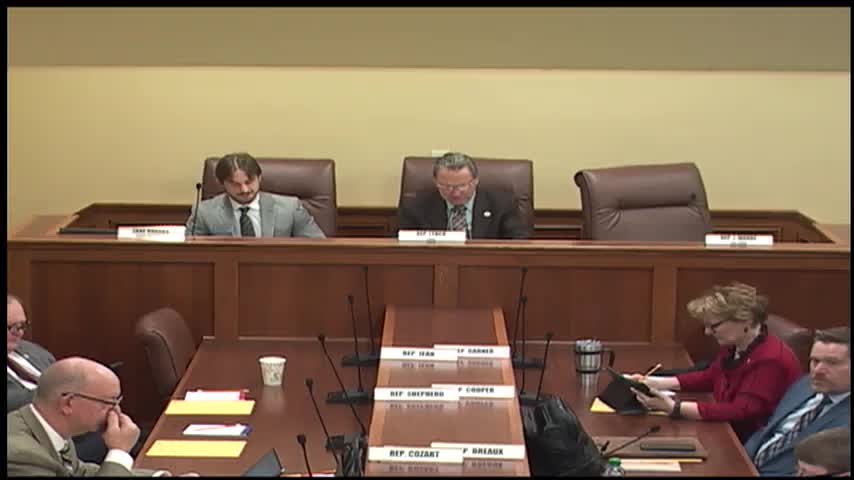
Committee approves bill allowing Arkansas Forestry Commission to use civil penalties before misdemeanor proceedings
Summary
SB249 would give the Arkansas Forestry Commission the option to impose civil penalties and follow a stepwise enforcement process for unregistered or improperly practicing foresters rather than immediately pursuing class A misdemeanor charges; the committee passed the bill after questions about who must be licensed.
Senate Bill 249, presented to the Agriculture, Forestry & Economic Development Committee, would add a civil-penalty option to the Arkansas Forestry Commission’s enforcement toolbox and clarify powers related to forestry licensing and disciplinary actions.
Representative Howard Beatty, the bill’s sponsor, said the statute currently requires the commission to pursue disciplinary steps that can include a class A misdemeanor for unregistered practice and that using a graduated civil-penalty approach would align enforcement with the Administrative Procedures Act. "The civil penalty option is not as severe as immediate, charge and arrest for a class a misdemeanor," Beatty told the committee.
Beatty and agency staff said the proposed change would preserve the option to seek misdemeanors in severe cases but would give the commission an immediate civil remedy to encourage compliance and reduce court backlogs.
Representative Richard pressed the sponsor for a clear definition of who is required to be a registered forester. Kyle Cunningham, State Forester with the Arkansas Department of Agriculture, explained that the intent is to target individuals who represent themselves as foresters and provide forestry services to landowners without registration. "What this is intended for is someone, who calls themselves a forester and provides services to forest landowners in the state," Cunningham said.
Beatty told the committee the civil-penalty process lets the commission pursue stepwise compliance — warnings, consent agreements, then penalties — and retain the option to escalate to misdemeanor prosecution when warranted.
After discussion, Beatty closed and the committee approved the bill by voice vote; the transcript does not record a roll-call tally.