Get Full Government Meeting Transcripts, Videos, & Alerts Forever!
Get email alerts on the Agriculture Enforcement topic
No spam. Unsubscribe anytime.
House committee approves bill to allow agriculture law enforcement to issue small fines for animal-health violations
Summary
The House Agriculture, Forestry & Economic Development Committee voted to pass HB1516, which gives the Arkansas Department of Agriculture’s law enforcement unit authority to issue fines up to $300 for certain violations and updates administrative provisions after the unit moved into the department.
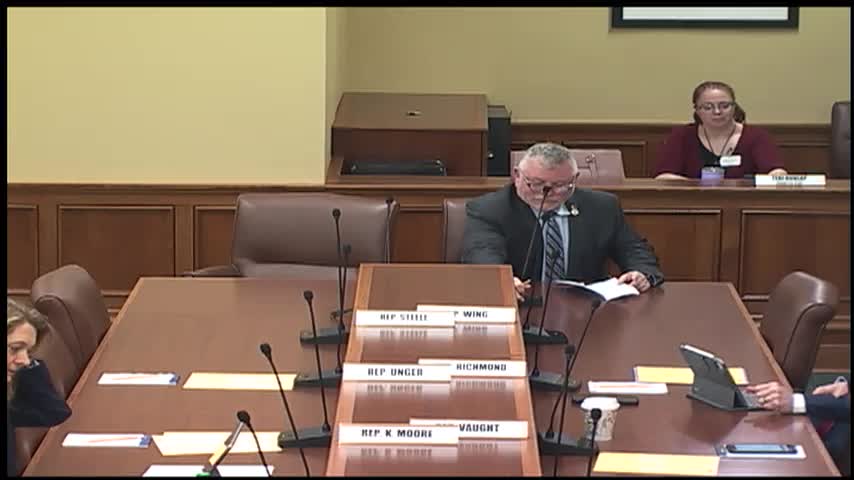
The Agriculture, Forestry & Economic Development Committee on Oct. 12 voted to send HB1516 forward after lawmakers heard that the measure would give the Department of Agriculture’s law enforcement unit a modest fine to enforce animal-health and related requirements.
The bill “adds somebody guilty of a violation is subject to a fine not to exceed $300,” Representative Richmond said while presenting the bill, saying the change is intended to give the department an additional tool to enforce existing law. “We’re not creating new law here, we’re trying to create the ability to enforce existing law,” Richmond said.
The bill’s sponsor and the department emphasized the proposal is aimed at persistent noncompliance. “We’re not trying to money grab here in no way. It’s just simply giving us a tool that this department needs in order to solve a problem that the state has,” Billy Black, chief of law enforcement at the Arkansas Department of Agriculture, told the committee. Black said the unit issues few citations overall and that warnings still are the typical first response: “Last year, we got a hundred and $10, this year, up $230,” he said when asked about ticketing trends.
Representative Richmond described scenarios that lawmakers and the department say the change would help address, including instances in which animal owners who do not obtain required tests and who come into contact with other animals can endanger larger livestock investments. Richmond said the penalty option is intended to increase compliance when warnings have not worked.
The bill also updates administrative language to reflect that the enforcement unit was moved into the Department of Agriculture from another agency, clarifies where collected fines would be retained, and mirrors other state law practice for postemployment firearm disposition for retiring officers.
Representative Platt asked whether the department would always issue a warning before a citation; Black replied that it “depends on circumstance” but estimated warnings occur about 90% of the time.
After questions, Richmond closed and moved that the bill “do pass.” The committee approved the motion by voice vote; individual roll-call tallies were not recorded in the transcript.
If enacted, HB1516 would permit agriculture law enforcement officers to assess civil fines of up to $300 for specified violations and make several administrative updates related to the unit’s placement inside the Department of Agriculture.