Get Full Government Meeting Transcripts, Videos, & Alerts Forever!
Get email alerts on the Public Safety Cameras topic
No spam. Unsubscribe anytime.
Neighborhood group offers two privately funded license‑plate‑reader cameras; council agrees to consider matter at a future meeting
Summary
A Knickerbocker‑area residents’ group offered to donate and maintain two privately funded license‑plate‑reader (LPR) cameras covering roughly 200 households, prompting the Orinda City Council to vote to bring a staff report and decision to a future meeting for specific direction.
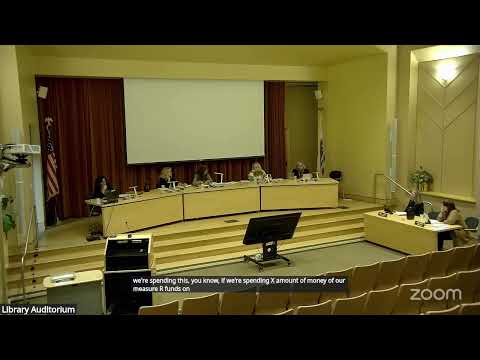
Resident Evan Dreyer told the Orinda City Council on March 4 that a neighborhood coalition privately funded and installed two license‑plate‑reader (LPR) cameras in the Knickerbocker area in July and that the cameras have coincided with a drop in reported burglaries in that neighborhood.
Dreyer said about 30 families financed the cameras and that installation and solar power costs are covered through July 2026. He offered to assign the cameras to the city and to help the city negotiate terms with the vendor Flock, saying "if the city moves forward and needs help, I'm willing to help, you guys continue to execute and expand the network." Dreyer said the cameras were solar‑powered and required no new city infrastructure.
Council members noted the item was not agendized for a decision that night but said it merited a focused staff review. City staff and the city manager recommended bringing a matter‑initiated report to a future council meeting to consider the offer and to determine whether to evaluate the Knickerbocker devices alone or as part of an overall review of the city’s LPR network.
A council member moved to place the item on a future agenda for specific direction; another council member seconded the motion. The council voted in favor and directed staff to return with a report for council consideration.
Why it matters: private‑funded camera deployments generate immediate public‑safety and privacy tradeoffs for cities. The council’s decision to evaluate the offer in a future agenda item will allow staff to analyze vendor terms, data‑management plans, interoperability with existing city systems and community privacy safeguards before the city assumes operation or ownership.
What happens next: the city manager will agendize the matter for a forthcoming council meeting so the council can decide whether to accept the cameras, how to integrate them with existing systems and how to handle data‑sharing, vendor contracts and recurring payments once private funding ends.