Get Full Government Meeting Transcripts, Videos, & Alerts Forever!
Get email alerts on the Environmental Review Auar topic
No spam. Unsubscribe anytime.
Cannon Falls begins 30-day scoping comment period for AUAR of 251-acre site
Summary
City officials, consultants and developer representatives outlined the Alternative Urban Areawide Review (AUAR) process for a proposed 251-acre development on March 4; public comments for the scoping document run March 4–April 3, and the AUAR will study two scenarios: an industrial park and a technology/data-center park.
The City of Cannon Falls opened a 30-day public comment period March 4 for the scoping document of an Alternative Urban Areawide Review (AUAR) covering about 251 acres proposed for annexation and development, city staff and consultants said at a joint Planning Commission and City Council work session on March 4.
The scoping document identifies what will be studied in the AUAR — including water resources, geology and soils, wildlife and plant communities, historic properties, traffic, utilities and greenhouse gas emissions — and frames two development scenarios the review will evaluate: an industrial park scenario and a technology park (data-center) scenario, consultants said.
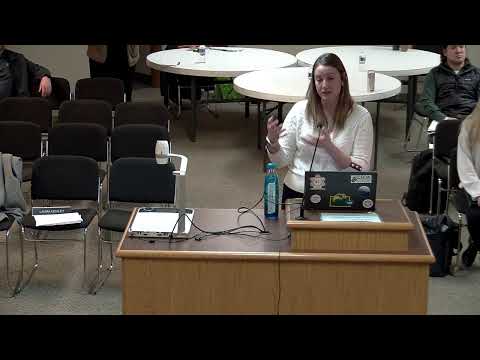
"This is just laying out what's going to be studied," said Ashley Payne, an environmental scientist at Kimley‑Horn, who reviewed the environmental-review steps and timeline for the audience. Payne said the scoping comment period runs through April 3 and that the city, as the Responsible Government Unit (RGU), will collect comments and work with the project team to respond before adopting a final order that authorizes preparation of the AUAR.
Why it matters: An AUAR is a planning-level environmental review that can function at an EIS level while studying multiple development scenarios. The review will identify existing conditions, potential impacts for each scenario, and mitigation strategies the city or future developers would use if a particular outcome proceeds. The AUAR process also routes documents to roughly two dozen state agencies for review and includes additional public-comment windows on the draft AUAR.
City consultant Bill Engerman (WHKS) and Kimley‑Horn staff explained the sequence: after the 30-day scoping comment period ends, the city will prepare a final order adopting the scoping scope; the draft AUAR and mitigation plan then go out for another 30-day public comment period; state agencies receive a 10‑day objection window before the city considers final adoption. Payne characterized the AUAR for a large project as following established statutory timelines and noted that the city has 120 days (statutory maximum, subject to extension) to prepare the AUAR after adopting the final order.
Developer representative Kristen Dean, identified as with TRAC, said the AUAR is an early, high-level study meant to guide later entitlements such as rezoning and site plan review. "The AUAR is really this preliminary study of the land and looking at these alternative scenarios," Dean said, adding the developer plans community outreach including a public meeting tentatively scheduled for late April and a project landing page to post documents and FAQs.
Dean described three common market paths for later vertical development: TRAC retaining the site and ground‑leasing to an end user, TRAC or an affiliate acting as the end user, or selling parcels to a hyperscaler. She said the project team is preparing the site and outreach materials now so the community has more detailed information at the planned April meeting.
Officials and consultants emphasized that the AUAR examines maximum potential development densities and identifies mitigation that would be required if certain impacts occur. Payne said the AUAR will address potential water usage and any permits or infrastructure upgrades that would be required, and will evaluate traffic impacts and potential mitigation such as turn lanes.
The council and Planning Commission were told the AUAR document remains valid for five years and must be updated if conditions or completed mitigations change. City staff also announced a Cannon Falls Technology Park landing page on the city website where the scoping document and future materials will be posted.
No final approvals or zoning decisions were made at the meeting. Staff repeatedly noted the AUAR and subsequent rezoning and site‑plan reviews will include multiple public comment opportunities and additional reviews by state agencies.
Ending: City staff and the project team urged residents with concerns to submit comments during the March 4–April 3 scoping window and to watch the project landing page for the scheduled community meeting and additional opportunities to comment. "Once we've started the process, the city couldn't approve a development to go in and start construction within the AUAR study area unless it has already been entitled," Payne said, describing how the AUAR fits into the larger regulatory sequence.