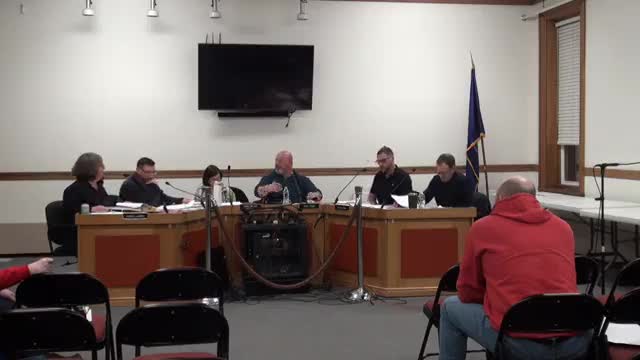
Selectman Amber Lick outlines Freedom of Access Act limits on remote participation and public comments
Loading...
Summary
Selectman Amber Lick summarized Maine’s Freedom of Access Act requirements governing remote participation, public notice, and public-records access, and advised the Selectmen that a written remote‑participation policy requires a public hearing before adoption.
Selectman Amber Lick briefed the Selectmen on Maine’s Freedom of Access Act (FOAA) and how it constrains remote participation, public comment and records access.
Amber Lick said the FOAA governs public meetings and public records, requires public notice of meetings, and treats quorum conversations as public meetings. She told the board that the FOAA gives members of the public the right to attend, observe, record and televise publicly noticed meetings, but does not automatically give members of the public the right to participate. She noted that offering an “items by the public” period is a courtesy the Selectmen provide, but that boards may limit time and scope for public comments to preserve orderly meetings.
On remote participation the Selectman explained the statute requires a municipality to adopt a written remote‑participation policy after holding a public hearing; until the board adopts such a policy, board members who participate remotely must do so under limited circumstances (for example, an emergency camera failure). She also said that if the board decides to allow remote participation for board members, the town must allow equivalent participation by the public; the workshop the Selectman attended clarified that permitting remote participation creates additional obligations and is not a simple change.
Lick identified the town’s public-access officer (the Town Clerk/records custodian) and urged residents to use the public‑records request process when seeking documents. She said the town must make materials considered by the board available to remote attendees and that the town has no obligation under FOAA to create new documents in a requested format.
No formal vote was taken; the item was an informational presentation and the board agreed to consider the statutory requirements before drafting any remote‑participation policy.