Get Full Government Meeting Transcripts, Videos, & Alerts Forever!
Get email alerts on the Special Education topic
No spam. Unsubscribe anytime.
Frontline educators tell Senate committee special education staffing shortages are a crisis
Summary
Special education teachers, paraprofessionals and related-service providers told the Senate Education Committee that Alaska faces acute shortages, rising caseloads, reliance on costly contractors and growing unmet student needs. Witnesses said permanent increases to school funding and caps on caseloads are needed to recruit and retain staff.
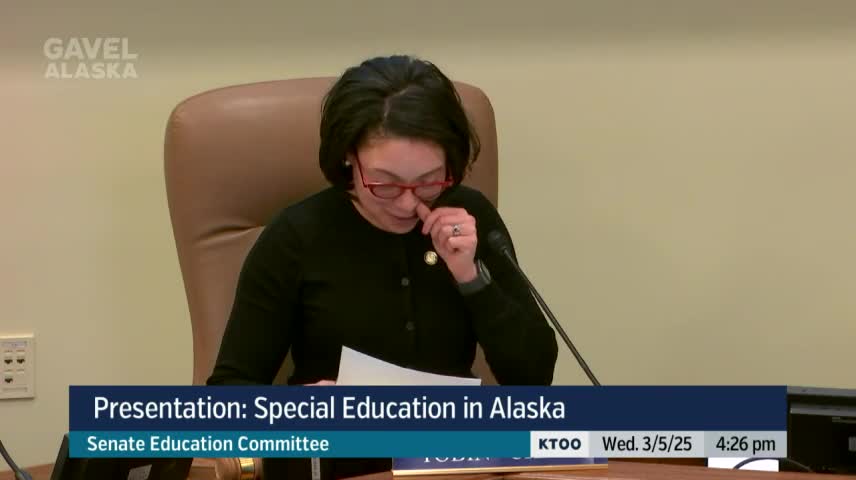
Frontline educators from multiple districts told the Senate Education Committee on March 5 that special education staffing shortages and rising caseloads have created a statewide crisis that limits students’ access to services.
Tom Claymeyer, president of NEA Alaska and a high-school teacher, opened a multi-witness presentation on special education and said vacancies in special education and related services “are so hard” to fill and that federal IDEA funding is far below the level advocates say is needed. He summarized national and state trends and noted Alaska’s remote geography and higher prevalence of certain disabilities, including fetal alcohol spectrum disorders, as compounding factors.
Kim Ward Massey, a speech-language pathologist who said she has worked in 12 Alaska districts over 20 years and now leads speech services in the Anchorage School District, told the committee that the district employs 76 SLPs but relies on teletherapy contractors when in-person staff cannot be hired. She said almost one-third of SLPs in her district are teletherapists contracted from the Lower 48 and that the district incurs additional paraprofessional and technology costs to support them. “Without competitive salaries or desirable retirement plan, our district struggles to attract and retain these hard to fill positions, forcing schools to rely on costly contract services,” she said.
Joshua Gerard, a paraprofessional supporting intensive-needs students at Seward Middle School, described being the only full-time permanent special education educator at his school while long-term substitutes and a half-time contracted teacher covered the other positions. Gerard said he regularly worked past contract hours and taught multiple classes while coordinating virtual services and that the district’s housing and cost-of-living pressures make it difficult to recruit and retain staff.
Jada Kahl, an occupational therapist in Juneau, described a broad workload that includes direct therapy, assessments, individualized education plan writing, consultative work across multiple sites and crisis response. She said her caseload exceeds 40 students and that understaffing causes students to miss services and increases stress on providers and families.
NEA Alaska and testimony from these practitioners called for a permanent increase to the base student allocation or another mechanism to provide predictable, ongoing funding; caps on special-education caseloads or adoption of a workload calculator; higher, competitive salaries and retirement benefits to retain staff; and targeted investments to reduce the need for contracted remote providers.
Ending: Committee members thanked presenters and acknowledged the need for further consideration. The presentation concluded without committee action, and members signaled it would inform future budget and policy deliberations.