Get Full Government Meeting Transcripts, Videos, & Alerts Forever!
Get email alerts on the Capital Infrastructure topic
No spam. Unsubscribe anytime.
Legislative Finance flags $2.4B deferred maintenance backlog, GRIP match and AMHS funds at risk
Summary
Staff told the committee the state’s deferred maintenance backlog is about $2.4 billion (University of Alaska ~63%), that GRIP energy grants require a substantial future state match, and that the Alaska Marine Highway System faces a potential $76.5 million operating hole if federal funding ends.
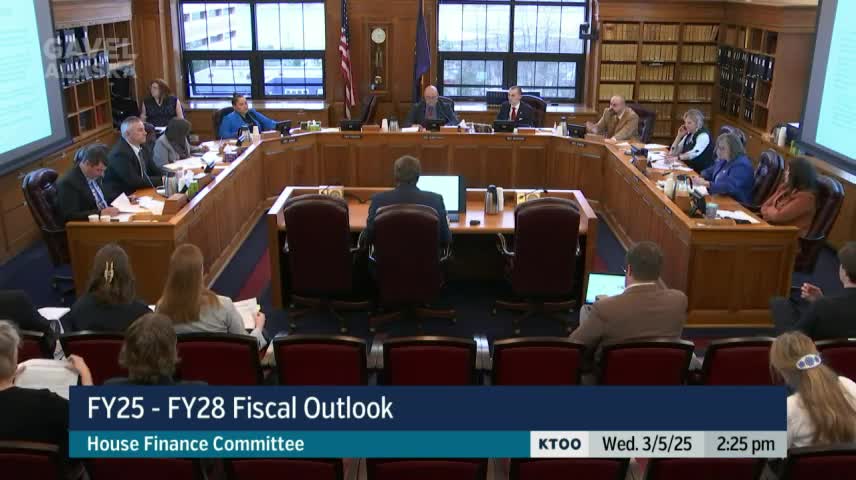
The Legislative Finance Division told the House Finance Committee the state faces major capital pressures: a roughly $2.4 billion deferred maintenance backlog, a federal GRIP (Grid Resilience and Innovation Partnership) program that requires a multi‑year state match, and a potential operating shortfall for the Alaska Marine Highway System (AMHS) if federal Infrastructure Investment and Jobs Act (IIJA) funds lapse.
Lehi Painter said the FY2025 deferred maintenance backlog reported by the Office of Management and Budget is about $2.4 billion and that the University of Alaska accounts for about 63 percent of that total (roughly $1.5 billion). Painter cautioned that the way agencies track facility needs differs and that some inventories, once inspected, have shown much larger needs than earlier estimates.
Painter said one way to view long‑term capital needs is to apply a 2 percent of asset value guideline; with a roughly $9 billion assessed asset value for state facilities, that would imply about $180 million per year for maintenance. But he warned this approach does not account for replacements of specialized facilities or information technology systems that require larger, often bond‑scale, investments.
On energy projects, the committee heard that AEA’s GRIP award requires state matching over several years; Legislative Finance included a placeholder for roughly $143 million in state match across FY2027–FY2032 in staff planning and noted the governor’s FY2026 budget includes only $1.5 million for GRIP in FY2026. Painter said the federal GRIP funds in some phases were reported as currently frozen in media reporting; he said he would check agency status and follow up for the committee.
On the Alaska Marine Highway System, Legislative Finance staff said current IIJA‑era operating and capital federal funds included roughly $76.5 million in operating support. The staff outlook assumes that federal operating funds could end by FY2028; if so, AMHS operating support would need to be replaced by state funds or other sources in that year.
Members asked about how the deferred maintenance tally is compiled and whether highways, bridges and local school facilities are included; Painter said highways are generally not included in the deferred maintenance pool (they are funded through separate federal highway programs) and that DEED school major maintenance and municipal school debt reimbursement operate on separate schedules and mechanisms.
Ending: Legislative Finance recommended the committee consider the backlog, school major maintenance lists and large single‑facility replacement needs (for example, pioneer homes or prisons) when setting capital priorities and noted that larger bond measures may be necessary for some high‑cost replacements.