Get Full Government Meeting Transcripts, Videos, & Alerts Forever!
Get email alerts on the Bond Land Acquisition topic
No spam. Unsubscribe anytime.
Committee sends bond land-acquisition resolution back to council after members raise notice and scope concerns
Summary
Committee voted to return a proposed resolution tied to the city's bond projects — which lists parcels and authorizes spending over $25,000 on land — with an unfavorable recommendation and a suggestion to withdraw the measure, citing missing attachments, unclear scope and homeowner anxiety.
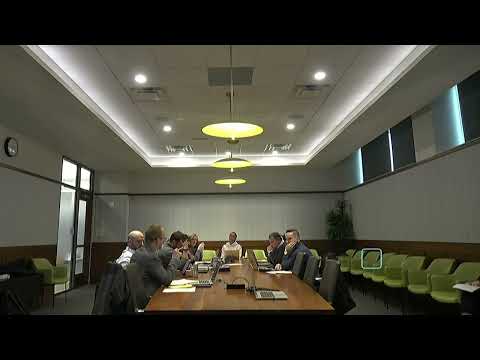
CARMEL, Ind. — The Land Use and Special Studies Committee on Feb. 19 voted to send back a council resolution tied to the city’s recent bond package that authorizes spending more than $25,000 to acquire parcels in support of listed infrastructure projects. Committee members said the exhibit listing parcels was not available with the resolution when council first reviewed the measure, and several members said the public reaction showed the item requires clearer public notice and project-by-project review.
Committee member Matt moved that the committee return the resolution to council with an unfavorable recommendation and that the city withdraw and resubmit a revised version; a second was called and the motion was approved by voice vote. The resolution had listed many properties (Exhibit A) connected to roughly 30 projects in the bond package; staff and several council members said that listing caused homeowner alarm because it read like an immediate offer to acquire property.
Matt told the committee he had discussed a possible sunset and suggested a five-year limit for authority tied to the bond projects, proposing “December 30, 2029” as a sunset date for the delegated authority in the draft. That change was discussed as a safeguard against long-term, open-ended acquisition authority.
City Engineer Bridal Pease and other staff described the administration’s intent as administrative flexibility to buy property needed to build projects — such as right-of-way for roundabouts, stormwater structures or multiuse paths — while also acknowledging the need for clearer process and neighborhood notice. Pease said the city’s usual right-of-way acquisition process includes separate notification and appraisal steps before any property is taken.
Committee members repeatedly said posting a long exhibit with parcel lines in a council packet — and email distribution shortly before a meeting — provoked confusion and distress among residents who read the list as immediate action. Members asked staff to develop a tighter process: bring individual acquisitions for specific projects when ready, send more direct notice to affected property owners in advance, and include clearer intent language (for example: whether a parcel is proposed for design, temporary easement, permanent acquisition, or only potential future need).
Legal counsel Sergei told the committee the listing in the draft resolution was meant to comply with state notice requirements but acknowledged that the way the exhibit was circulated and presented could be revised to reduce public alarm. Committee members suggested engineering complete scoping, then return individual projects for council-level approval of acquisitions rather than approving a single, open-ended authority for dozens of parcels.
Why it matters: Councilors said the item ties to a $90 million bond package the council approved last month; members expressed a desire to spend the borrowed funds promptly but also to preserve transparent notice and avoid surprising homeowners. The committee’s unfavorable recommendation sends the resolution back to council for rework before any acquisitions proceed.
Outcome: The committee’s motion to return the resolution with an unfavorable recommendation (and the recommendation that the administration withdraw and resubmit a revised resolution or bring projects individually) passed by voice vote; individual roll-call tallies were not recorded in the committee discussion.