Get Full Government Meeting Transcripts, Videos, & Alerts Forever!
Get email alerts on the Transportation Traffic topic
No spam. Unsubscribe anytime.
Maine DOT defends flashing yellow arrows at Pearl Harbor Remembrance Bridge after Gardiner residents report crashes and confusion
Summary
Maine DOT staff told the Gardiner City Council a preliminary six-month review shows fewer crashes after the bridge signal switch to flashing yellow arrows, while residents and some councilors urged quicker changes and public education to address driver confusion and pedestrian safety.
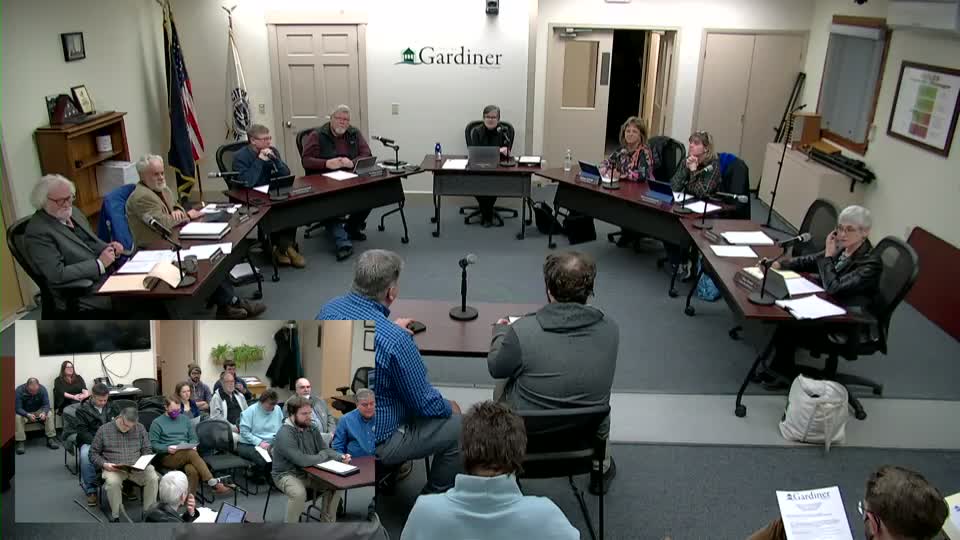
Maine Department of Transportation engineers told the Gardiner City Council on Feb. 12 that a six‑month, preliminary review of a new flashing yellow arrow pattern at the Pearl Harbor Remembrance Bridge shows a reduced crash rate, but residents and councilors pressed DOT for additional changes and clearer public education.
The issue drew sustained public comment from residents who commute across the bridge and contend the flashing yellow arrow creates confusion at peak hours. "We've had multiple accidents. I've almost been in multiple accidents," resident Zach Wannberg told councilors. "It leads to a dangerous turn." Wannberg said the combination of heavy left‑turn traffic and angled approaches makes the signal pattern especially difficult for drivers and pedestrians.
Steve Landry, Maine DOT state traffic engineer, told the council the intersection has been a "high crash location" for about 10 years and said the agency implemented flashing yellow arrows and shorter cycle lengths as part of a statewide signal modernization project to increase capacity and reduce rear‑end crashes. "When we went through and we did the initial traffic signal and statewide improvement project . . . we were hoping to improve it," Landry said. He told the council the DOT's preliminary comparison showed an average crash frequency of about 0.5 crashes every two months since the change, compared with roughly 0.8 during the historic period; he cautioned the six‑month sample is small and that DOT prefers to study a year or more for safety trends.
Councilors and residents pressed DOT engineers for near‑term changes. Councilor Rusty Greenleaf said the flashing yellow pattern is more dangerous during commuter hours, when drivers "sit in the middle of the intersection because they're not sure what to do." He asked whether DOT could change the signal's operation by time of day. Landry said time‑of‑day phase changes are technically possible but warned that changing signal behavior by hour can create safety problems because drivers form expectations about how a signal operates. "People get used to driving it a certain way," he said, adding that varying operations can increase hesitation and some crash types.
DOT engineers said they have already made several adjustments and proposed near‑term actions: moving and adjusting some signal heads for improved visibility, installing more durable lane striping in spring that will resist plowing, and considering a custom lane‑use arrow sign that shows the angled turn versus the 90‑degree turn. Curtis Thompson, a Maine DOT traffic operations engineer, said the contractor remains within the acceptance window, so the agency can still request sign changes before full project acceptance. DOT staff also agreed to pursue public education materials, including targeted social media posts and a short video through DOT's creative services, and to explore a leading pedestrian interval at the nearby downtown crosswalks (a short walk‑signal lead to allow pedestrians to establish themselves before vehicle movements begin).
Landry said DOT will continue to monitor the intersection and return to Gardiner with updated crash data and results of striping and signage changes. He asked the council and residents to allow more time for patterns to stabilize, noting statewide installations of flashing yellow arrows have sometimes produced a learning period. "Give us some time. If, by the end of next summer, this is still a problematic event and we see things go up, we'll make the changes," Landry said.
Councilor Gay Grant asked DOT to provide concise website text and a short instructional video the city can share to help resident drivers learn the new pattern. Residents said they welcome education but urged quicker operational changes if crashes continue.
The council did not vote on any ordinance or formal action related to the intersection at the Feb. 12 meeting; DOT presented findings and promised follow‑up work including spring striping, consideration of custom signage, outreach materials, and continued monitoring of crash data.
Ending: DOT said its statewide signal project aimed to reduce long cycle lengths that produced inattentive driving and rear‑end crashes; local leaders said the intersection's unusual, non‑orthogonal geometry and heavy commuter flows merit close monitoring and additional safety steps.