Get Full Government Meeting Transcripts, Videos, & Alerts Forever!
Get email alerts on the Parks Recreation Cultural Affairs topic
No spam. Unsubscribe anytime.
Gainesville parks, recreation and cultural affairs highlight programs, staffing and equity work in quarterly update
Summary
Department leaders reported a year of reorganizing staff into six teams, expanded programs (midnight basketball, youth resiliency), more prescribed burns, increased facility partnerships and the launch of an RBA-based equity project; commissioners pressed for sponsorships, holiday event coordination and more neighborhood outreach.
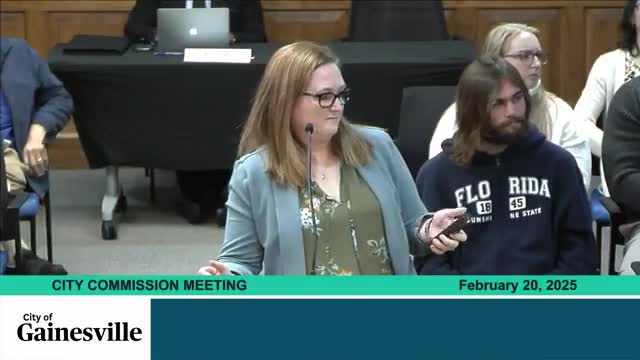
Parks, Recreation and Cultural Affairs Director Roxy Gonzales told the City Commission on Feb. 20 that the department reorganized in fiscal year 2024 from nine divisions into six cross-functional teams and kept services running despite staffing reductions.
Gonzales and Assistant Director Leslie Leitendorf presented program-level data, staffing and partnership changes and said the department’s mission now emphasizes “meaningful experiences and a feeling of connection and belonging for all.” Staff credited the reorganization with expanding maintenance capacity (adding about 34 positions to park operations), folding environmental education into youth services and preserving core programs by relying heavily on temporary city hires for lifeguards and camp counselors.
Presenters outlined accomplishments including growth of the Midnight Basketball program (monthly mentorship and Friday-night programming at MLK Recreation Center), expanded prescription burn acres for natural-area management, reopening of the Rosa B. Williams Center for participatory arts, and a “1 Nation, 1 Project” arts-and-wellness initiative that gave grants to 29 groups and drew 3,600 program attendees. Cultural Affairs said it is increasing co-sponsorships and facility use and noted that some attendance data had been corrected after duplicate counts were found.
Gonzales said the department is professionalizing internal processes: a newly produced printed and digital seasonal guide, improved reporting and an equity project using Results-Based Accountability (RBA). Two RBA cohorts have completed training on setting performance measures and tracking outcomes; Cohort 3 is planned for the coming year with support from the Office of Equity and Inclusion. On partnerships, staff listed more than a hundred formal agreements across athletics, cultural affairs, youth services and facilities and said contracts or MOUs define shared revenues for organizations that charge participants.
Commissioners asked detailed operational questions. Commissioner Chestnut asked whether PRCA coordinates after-school and summer programming with the Children’s Trust; staff said the department runs its own programs but partners with the Children’s Trust for startup funding when a program is not yet sustainable (midnight basketball was cited as an example). Commissioners pressed for sponsorship development; staff said a sponsorship guide exists and work to market sponsorship opportunities is underway, with the goal of creating scholarship and program funding. Commissioners also asked about cultural observances (Indigenous Peoples Day, Hispanic Heritage programming) and received examples of recent partnerships and rental arrangements that enabled those events even when PRCA staff did not produce them directly.
Several commissioners and public commenters praised the A. Quinn Jones Museum’s programming and asked about museum accreditation; Cultural Affairs staff said the museum is small and not currently pursuing American Alliance of Museums accreditation. The commission and staff agreed on continued quarterly, team-level briefings to give more detail on programs, budgets and metrics.
Gonzales said anticipated priorities for FY2025 include advancing the equity cohorts, aligning facility rental processes, improving marketing and web content, and identifying sponsorship and grant revenue opportunities to support scholarships and programs.