Get Full Government Meeting Transcripts, Videos, & Alerts Forever!
Get email alerts on the Homelessness topic
No spam. Unsubscribe anytime.
Melbourne residents press council over homeless outreach as Providence Place plans advance
Summary
Hundreds of residents and business owners pressed Melbourne city leaders on Feb. 11 over the concentration of homeless services near Fee Avenue and the future of a planned affordable-housing project, Providence Place, as council and staff prepared for a city workshop next week.
Hundreds of residents and business owners pressed Melbourne city leaders on Feb. 11 over the concentration of homeless services near Fee Avenue and the future of a planned affordable-housing project, Providence Place, as council and staff prepared for a city workshop next week.
The meeting’s public-comment period lasted more than two hours and drew repeated complaints about nightly out‑of‑area feedings, needle litter, encampments behind businesses and safety near parks and homes. Several speakers said the long-running outreach model has created a “dependency” and pushed criminal and quality-of-life problems into neighborhoods.
“Trust cannot mean empty promises of solving homelessness by, a fiat or, willful desire,” said Jeff News of Daily Bread (referred to in the meeting by the operating name “Daily Bread”), who told the council the organization plans to transition from a soup-kitchen model to affordable housing. “We want to provide that solution at Providence Place.”
Why it matters: Council members said the city is shifting funding and policy to favor housing-based approaches rather than open‑ended day services, and they signaled support for strict conditions in a forthcoming developer agreement. Residents said that unless outreach outside structured sites is reduced and enforcement of park and sidewalk rules is consistent, neighborhood problems will continue.
What speakers told the council
- Residents across Fee Avenue, Heritage Park and other neighborhoods described large, recurring evening gatherings, discarded shopping carts, discarded hygiene items and used needles. One speaker said maintenance staff at an apartment building found weapons. Another described people sleeping in duffel bags on park benches.
- Several speakers urged churches and faith groups to host feedings at their own parking lots rather than downtown parks—“set up in the church parking lots and organize a schedule,” one commenter said—to reduce the nightly draw to Fee Avenue.
- Property and business owners asked what happens to people who are not eligible for Providence Place or who can’t secure units; some warned of increased theft and trespass if those people remain nearby.
Council and staff response
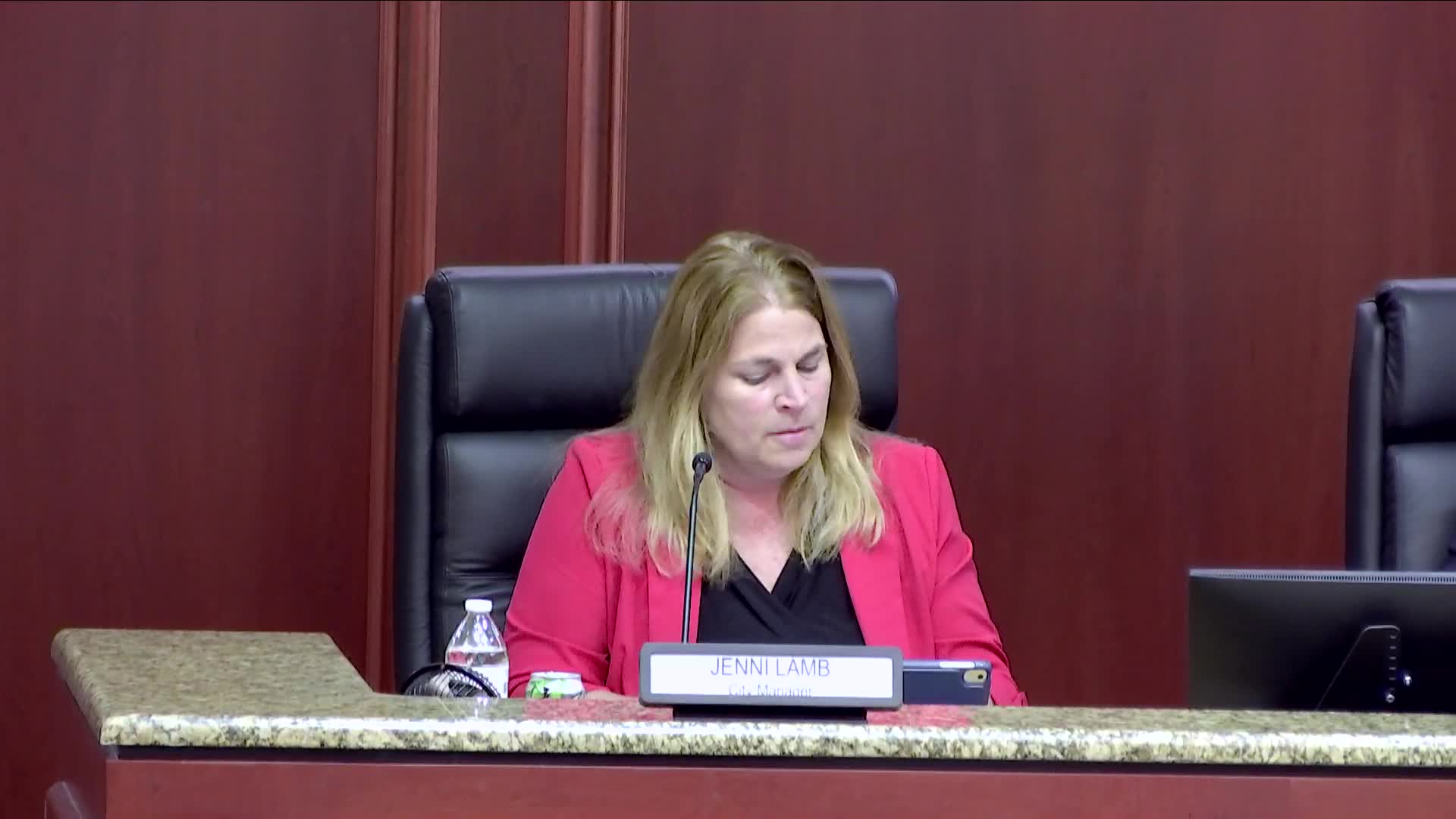
City Manager Megan Lam told the meeting the city will present more information at a homelessness workshop scheduled for Feb. 18 and said staff is tracking which faith groups and nonprofits are performing outreach. “We are attempting to do our best to try to coordinate with churches and organizations,” Lam said, noting staff is compiling a list of participating churches.
Mayor Paul Alfrey and multiple council members said the city plans to include conditions in a developer agreement for Providence Place that would limit onsite services such as open, walk‑up feeding programs and define enforcement and programming expectations. Council members repeatedly emphasized enforcement of new park and camping rules that council approved that night (see related item below).
Daily Bread and Providence Place
Speakers and council members repeatedly returned to the organization operating Fee Avenue services. Jeff News said Providence Place would be housing-focused and that “there will be no services on Apollo Boulevard at Providence Place for people that are currently homeless,” adding that the transition should remove the existing draw of free meals in Fee Avenue.
Several residents and council members said they view removing the soup‑kitchen draw as a necessary step but caution the gap between Daily Bread’s closure and Providence Place’s opening could displace people to other locations. One council member told the audience Providence Place is not expected to open until late 2027, which could create an interim period when outreach and feeding continue elsewhere.
Other public-safety and neighborhood requests
Speakers sought more consistent, proactive enforcement of park and sidewalk rules, and some suggested short-term private security or increased police presence while the city enforces newly adopted ordinances. Residents described the library and certain parks as recurring congregating points and asked for operational changes, better cameras, gate repairs and coordinated cleanups.
What the council directed
- The council moved forward with a homelessness workshop for the next week to collect input and present options. - Council members said they would press for enforceable terms in a Providence Place developer agreement, including residency preference for Melbourne residents and limits on walk‑up services. - Staff was directed to continue compiling outreach‑group participation and to work with the county and neighboring cities on regional coordination.
Clarifying details from the meeting
- Providence Place: speakers reported the project proposal could offer about 120 units (one commenter’s reading); construction was discussed as not expected to finish until roughly the end of 2027. These numbers were cited by meeting speakers and not presented as council-adopted facts. - City funds: a council speaker said the city had roughly $14 million in federal ARPA funds available to direct toward local affordable-housing projects; that figure was mentioned in public comment and by council members as the source of potential city contributions.
What’s next
Councilmembers said they would review a development agreement that will return to council for review; they also emphasized time-limited enforcement steps to “take our parks back” while the housing project moves through planning and approvals. The Feb. 18 homelessness workshop will present options, staff estimates of costs and proposals for outreach coordination.
Ending note: The Feb. 11 meeting reflected long-running neighborhood frustration with the concentration of outreach services in parts of Melbourne and signaled the council’s intent to pivot from a predominantly meal‑based outreach model to one that emphasizes housing, developer agreements and enforcement of new park and camping rules.