Lifetime Citizen Portal Access — AI Briefings, Alerts & Unlimited Follows
Senate Small Business Committee hears competing views on SBIR/STTR reauthorization and new INNOVATE Act
Loading...
Summary
Chair Joni Ernst opened a Senate Small Business Committee hearing and introduced the INNOVATE Act to reauthorize and reform SBIR and STTR, proposing streamlined Phase I proposals, limits on repeat awardees, larger DOD strategic awards with matching funds, and strengthened foreign‑risk rules.
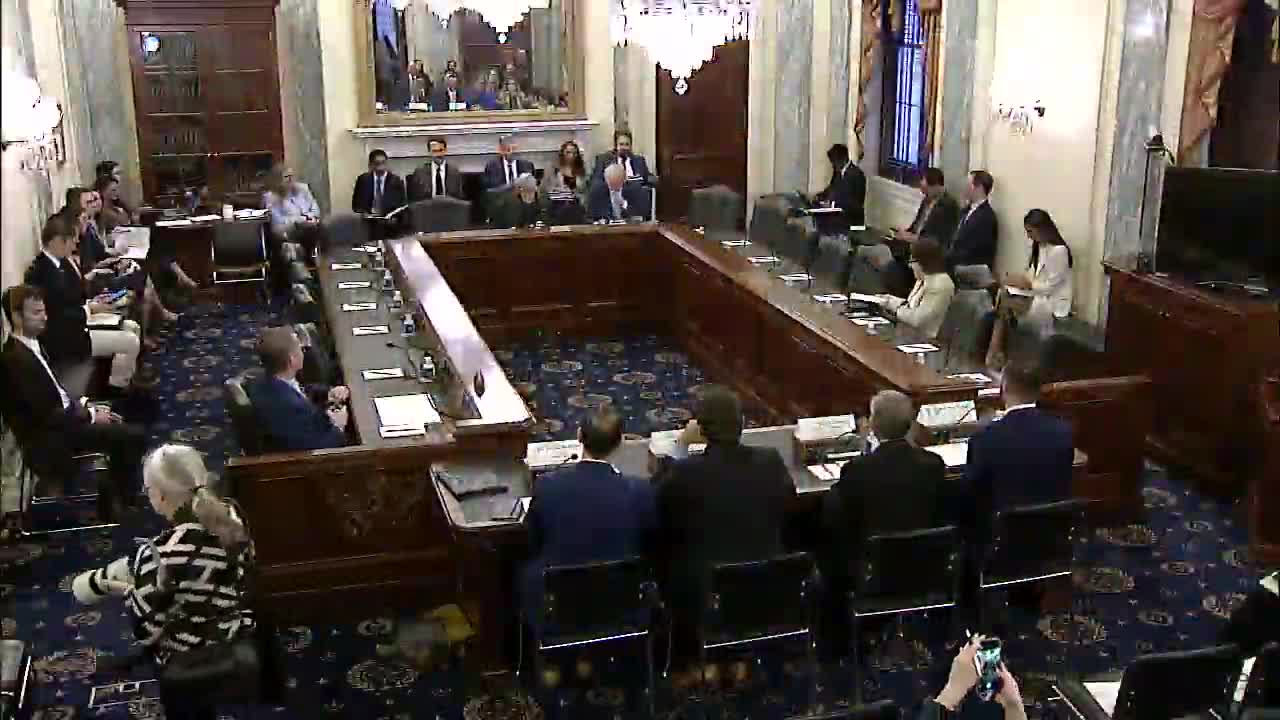
Chair Joni Ernst, chair of the Senate Committee on Small Business and Entrepreneurship, opened a committee hearing on the reauthorization of the Small Business Innovation Research (SBIR) and Small Business Technology Transfer (STTR) programs and announced the Investing in National Next Generation Opportunities for venture acceleration and technological excellence (INNOVATE) Act, a reauthorization and reform bill. "My legislation streamlines and simplifies existing processes, directs the funding toward projects based on merit, channels funding to help accelerate the most promising projects towards final stage commercialization, protects against waste and abuse, and introduces enhanced protections and accountability tools to prevent these new technologies from getting into the hands of our foreign adversaries," Ernst said.
The hearing assembled witnesses and senators from states with concentrated SBIR/STTR activity to discuss program performance, geographic disparities, commercialization rates and national security protections. The three majority witnesses were Austin Strawhacker, associate state director, America's SBDC Iowa; Caleb Carr, chief executive officer of VITA Inclinada; and David Rothstein, principal at Shield Capital. Ranking Member Edward J. Markey introduced the minority witness, Dr. Ken Mahmood, executive vice president of Triton Systems.
Why it matters: SBIR and STTR award authorizations are set to expire and lawmakers are considering reforms that could change application mechanics, award limits, agency authorities and national security review standards. Witnesses and senators debated whether to preserve broad, open competition with few limits or to impose caps and new eligibility rules and to create larger bridge awards to improve transition to procurement.
Key provisions proposed in the INNOVATE Act and discussed at the hearing include a simplified two‑page Phase I proposal form, a $75,000,000 lifetime cap on a single firm’s SBIR/STTR receipts, elimination of DEI preferences, a DOD authority to create strategic "breakthrough" awards of up to $30,000,000 limited to firms demonstrating commercialization progress and an identified DOD end user, and a requirement that such strategic awards carry 100% matching funds. Ernst said the bill would also expand a statutory definition of foreign risk, create a disqualifying list of foreign ties and give agencies clawback authority for post‑award foreign exposure.
Supporters said the program drives commercialization and job creation. "SBIR and STTR awards have driven innovation, strengthened local economies and created high quality jobs in America for over 4 decades," Austin Strawhacker said, describing the Iowa SBDC’s outreach role and data showing the SBDC network’s local impact. Caleb Carr described how his company used AFWERX SBIR awards to develop the Vita Rescue System and later secured a phase‑3 IDIQ to the U.S. Army, saying SBIR enabled transition from idea to deployed equipment.
Witnesses and senators described persistent concerns and tradeoffs. Several witnesses and senators raised geographic concentration: Strawhacker and Senator Jacky Rosen noted that five states receive a large share of awards and urged expanded FAST (Federal and State Technology Partnership) support, regional outreach and simplified Phase I awards to lower entry barriers for rural and underserved innovators. Multiple witnesses also described an imbalance between award receipt and transition to procurement: studies and witnesses cited low phase‑2 to phase‑3 transition rates (witnesses referenced figures roughly in the high single digits to under 20% for some sectors) and urged bridge programs such as Stratify/Tacify (Air Force/Space Force) and Catalyst (Army) to increase transitions.
A central point of contention involved repeat recipients, sometimes labeled "SBIR mills." Ernst and other senators referenced GAO and Defense Industrial Board findings noting firms that receive many awards may have lower commercialization metrics; Ernst proposed caps and outcome measures. Opponents, led by Ranking Member Markey and several witnesses including Dr. Mahmood, said caps risk excluding productive firms and would penalize successful small businesses, particularly those that sustain long development cycles for defense platforms. "We should not place limits on the number of awards, the amount of funding that goes to deserving small businesses," Markey said, arguing the program must remain merit‑based.
National security and foreign‑ties screening drew sustained attention after Ernst and others cited open‑source reporting about commercial ties between companies and investors in countries of concern. Dr. Mahmood said Triton subjects facilities and personnel to DCSA vetting and that spun‑off companies raising foreign capital are outside Triton’s direct control; Ernst said that practice exposes a due‑diligence gap and supports her bill’s tougher foreign‑risk baseline and clawback authority.
Procurement and budgeting timing also surfaced as a barrier. Multiple witnesses and senators described the mismatch between SBIR award timing and the Department of Defense planning, programming, budgeting and execution (PPBE) cycle, which can delay phase‑3 procurement. David Rothstein and other witnesses recommended better alignment of SBIR investments with agency acquisition strategies and use of bridge funds to accelerate fielding.
Areas of bipartisan agreement included the need to simplify application paperwork for first‑time entrants, improve outreach to underserved states and rural areas (via SBDCs and FAST), and increase agency resources for foreign‑risk management. Disagreement remained on quantitative caps, how to measure commercialization, and the extent of matching‑fund requirements or large strategic awards.
The committee did not take formal votes at the hearing. Chair Ernst said she looked forward to working with colleagues on a bipartisan reauthorization. The record will remain open for two weeks for members to submit questions and additional materials.