Citizen Portal

Senate Foreign Relations Hearing Warns of Growing Chinese, Russian and Iranian Influence in Western Hemisphere; Calls for 21st‑Century Strategy

2514377 · March 5, 2025

Get AI-powered insights, summaries, and transcripts

Subscribe
AI-Generated Content: All content on this page was generated by AI to highlight key points from the meeting. For complete details and context, we recommend watching the full video. so we can fix them.

Summary

At a Senate Foreign Relations Committee hearing, witnesses and senators urged a renewed U.S. strategy for the Western Hemisphere to counter growing influence from China, Russia and Iran, stressing economic engagement, restored foreign assistance and strengthened diplomatic presence.

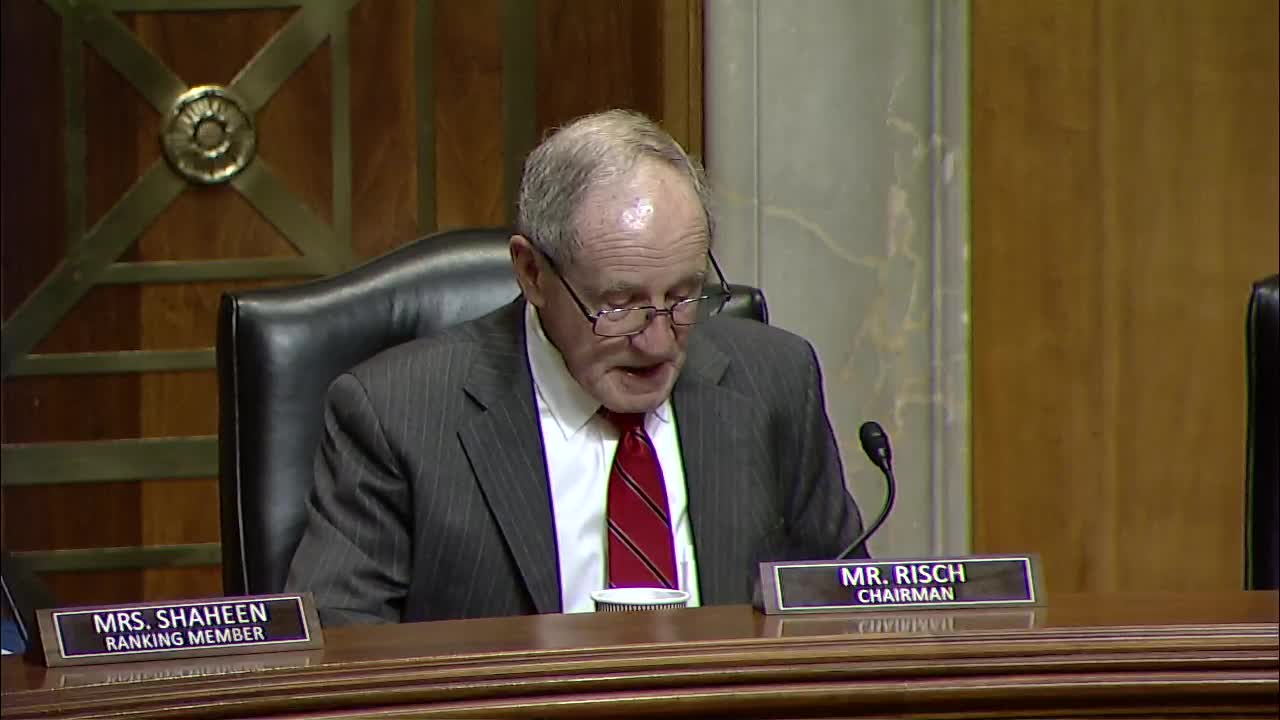
Sen. Jim Risch, chairman of the Senate Foreign Relations Committee, opened the hearing by urging a renewed American focus on the Western Hemisphere and warned that “the most pressing long term threat in the Western Hemisphere is China.” The committee heard testimony from two experts who described economic, security and political challenges tied to expanding foreign influence across Latin America and the Caribbean.

Dr. Ledford, a Hoover Fellow and assistant director of the Hoover History Lab at the Hoover Institution, told the committee that preventing “hostile foreign powers from spreading their malign influence in the Western Hemisphere must serve as the cornerstone of American foreign policy.” He cited Chinese investments in ports and mining, growing military and intelligence ties with Cuba, Nicaragua and Venezuela, and economic footprint expansion across South America as examples of strategic competition in the region.

Margaret Myers, senior advisor at the Inter‑American Dialogue and a global fellow at the Woodrow Wilson Center, argued that while hard power and security steps are necessary, “reliance on sticks alone is not sustainable and will not yield desirable long term outcomes.” She urged increased U.S. investment, diplomatic engagement and use of development finance to offer a competitive alternative to Chinese projects.

Why it matters: witnesses and members said growing footprints by China, Russia and Iran in the hemisphere create strategic vulnerabilities for the United States, including new commercial choke points, dual‑use infrastructure and expanded pathways for disinformation and narcotics trafficking. Committee members pressed the administration to pair security cooperation with strengthened development and economic tools — including use of the U.S. Development Finance Corporation, trade agreements and more active diplomatic representation.

Details from testimony and questioning focused on several crosscutting areas:

- Economic and infrastructure influence: Dr. Ledford cited Chinese investment in ports and mining and warned of “dual use infrastructure” that could have strategic ramifications. Senators noted recent private purchases and investment in port facilities in Panama and elsewhere, and discussed options to mobilize U.S. capital markets and public‑private finance to compete.

- Narcotics and precursor chemicals: Committee members and witnesses discussed fentanyl and the supply chain for precursor chemicals. Chairman Risch said Chinese exports of chemicals used in fentanyl production are a key driver of overdose deaths, saying those shipments help Mexican cartels produce opioids that “are killing over 100,000 Americans every year.” Dr. Ledford described transnational criminal organizations as an “intractable threat” and cited China’s role in supplying precursor chemicals and equipment.

- Diplomatic presence and soft power: Senators across the aisle pressed the need to fill vacant U.S. ambassador posts and maintain consular and development presence. Myers and Ledford both argued that ambassadors and sustained on‑the‑ground engagement are essential to preserve U.S. influence and to “message” American development and private‑sector activity in the region.

- Foreign assistance and multilateral engagement: Ranking Member Sen. Jeanne Shaheen and witnesses noted a recent court order requiring certain aid payments to proceed and warned that an administration freeze of foreign assistance weakens U.S. competitiveness. Myers said cuts or a pause in U.S. assistance “is essentially akin to shooting ourselves in the foot” because China’s Belt and Road engagements continue to expand.

- Mexico and security cooperation: Senators asked how to deepen security cooperation with Mexico to disrupt cartels and interdict illicit flows. Witnesses urged a Mexican‑led security framework with enhanced U.S. intelligence sharing and legal authorities. Ledford said recent moves by Mexico to deploy more security forces and hand over cartel suspects were encouraging but underscored the need for new legal tools and a negotiated framework.

What the witnesses recommended: develop a realistic five‑year hemispheric strategy (Ledford cited the Western Hemisphere Partnership Act’s requirement for such a plan), accelerate public‑private finance to rival Chinese offers, restore and sustain foreign assistance and staffing at embassies, and pair law enforcement efforts with long‑term development to address root causes of instability and migration.

The hearing did not produce formal committee votes. Senators and witnesses signaled bipartisan agreement on the need for a more comprehensive, interagency approach that combines economic tools, diplomacy and security cooperation to preserve U.S. interests in the hemisphere.

Looking ahead, senators directed the witnesses’ testimony into potential follow‑up actions: faster ambassador nominations, using the Development Finance Corporation and inter‑agency tools to mobilize private capital, and congressional engagement on trade and legal frameworks to strengthen regional cooperation.