Get Full Government Meeting Transcripts, Videos, & Alerts Forever!
Get email alerts on the Gob Oversight topic
No spam. Unsubscribe anytime.
Commission keeps GOB oversight board after heated debate over sunsetting
Summary
After hours of public discussion and a failed amendment to sunset it, the City Commission voted 6–1 to continue the General Obligation Bond (GOB) oversight advisory committee, while allowing reductions in meeting frequency to address staff workload concerns.
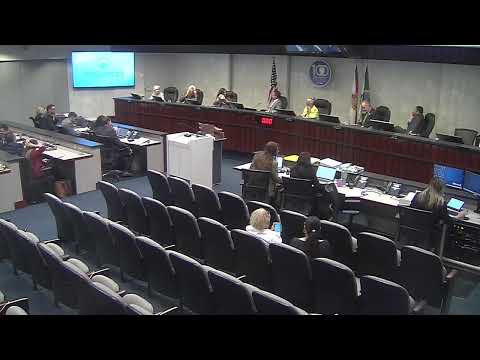
The Hollywood City Commission voted 6–1 on March 5 to continue the General Obligation Bond (GOB) oversight advisory committee rather than sunsetting it, after a two-hour debate about the board’s utility now that many bond-funded projects are in construction.
The commission’s decision follows a motion by Commissioner Hernandez to approve the city clerk’s recommendation to continue the listed advisory boards, and an earlier amendment by Commissioner Biederman seeking to remove the GOB oversight board. That amendment failed 3–4, and the final motion to retain the GOB advisory committee passed 6–1 with Commissioner Biederman opposed.
The advisory body was created by the city commission’s implementing resolution, which the city attorney read into the record as Resolution 2018-389 and which sets the committee at 15 members with specific category and geographic guidelines (neighborhood representation, professional/industry seats, no more than three members from any single district). The committee’s chair, Terry Cantrell, told commissioners the panel has met about 30 times in five years and provides a transparency channel for residents who voted for the bond.
Commissioners debated whether the board remains needed now that most bond projects have moved into the construction phase. Supporters said the committee provides a public forum for updates and helps keep projects visible to voters; critics argued some members have not been attending, representation is uneven across districts, and staff time to support frequent meetings is burdensome.
“You have a core of them that do not not go to a single meeting,” Jose Cortez told the commission during discussion of participation and vacancy levels. Cantrell pressed for preserving the board until projects are fully complete: “The last thing I want to do is waste Jose’s time… If this is a burden for Jose and his staff, then fine, then we can reduce the frequency of it or we can go against the resolution and we can get rid of the whole thing and call it a day. But it’s really more about transparency, and the ability for residents to know that there is an oversight committee.”
Commissioners agreed to keep the board but discussed reducing the required meeting frequency (the enacting resolution sets a minimum of two meetings per year). Mayor Levy and other commissioners noted flexibility exists in the resolution for staff to schedule fewer meetings as projects wind down and urged improved outreach and clearer vacancy advertising when appointments are made.
Discussion points: several commissioners emphasized the board’s value as a public communications channel; others cited uneven attendance and district representation as reasons to consider sunsetting. Commissioners also requested that, if the board continues, recruitment and the advertised meeting frequency be clarified during the upcoming appointment cycle so applicants know expectations.
What happened next: The commission instructed staff to proceed with the clerk’s advertised appointments (including consolidating the Young Circle Arts Park advisory duties into Parks, Recreation and Cultural Arts) and to proceed with recruitment and outreach. Commissioners said city staff should evaluate meeting frequency as projects near completion and report back if additional changes are needed.
Proper names noted in debate included the GOB oversight advisory committee (JOB/GOB advisory committee), Jose Cortez (city design/construction staff), and chair Terry Cantrell.
Ending: Commissioners did not fully eliminate the oversight board; instead they kept it in place with direction to staff and the chair to reduce unnecessary meeting burden as project work shifts from design to construction and to improve public recruitment and reporting so residents can track remaining bond work.