Get Full Government Meeting Transcripts, Videos, & Alerts Forever!
Get email alerts on the Migrant Transport topic
No spam. Unsubscribe anytime.
Senators press Transcom over use of military aircraft for migrant transport; witness says DHS leads, DOD supports non-reimbursable missions
Summary
Committee members raised concerns about the Department of Defense using Transcom aircraft to move migrants on non-reimbursable flights, asked who makes the tasking decisions and sought assurances on manifest verification and oversight; Transcom said DHS is the lead agency and that DOD flies when tasked.
Senators raised repeated concerns about Transcom missions that supported Department of Homeland Security (DHS) migrant transport operations, focusing on decision authority, cost, manifest verification and humanitarian safeguards.
Why it matters: Using military airlift for non-military missions can consume readiness resources and raise legal and oversight questions; the committee sought clarity about who authorizes such flights, what verification steps are taken and whether the practice will continue.
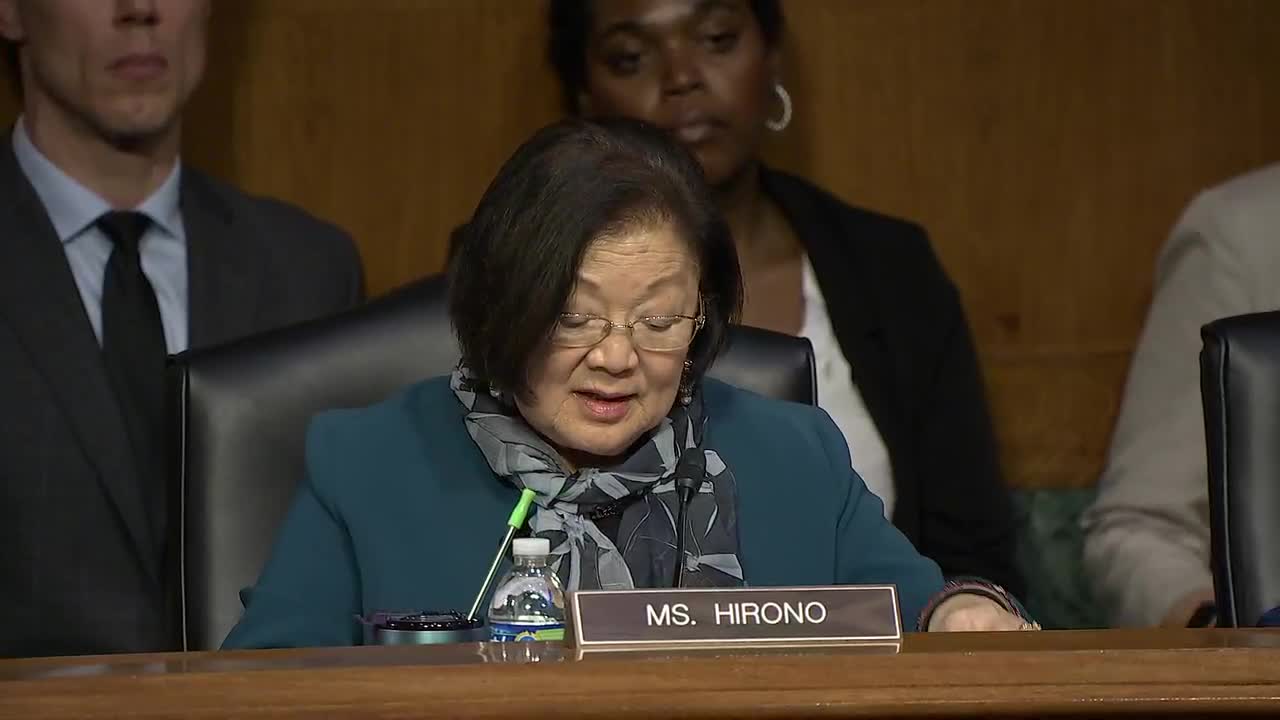
Senator Mazie Hirono told the panel that Transcom assets were used to move migrants at “three times the cost” of DHS-chartered flights and cited an example she said cost roughly $2.5 million to move about 100 people to India. She asked who makes the decision to use DoD aircraft in such missions. The witness said the Department of Homeland Security is the lead agency, that Northern Command (NORTHCOM) is the lead combatant command within DOD for those taskings, and that Transcom “works with them to receive the task to actually fly sorties.”
When asked whether Transcom verifies the identities of people it transports, the witness said Transcom receives a manifest from ICE and that “ICE maintains control of everyone that's on the aircraft.” He said Transcom follows established procedures to ensure air crews have the list and that ICE is complying with its responsibilities.
Senators also cited a Government Accountability Office (GAO) finding — described at the hearing — that ICE has not consistently collected or maintained complete electronic data on encounters that could indicate U.S. citizenship, and they asked what steps Transcom takes to prevent mistaken transport of U.S. citizens. The witness said he was “not aware” of any instances in which U.S. citizens were mistakenly flown to Guantanamo Bay on Transcom aircraft and deferred contingency evacuation-planning questions to SOUTHCOM for Guantanamo-specific emergency planning.
The witness said Transcom will fly missions if tasked and that he had been told to expect “maybe more flights” but that in the 48 hours before his testimony, Transcom had not flown any such migrant flights. He agreed to inform the committee if Transcom begins flying a new set of such missions.
Committee members asked for written follow-up and additional documentation on the legal basis, tasking authority, cost, manifest procedures and contingency plans for these missions.