Get Full Government Meeting Transcripts, Videos, & Alerts Forever!
Get email alerts on the Disaster Recovery Loans topic
No spam. Unsubscribe anytime.
SBA outlines disaster loan help for businesses, homeowners after Hurricane Milton; deadlines noted
Summary
An SBA official told the Kissimmee City Commission about physical-damage and economic-injury disaster loans, interest rates, loan limits and application deadlines, and offered local help resources.
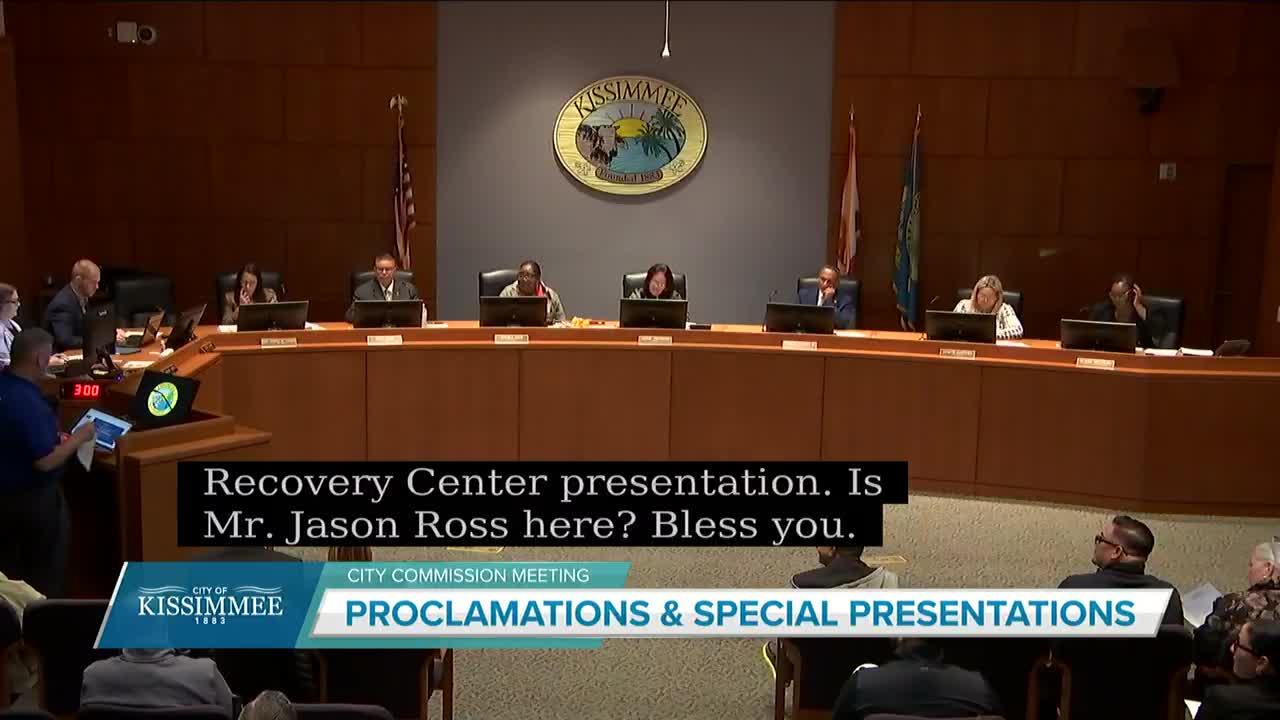
Jason Ross, a public affairs specialist with the U.S. Small Business Administration’s Office of Disaster Recovery and Resilience, briefed the Kissimmee City Commission on SBA disaster loan programs available to local businesses, nonprofits, homeowners and renters impacted by Hurricane Milton.
Ross said physical-damage disaster loans are available for businesses and nonprofits up to $2 million, and for homeowners up to $500,000; homeowners and renters may also borrow up to $100,000 for repair or replacement of personal property. He described a mitigation allowance — up to an additional 20% of the real-estate damage amount — to harden properties against future storms, citing examples such as impact-resistant windows and sump pumps.
Interest rates Ross gave in the presentation were 4% for businesses, 3.25% for nonprofits, and about 2.813% for homeowners and renters. He said SBA disaster loans are long-term (up to 30 years), with no payments required during the first year and no interest added to the principal during that period. Ross told the commission that the physical-damage loan deadline had been January 7 but that a 60-day grace period extended the effective deadline to March 7; the economic injury disaster loan (EIDL) deadline he cited was July 11.
Ross encouraged business owners to consider economic-injury disaster loans even if they had no physical damage, explaining that these loans help companies stay open after customers or revenue streams were affected. He also described collateral policies (loans over $50,000 have collateral requirements; borrowers may pledge available real estate; SBA will not decline solely for lack of collateral) and documentation to bring when applying.
Ross provided application resources: lending.sba.gov to begin eligibility checks by state and county, sba.gov/disaster for program information, and a contact phone number listed in his presentation. He said he would remain after the meeting to answer questions in person.
Ross: “We do have physical damage loans for businesses, nonprofit organizations, homeowners, and renters. These loans can go all the way up to $2,000,000 for businesses and nonprofits.”
Q&A at the meeting covered schedules and local drop-in availability; Ross confirmed there are local Business Recovery Center locations and online application options.