Get Full Government Meeting Transcripts, Videos, & Alerts Forever!
Get email alerts on the Employee Compensation topic
No spam. Unsubscribe anytime.
New Berlin committee backs new city salary ranges, implementation set for July 2025
Summary
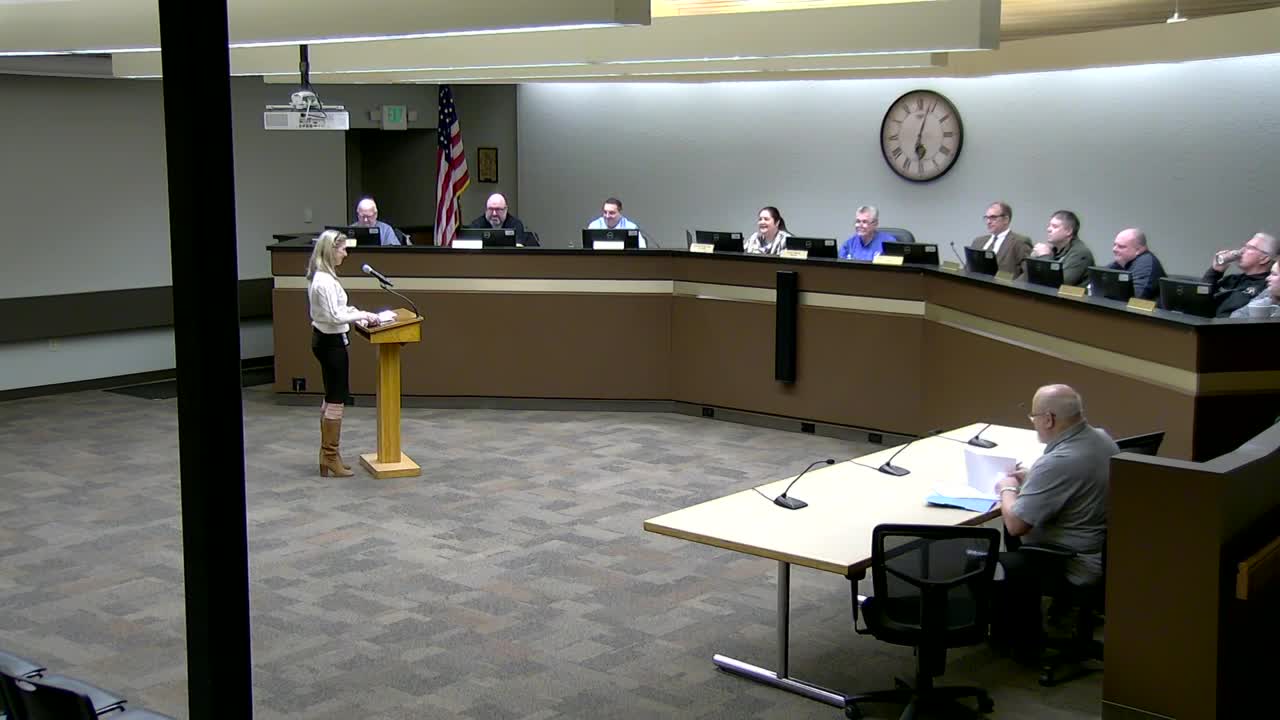
The City of New Berlin Committee of the Whole voted unanimously Feb. 25 to recommend new salary ranges and market adjustments for city employees, proposing implementation July 1, 2025, with an estimated fiscal impact of about $269,000.
The City of New Berlin Committee of the Whole voted unanimously Feb. 25 to recommend that the Common Council approve new city salary ranges and market adjustments, proposing implementation on July 1, 2025, with an estimated fiscal impact of about $269,000.
City staff presented a third-party salary study completed in 2024 and recommended placing employees in new pay bands, applying a 2% cost-of-living adjustment already given in January and raising the new ranges another 2% as of the July implementation. The presenter said market adjustments would be applied to individual positions where warranted.
The study, completed with outside data collection and consultation, used 13 comparator municipalities and reviewed job descriptions rather than relying solely on job titles. The presenter said GovInvest conducted the data collection in 2024 and that MRA was consulted on placement methodology. Staff noted some comparator municipalities did not provide usable job descriptions; when a close match could not be found, those positions were excluded from the comparator averages.
Key technical changes described by staff included shrinking the spread for hourly pay ranges from 35% to 25% (minimum to maximum) and setting the step spread between hourly range levels at about 4%. Salaried ranges retain a roughly 35% min-to-max spread, with approximately 7% between mid-level steps and slightly lower spreads at higher ranges. Staff explained that when employees are moved into the new ranges they will be placed at the same point relative to midpoint as in the old ranges (for example, an employee at 90% of midpoint in the current range would be placed at 90% of the new midpoint).
The presenter said the study also identified compression issues in police and fire pay compared with contracted employees in those departments, and that the recommended ranges are intended to address that compression to aid recruitment and retention. The presenter summarized the recommendation: "The final recommendation would be to approve and implement the new salary ranges and adapt to the market adjustments for employees effective July 2025." This recommendation was moved and seconded during the meeting and approved on a roll-call vote.
The fiscal impact staff cited for the recommended placement and adjustments is about $269,000. Staff confirmed the 2% COLA for 2025 was already applied in January to all employees and that the July implementation would include the additional 2% range increase plus any required market adjustments.
Votes at a glance
- Approval of minutes from the Feb. 11, 2025 Committee of the Whole meeting — motion approved unanimously. (No further details specified in minutes discussion.) - Approval of utility and finance claims for Feb. 26, 2025 — water utility claims $236,561.94; sewer utility claims $6,776.58; general city claims $1,799,427.61; We Energies EFT $78,697.37 — motion approved unanimously. - Recommendation to Common Council to adopt the salary study recommendations and implement employee placements/market adjustments effective July 2025 — motion passed on roll call, 7-0.
The Committee heard questions about study methodology, comparator selection and whether some positions could move down if market conditions change; staff responded that comparators can lead to increases or decreases and that the study's purpose is to present current market data to inform policy. Committee members asked for clarity about best practices and whether the city could be fiscally responsible if market conditions shifted; staff said adjustments can go down or up depending on market data.
The Committee did not identify any amendments to the recommendation during discussion. The matter will move to the Common Council for final action.