Get Full Government Meeting Transcripts, Videos, & Alerts Forever!
Get email alerts on the Budget topic
No spam. Unsubscribe anytime.
Hollywood fiscal kickoff flags budget pressures, downtown CRA transition and $11.7M in newly available tax increment
Summary
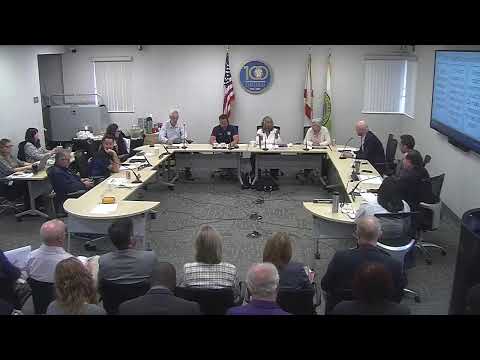
City staff opened the City of Hollywood’s FY2026 fiscal kickoff on Feb. 24, presenting tax-roll trends, operating assumptions and the planned transition of the downtown and beach Community Redevelopment Areas that will change how millions of dollars are collected and spent.
City staff opened the City of Hollywood’s FY2026 fiscal kickoff on Feb. 24, presenting tax-roll trends, operating assumptions and the planned transition of the downtown and beach Community Redevelopment Areas that will change how millions of dollars are collected and spent.
City Manager George said the meeting was "the unofficial start to the budget development process for next year," and warned that proposals at the state level to change property-tax treatment could be disruptive because "it's our largest revenue source, accounts for almost half of our total revenue." The presentation combined a market overview from CBRE with the budget office’s five-year forecast and a breakdown of contractual services that the city will need to assume as CRAs change status.
Why it matters: property taxes fund most general operations and public safety. Jonathan Antista, director of the budget office, walked commissioners through FY2024 performance measures and FY2025 results to frame FY2026 choices. He said the city's taxable value rose to about $25.5 billion for FY2025, an increase of 9.6% over FY2024, and noted the city is modeling a conservative 3% taxable-value growth assumption for the forecast used in planning.
The presentation included a guest briefing on commercial real estate from Mark Miller, research director of field research and data intelligence at CBRE, who told commissioners Broward County employment remains strong and "unemployment is still below 3%," a factor that has supported property values. Miller described trends in office, retail and multifamily markets and said Broward has seen more high-wage office-using jobs since 2019, while downtown Hollywood’s recent multifamily growth is helping retail demand.
Budget drivers and assumptions: Antista listed the forecast assumptions driving FY2026 planning: a 3% cost-of-living increase for employees, projected health-insurance increases (6% for FY2026, then 5% thereafter), pension increases of 5%, a 1% increase for other operating costs and a maintained 17% fund-balance target. He characterized the five-year general-fund forecast as a conservative guidance tool rather than a prediction and emphasized staff will test core vs. enhancement requests as departments submit budgets.
ARPA and capital: the city reported federal American Rescue Plan Act (ARPA) funding of about $29 million, all of which has been either spent or obligated as required; final expenditures must be completed by end of calendar year 2026. Antista said the city has used ARPA for one-time capital and operating needs and is building recurring capital replacement plans so new assets bought with ARPA are maintained and replaced when they reach end of life.
CRA transition and downtown costs: staff detailed the upcoming CRA changes and the contractual and personnel items the city must resolve. As part of an existing tri-party agreement with Broward County and the CRA, the downtown CRA will cease receiving county property-tax increment after Sept. 30, 2025. Broward County has agreed to provide $3 million per year for five years to the CRA for related activities beginning December 2025; at the same time the city's current annual TIF contribution to the downtown CRA (about $8.7 million this year) will instead flow to the city after the CRA's TIF status changes. Adam (staff) and others told the commission those combined dollars — roughly $11.7 million gross in the near term — are the pool from which city management will recommend which downtown services to continue, scale back, or absorb into general operations.
Staff provided approximate annual costs for downtown services the city will need to assume or decide upon: micro‑transit (circa) ~$200,000; FPL neighborhood lighting retrofit operations ~$63,000; "block-by-block" sanitation/cleaning ~$600,000; downtown maintenance ~$300,000; Art Walk and similar special events ~$250,000; valet services ~$75,000. Staff also noted potential ongoing obligations tied to incentive agreements for major downtown projects (examples and approximate annual estimates provided by staff): Alta Hollywood (cap $4.5M; annual est. ~$850,000 for phase 1; higher with phase 2); Block 57 (cap ~$18M; annual est. $1.3–2.0M for first 10 years, then ~$1.1M); Block 58 (annual est. ~$1.0M); Tropic (cap ~$2.4M; annual est. ~$340–370K). In several cases staff noted the incentive would end if a project converts to condominiums.
Direction and follow-ups: commissioners asked staff to provide more detailed industrial-market data and to produce a follow-up report on industrial vacancy and outside-storage demand; Mark Miller agreed to supply an industrial market report. Antista and the city manager committed to provide more granular capital and operating analyses at upcoming workshops. Staff scheduled a capital workshop in May and an operating budget workshop in June; the city will set a maximum millage rate in early July and hold two public hearings in September. Antista also said the budget office will post a public input form and recommended running a resident survey to gather priorities.
Public-safety and maintenance concerns surfaced repeatedly. Commissioners pressed staff on automating asset-maintenance schedules (CityWorks was cited as the system used by Public Works) and on ensuring recurring operating costs for new capital projects are budgeted. Commissioner Hernandez pressed for revisiting zoning and small‑bay industrial uses and asked staff to consider more flexible outdoor-storage allowances for certain parcels; Hernandez said, "maybe we ought to be a little more open minded as to the availability for open storage."
What’s next: staff will return with the industrial follow-up report, a detailed CRA transition financial plan and recommendations for which downtown contracts to continue, and the budget office will collect public input ahead of June workshops. Antista emphasized the forecast is a planning tool and that staff will continue to refine revenue and expenditure assumptions as the tax roll and contract obligations become clearer.
Credits: presentation material and market data were provided during the fiscal kickoff by Jonathan Antista (budget director), City Manager George, Adam (staff), and Mark Miller of CBRE.