Get Full Government Meeting Transcripts, Videos, & Alerts Forever!
Get email alerts on the Zoning Ordinance Update topic
No spam. Unsubscribe anytime.
Nolensville outlines lengthy roadmap to update zoning ordinance and pattern book
Summary
Staff described a staged process to update the town's zoning ordinance and pattern book—public outreach charrette, joint workshops with the planning commission and multiple review iterations—cautioning the board the work will span many meetings and may require decisions about whether to adopt sections piecemeal or all at once.
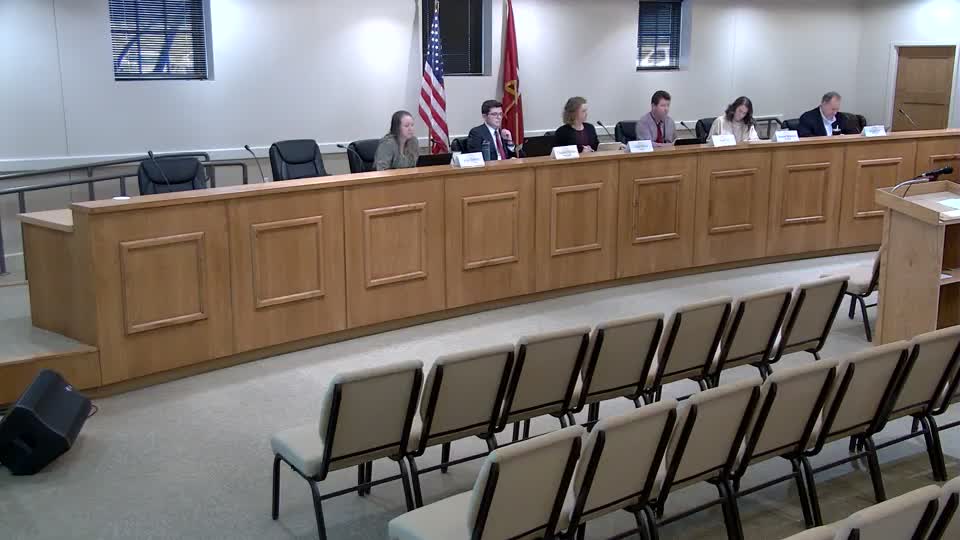
Town planning staff presented a tentative roadmap for a comprehensive update to Nolensville’s zoning ordinance, emphasizing the scale of the project and a phased approach that includes public engagement, planning‑commission review and multiple iterations at the Board of Commissioners level.
The update is not a full rewrite but a methodical refresh of the ordinance the town adopted in 2023. Staff said the process will likely mirror the recent subdivision regulations work: staff will prepare chapter‑level drafts, send them to the planning commission for discussion and recommendation, and then forward recommendations to the board for further review.
Planning staff proposed an opening public meeting modeled on a charrette to gather community input and a joint workshop with the planning commission and board to solicit practical feedback from people who use the ordinance. The presenter said, “It’s gonna be a long process, and it may take multiple meetings to talk about similar things.”
A practical question staff framed for the board was the adoption approach: whether to approve sections individually as they are completed, which could create a patched set of regulations, or to hold sections until the full package is ready for final adoption. Staff suggested several options, including holding at third reading until chapters can be adopted together to avoid inconsistencies.
Commissioners stressed the value of real‑world examples and stakeholder input; one commissioner recommended staff and commissioners speak with applicants who have used the new ordinance to identify friction points. Commissioners also emphasized coordinating the zoning update with the pattern book and subdivision regulations so design standards and development review remain consistent.
Ending: Staff will proceed with chapter‑by‑chapter drafting and seek dates for a stakeholder meeting or joint workshop in the coming months; no formal vote was taken at the work session.