Get Full Government Meeting Transcripts, Videos, & Alerts Forever!
Get email alerts on the Finance Debt Policy topic
No spam. Unsubscribe anytime.
Nolensville reviews fund-balance policy, warns general fund debt capped at 15%
Summary
Town staff presented the annual debt and financial policy review, highlighting a 15% cap on general-fund‑backed debt, discussion of the fund-balance threshold (currently 75–100%), and options to lower the target to about 50% tied to capital priorities.
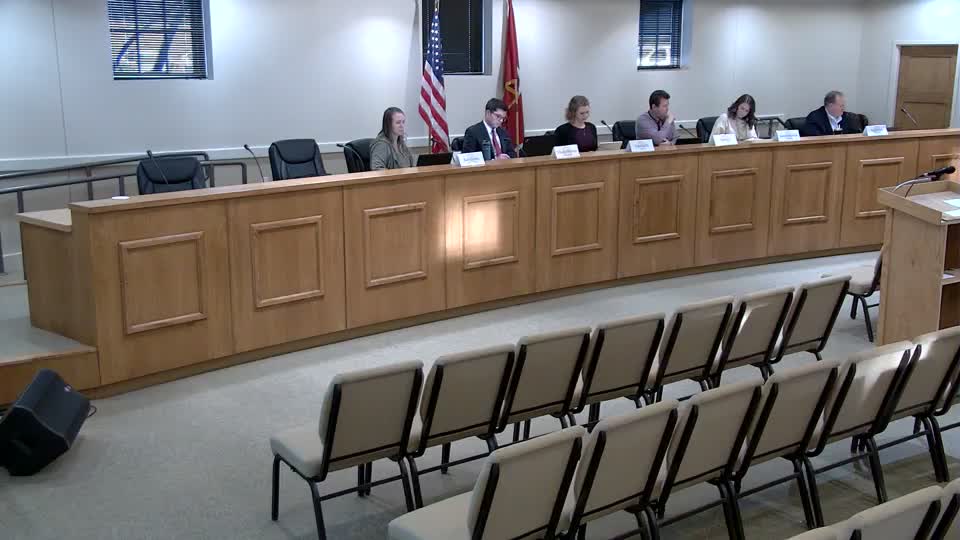
Town of Nolensville officials reviewed the town's annual debt and financial policy at their February work session, focusing on the fund-balance threshold and a 15% cap on general‑fund debt service.
The discussion matters because the town is planning capital projects that could change which obligations are paid from the general fund and therefore count against the cap. Christina, a town finance staff member, told the board the policy limits general‑fund‑obligation debt to no more than 15% of the general fund’s anticipated revenues in a budget year and that the only current general‑fund debt is a $100,000 obligation for fire service.
Christina said, “In the policy currently, it references that our general fund revenues, fund our debt management... it has to be within 15%.” She warned that moving more capital costs into the general fund would increase that percentage and affect future borrowing flexibility.
Board members discussed the fund‑balance threshold that the town’s policy currently sets at 75%–100% of an operating target. One commissioner said, based on the packet scenarios and current budget projections, they would be comfortable lowering the target toward about 50% but not going below that number to preserve coverage for unexpected events.
Several commissioners urged caution in lowering the fund balance because Nolensville’s revenue base is narrower than comparable municipalities. One commissioner said, “Knowing now that our revenue sources are not as elastic as some of these other good cities have... we need to keep a little bit more money in the bank.” That comment framed support for a conservative approach to any change.
Staff noted the policy also directs that recurring revenues, not one‑time receipts, should fund debt service; aside from the $100,000 fire service obligation, recurring revenue is not currently being used for other general‑fund debt. The board agreed the fund‑balance threshold and debt policy should be revisited alongside capital‑budget planning so any changes align with the projects the board prioritizes.
Board direction: staff will continue to provide scenarios during the budget process so commissioners can decide whether to retain the current 75%–100% target, lower it toward 50%, or keep it unchanged based on upcoming capital needs.
Ending: Commissioners did not take a final vote to change the policy at this session; the topic will carry into budget deliberations and future meetings.