Get Full Government Meeting Transcripts, Videos, & Alerts Forever!
Get email alerts on the Judiciary Accountability topic
No spam. Unsubscribe anytime.
Committee advances judicial‑reform substitute that raises judge pay and expands misconduct rules; civil‑rights groups warn of chilling effect
Summary
Chair Huffman laid out the committee substitute to Senate Bill 293, which the chair described as a package of judicial‑accountability and compensation reforms.
Chair Huffman laid out the committee substitute to Senate Bill 293, which the chair described as a package of judicial‑accountability and compensation reforms.
Chair Huffman said the State Commission on Judicial Conduct exists “to protect the public, promote public confidence in the integrity, independence, competence, and impartiality of the judiciary, and encourage judges to maintain high standards of conduct.” He summarized the substitute’s components: expanding the definition of judicial misconduct to include failure to meet statutory deadlines and “persistent or willful violations of bail proceedings under article 17 15 of code of criminal procedure,” enhancing complaint processes (including penalties for false complaints), increasing transparency through quarterly reports about judges' duties, removing the commission’s ability to issue private sanctions, modifying eligibility rules for retired judges serving temporarily and setting a seven‑year statute of limitations for complaints. The substitute would also increase the base salary of a district judge by 15%, which the chair said also raises prosecutors’ and appellate judges’ pay by statute, and would increase certain local and presiding judge supplements.
The nut graf: the substitute combines salary increases and new transparency/accountability measures intended to strengthen judicial performance and public confidence, while opponents warned that expanding misconduct standards tied to bail decisions could politicize and chill judicial decision‑making.
Committee members asked detailed questions about terms like “persistent and willful” and administrative‑deficiency dismissals. The chair said those determinations would be reviewed by the Commission on Judicial Conduct and that ‘‘persistent’’ meant repeated conduct and ‘‘willful’’ meant intentional. Senators also discussed how quarterly reporting would be implemented by the Office of Court Administration (OCA) and that the Supreme Court would set rules.
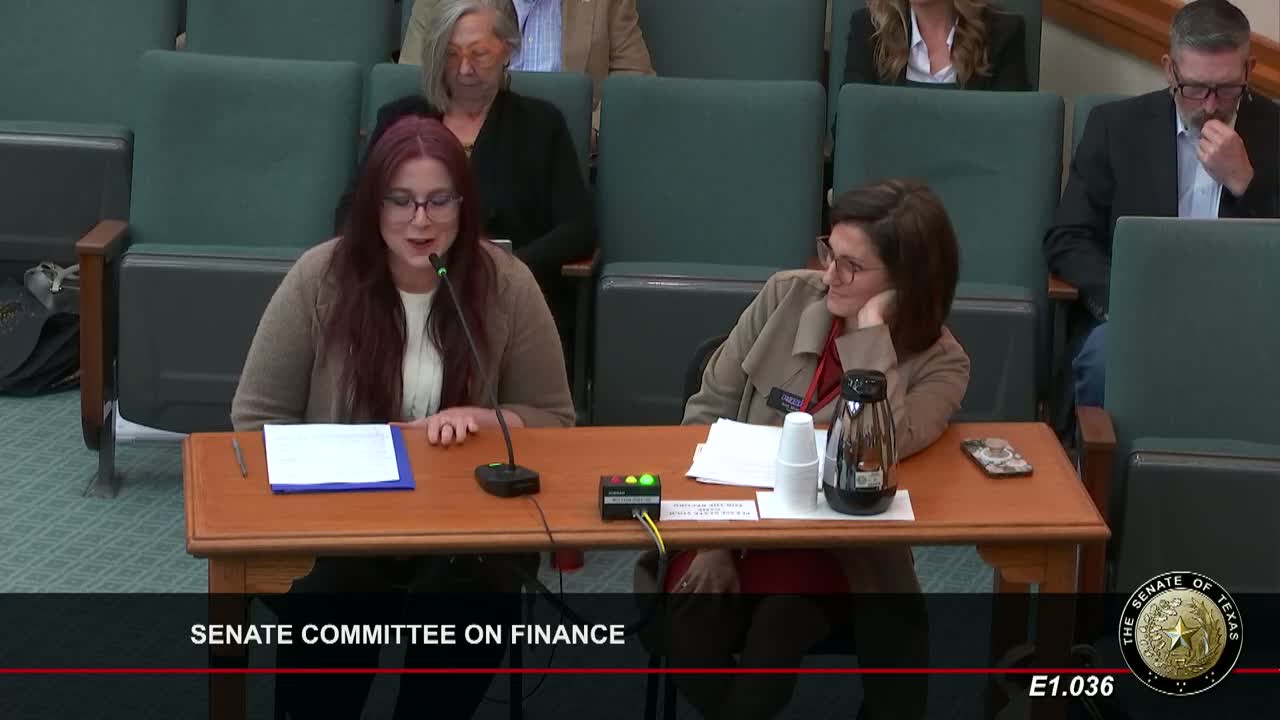
Public testimony included district judges, prosecutors and representatives of reform and civil‑rights groups. Judge Bill Miller (district court judge) said he was neither for nor against the bill but thanked the committee for addressing compensation. Philip McFarlane and other prosecutors warmly supported the bill, saying increased pay helps recruitment and retention. Opponents, including Kirsten Budwein of the Texas Civil Rights Project and a representative of the Texas Civil Rights Project, expressed concern that adding “persistent or willful violation of article 17.15” as a ground for discipline is vague and could result in politically motivated complaints; they urged caution to preserve judicial independence. Witnesses also raised concerns about the bail provision’s overlap with Chapter 17 requirements (e.g., least‑restrictive means) and possible politicization around immigration or other charged contexts.
On the fiscal side, members discussed salary math: a 15% base increase layered on existing longevity and county supplements could result in substantially higher total compensation for some district judges; committee discussion included illustrative figures (examples in committee dialogue suggested figures in the range of roughly $200,000 with supplements and longevity for long‑serving judges). The chair said the substitute builds on prior reforms to the judicial retirement system (JRS 2) and includes implementation provisions.
The clerk called the roll and the committee reported the committee substitute for SB 293 favorably to the full Senate by a recorded vote of 9 ayes, no nays.
Ending: SB 293 as substituted advanced to the full Senate; supporters said the package balances pay and accountability while civil‑rights groups requested clearer standards and protections to avoid politicized or arbitrary discipline tied to bail decisions.