Get Full Government Meeting Transcripts, Videos, & Alerts Forever!
Get email alerts on the Senior Housing Safety topic
No spam. Unsubscribe anytime.
Senate bills 731 and 732 would require water pressure boosters and backup power in tax‑credit senior housing; industry and local officials testify
Summary
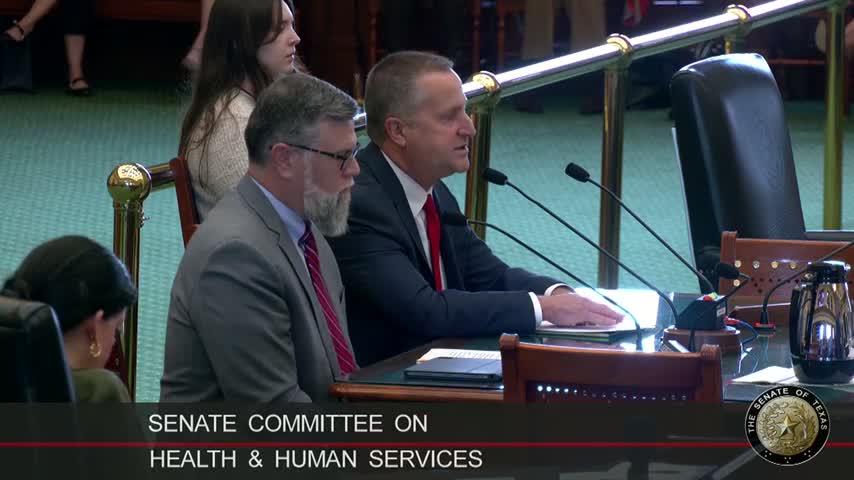
Senate Bills 731 and 732 would require water pressure booster systems and backup power for senior multifamily housing financed with low‑income housing tax credits; the committee heard testimony from city officials, fire chiefs and housing industry groups.
Senator Miles laid out two companion bills — SB 731 (water pressure booster systems) and SB 732 (backup power and temperature controls) — aimed at protecting residents of senior multifamily housing developments that receive low‑income housing tax credits.
Sponsor remarks said the bills respond to failures during recent storms and power outages in which seniors in higher‑rise developments lost water, electricity, elevator access and temperature control and in some cases were stranded on upper floors. SB 731 would require that senior developments receiving low‑income housing tax credits and that are four stories or taller be equipped with water pressure booster systems guaranteeing water access on every floor in an emergency. SB 732 would require a backup power source that maintains safe temperatures (defined in the bill as between 68 and 82 degrees Fahrenheit) and that ensures at least one elevator remains operable during outages; the sponsor allowed alternatives to generators to accommodate different building configurations.
A mix of local elected officials, fire chiefs, county and city emergency officials and industry representatives testified. Missouri City officials and fire/rescue chiefs said their emergency response systems were strained during Hurricane Beryl: residents were sheltered in charter buses and EMS resources were diverted to assist stranded seniors. Fire marshal and local officials said many 55+ multifamily properties are not subject to the same regulatory standards as assisted living or nursing homes, and that tax‑credit developments often receive favorable incentives yet lack uniform emergency standards.
Representatives of affordable housing developers and trade groups (Texas Affiliation of Affordable Housing Providers, Rural Rental Housing Association) said they support the underlying safety goals but raised concerns about retroactive application and cost. Industry witnesses said the housing tax‑credit financing model caps rents and constrains the ability to pass retrofit costs to residents; they urged funding mechanisms or phase‑in approaches to avoid financial infeasibility for existing small rural developments.
The committee left both bills pending. Sponsors and witnesses signaled willingness to work on funding options, phased implementation, and potential carve‑outs to reduce immediate fiscal burdens while preserving resident safety.