Get Full Government Meeting Transcripts, Videos, & Alerts Forever!
Get email alerts on the Consumer Affairs Notice Requirement topic
No spam. Unsubscribe anytime.
Subcommittee pauses bill requiring Department of Consumer Affairs contact info in certain contracts after industry concerns
Summary
A bill to require a toll-free number and website for the Department of Consumer Affairs in various consumer contracts was presented to the Business and Commerce Subcommittee; stakeholders requested further meetings and the subcommittee voted to continue the measure with one member recorded as opposed.
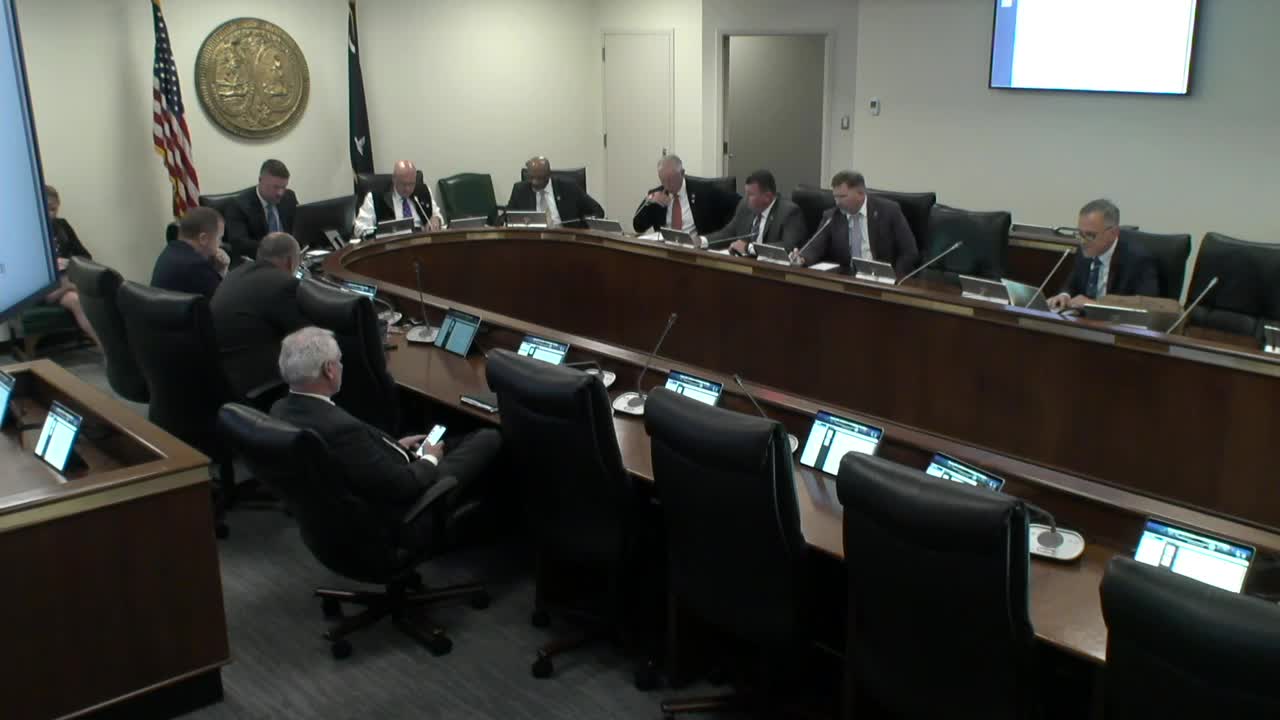
The Business and Commerce Subcommittee on March 5 considered a bill (referred to by committee paperwork as bill 3658) that would require certain consumer contracts to include a toll-free number, website and a statement that complaints may be directed to the South Carolina Department of Consumer Affairs. The subcommittee voted to continue the bill after testimony from the department and from industry groups.
Carrie Grube Lybarger, administrator and consumer advocate for the Department of Consumer Affairs, told the committee the proposal stems from the House legislative oversight review process and aims to increase public awareness of the department’s resources. Lybarger listed industries that already include the agency’s information in contracts or notices by statute or regulation: mortgage brokers, professional employer organizations, credit counselors, solar/renewable-energy retailers, vacation timeshare resellers and preneed funeral contracts. She also cited a supervised-lender disclosure requirement that applies when an APR exceeds 12% on small loans and noted lenders must give a brochure for loans of $2,500 or less that includes agency contact information.
Industry witnesses said they generally support consumer awareness but raised concerns about scope, enforcement and the cost of implementation. Neil Rashley, senior vice president and general counsel for the state Bankers Association, said bankers were open to the department’s goals but worried about how enforcement and penalties would be applied and whether the statute could have unintended regulatory effects that federal examiners would evaluate. “Statutes have a regulatory effect also… because of the way they’re drafted,” Rashley told the panel, asking the committee to consider the practical compliance and supervisory implications for banks.
Sims Floyd of the South Carolina Automobile Dealers Association opposed the proposal, saying dealers were concerned the provision would lead to “farming for negative comments” if the agency’s contact information were repeatedly posted on transaction documents or prominently displayed in dealerships. Floyd urged the committee to prioritize filling expired appointments on the Commission on Consumer Affairs as a governance fix and noted his group’s recent, unresolved disputes with the department.
Lybarger and industry representatives said they were willing to meet to narrow the bill’s language. The subcommittee chair called for further engagement and members voted to continue the bill; the clerk recorded one opposed vote during the roll call on the motion to continue.
The committee did not approve the statutory change at this meeting and no effective date or penalty scheme was adopted. Members asked the sponsor and interested parties to continue discussions to define the bill’s application to credit grantors with more than $150,000 in in-state volume, to clarify enforcement mechanisms and to avoid duplicative or confusing requirements where other statutes or regulations already provide similar notices.